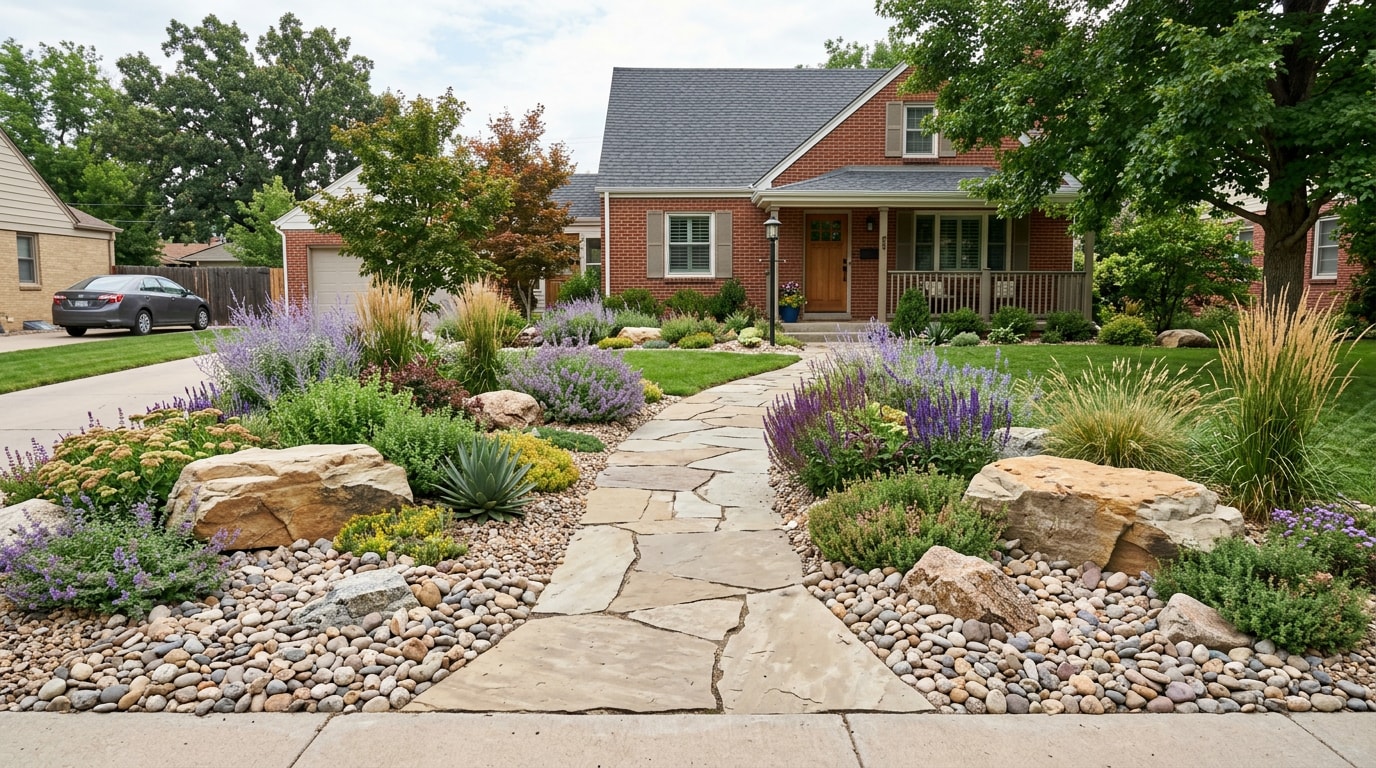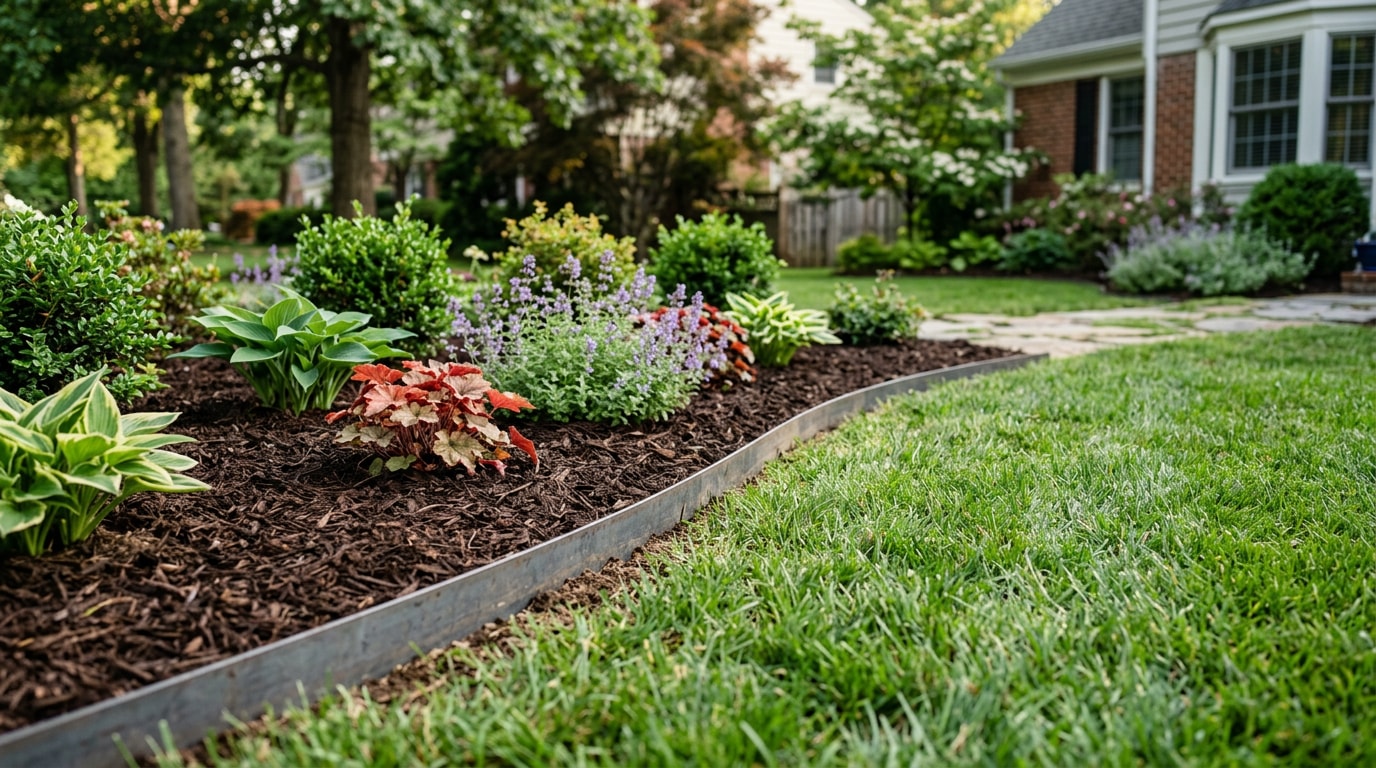
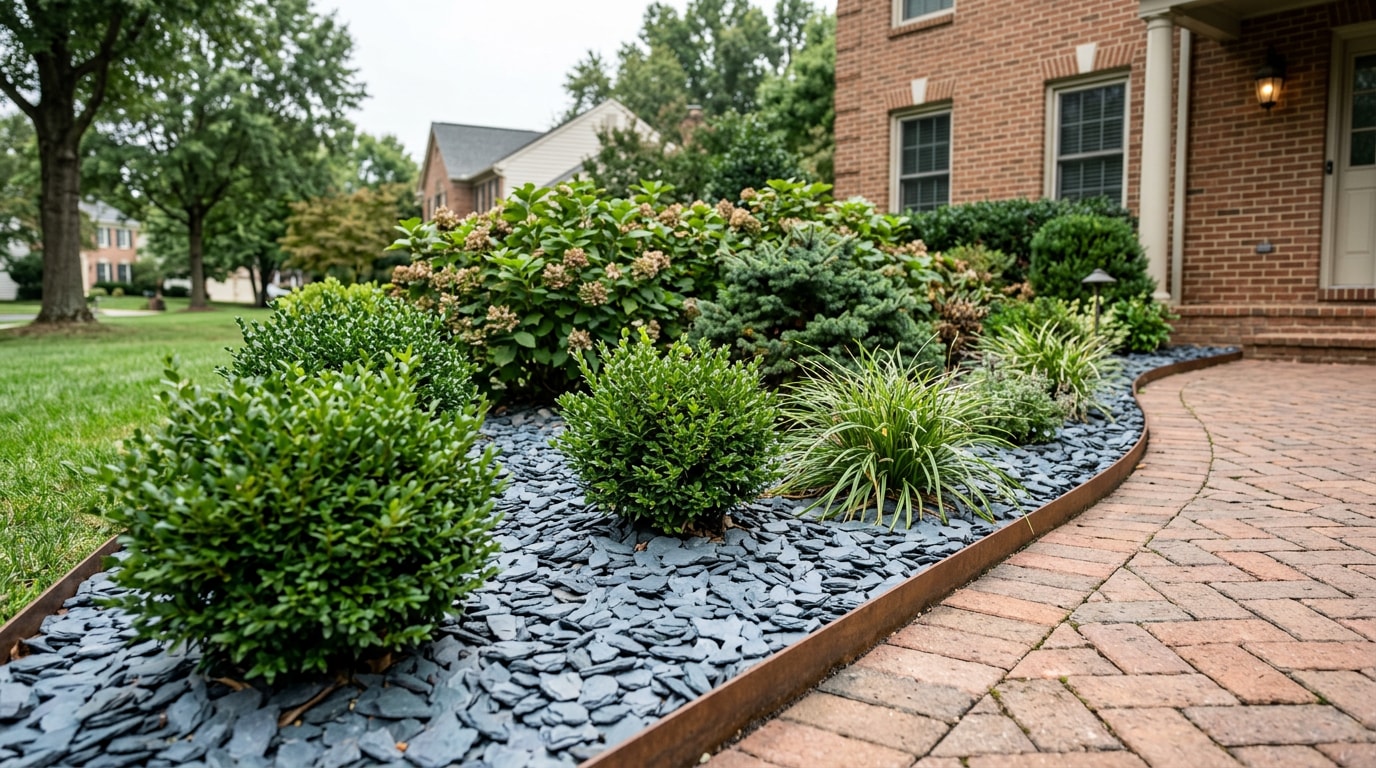
Slate chips for landscaping Fairfax County, VA yards have become a go-to ground cover for homeowners who want a clean, modern look that holds up through humid summers and freeze-thaw winters. These flat, angular stone pieces resist fading, skip the yearly top-off that mulch needs, and settle into beds and paths with tighter footing than rounded gravel. Here's what the material actually costs, where it performs best, and how to install it so it stays put on Fairfax County's clay soil.
What Are Slate Chips?
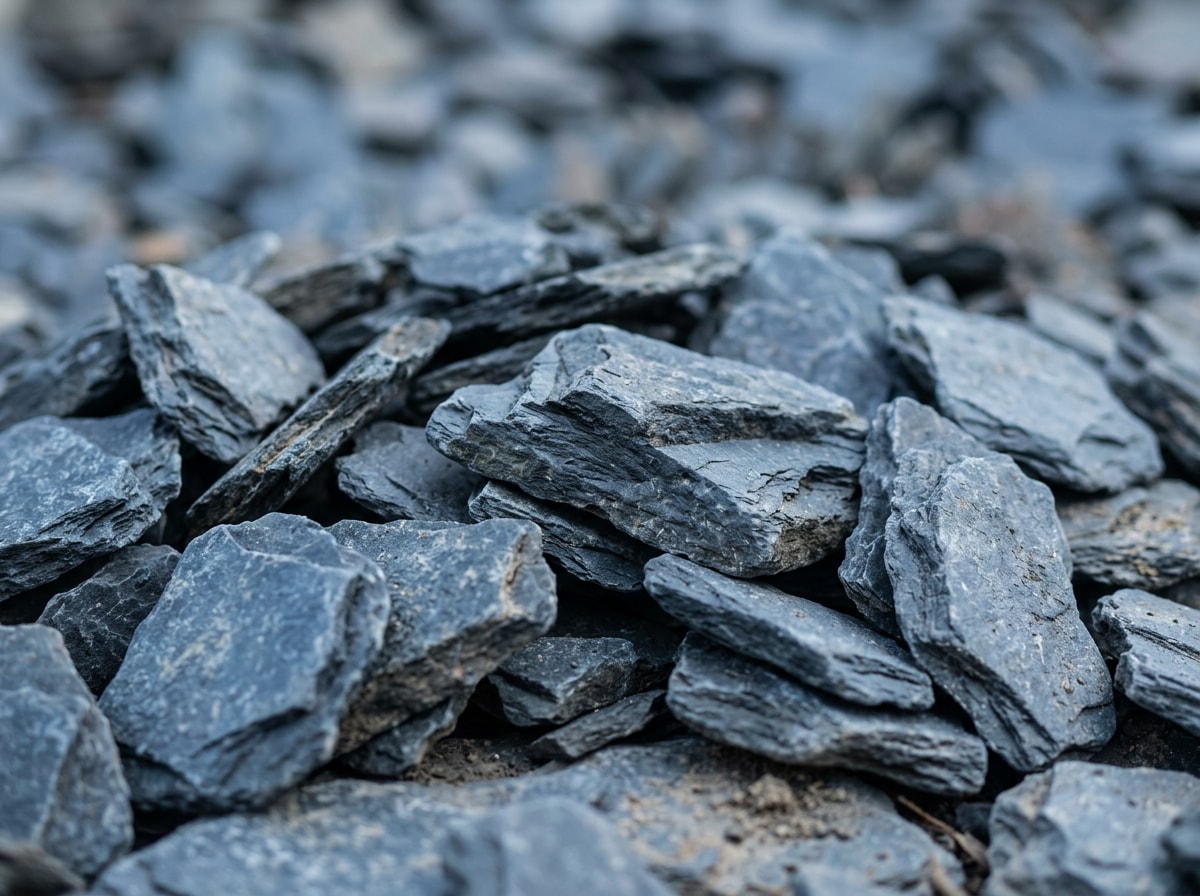
Slate chips are flat, angular fragments of natural slate, typically sized from a quarter-inch up to three inches across. Sometimes called slate chippings or slate aggregate, they're quarried and crushed from metamorphic rock, then screened into consistent size ranges for landscape use.
Most suppliers sell mini, medium, and jumbo sizes in a handful of colors. For Northern Virginia hardscapes, blue-gray and charcoal tones pair well with the brick, bluestone, and gray paver palettes common on local patios and walkways. Lighter gray slate works as a brighter accent against darker mulch or stone.
As a decorative landscape stone, slate chips sit in a middle ground: more refined than plain crushed gravel, but a far cheaper way to cover ground than pouring concrete or laying sod.
Benefits and Drawbacks of Slate Chips for Landscaping
Slate holds up to Fairfax County's weather swings without rotting, fading, or needing replacement every season the way organic mulch does. A properly laid layer also blocks weed growth by cutting off sunlight, and the gaps between chips drain better than compacted soil. The flat shape helps with erosion control on mild slopes, since the pieces interlock and resist washing away in moderate rain.
There are trade-offs, too:
- Cost runs higher than plain gravel per ton.
- Slippery when wet, especially on steeper paths or near water.
- Migration into lawns or driveways over time without edging.
- Not vehicle-rated for daily driveway traffic.
Most of these downsides are manageable with the right edging and base prep, which is where a lot of DIY installs go wrong.
Best Uses for Slate Chips in Landscaping
Slate chips perform best in low-traffic, decorative applications rather than areas built for heavy loads. They're a strong fit for garden beds, pathways, borders, and spots where drainage and appearance matter more than load-bearing strength.
Common uses include:
- Garden beds as a mulch alternative that won't break down
- Pathways for a firm, attractive walking surface
- Edging and patio borders to define spaces cleanly
- Around fire pits or water features for a heat- and moisture-tolerant surface
- Erosion control on gentle slopes and drainage swales
Slate chips aren't the right choice for driveways or anywhere regular vehicle traffic is expected. The flat pieces shift and compact unevenly under sustained weight, so a structural base designed for traffic loads is the safer long-term investment. If a vehicle surface is the goal, see Driveway Installation for options built to handle it.
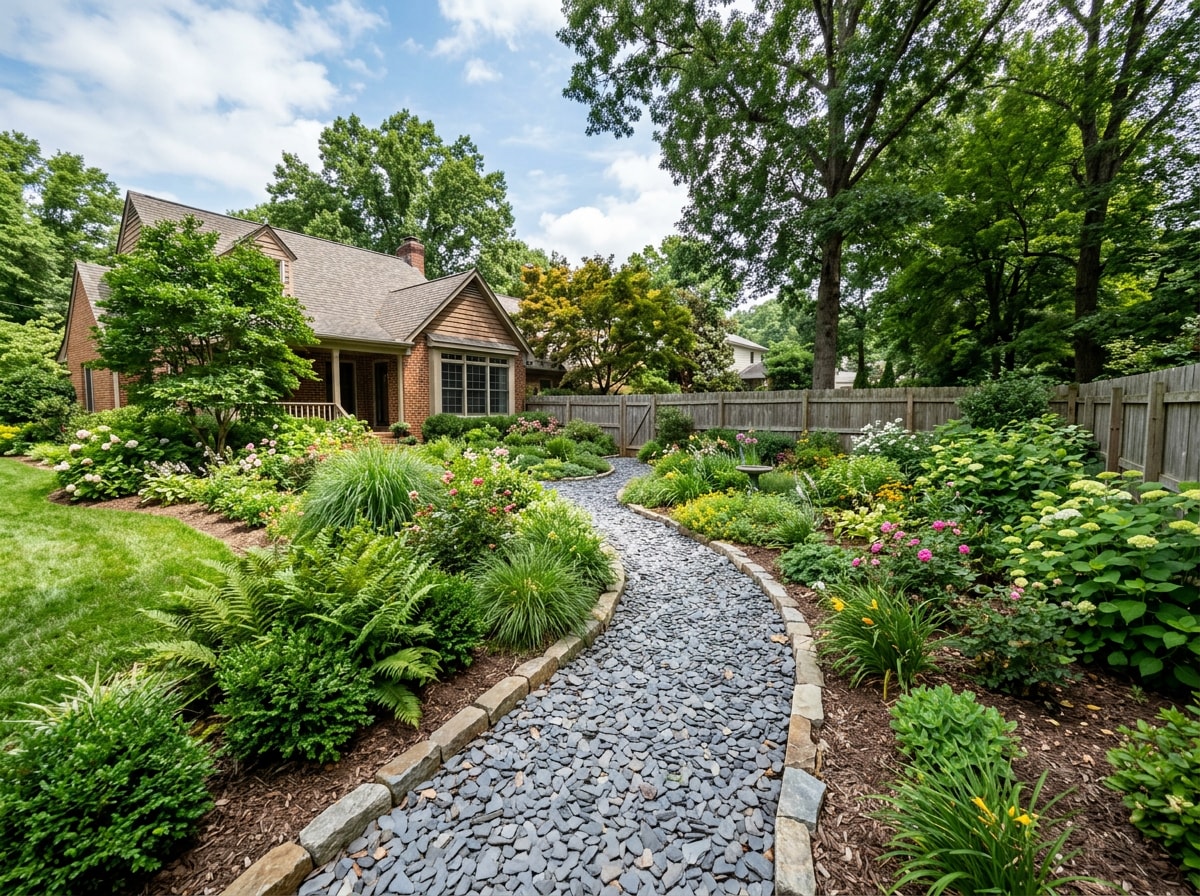
For pathway or patio-adjacent projects, Walkway Installation and Patio Installation pair well with a slate border or accent bed.
Slate Chips vs. Gravel vs. Crushed Stone
| Feature | Slate Chips | Gravel | Crushed Stone |
|---|---|---|---|
| Best use | Beds, paths, borders | Driveways, drainage | Driveways, base layers |
| Cost tier | Mid to higher | Lower | Lower to mid |
| Drainage | Good | Good | Moderate |
| Walkability | Comfortable, flat | Can shift underfoot | Sharp, less comfortable |
| Durability | High | High | High |
The difference comes down to shape. Slate's flat, angular pieces interlock and settle into a fairly stable surface, so they resist rolling the way rounded gravel does. Crushed stone, by contrast, has sharper, more irregular edges that compact tightly for structural work but feel rougher underfoot. That's why driveway and sub-base work in Virginia typically specs dense-graded crushed aggregate rather than decorative chips; Virginia's own pavement design guidance calls for a specific crushed aggregate gradation under driveways and secondary roads precisely because it compacts and drains differently than loose decorative stone. For homeowners comparing slate against other loose-stone ground covers, our cedar chips guide breaks down how an organic option stacks up on cost and upkeep.
How Much Do Slate Chips Cost in Fairfax County?
Slate chip pricing varies by color, size, and how far the material travels from the quarry. Across the suppliers we checked, bulk slate commonly prices between roughly $150 and $300 per ton, with darker or specialty colors running toward the higher end and basic gray-blue blends toward the lower end.
Coverage depends on chip size and installation depth:
| Slate Chip Size | Typical Use | Approx. Coverage per Ton (2" depth) |
|---|---|---|
| Mini (1/4"–3/4") | Garden beds, borders | 120–150 sq. ft. |
| Medium (3/4"–1.5") | Pathways, beds | 100–130 sq. ft. |
| Jumbo (1.5"–3") | Accent areas, light-traffic paths | 60–90 sq. ft. |
Buying bulk slate by the ton is almost always more economical than bagged material from a retail store, especially for beds or pathways larger than a few hundred square feet. Delivery is usually a separate line item and shifts with distance and order size, so get a specific quote before budgeting a full-yard project.
How to Install Slate Chips for Landscaping in Fairfax County, VA
Getting the base right matters more than the chips themselves. In our experience working across Fairfax County yards, the installs that hold up longest are the ones where the base gets as much attention as the top layer. Here's the process most installers follow, adjusted for local soil conditions.
Step-by-Step: Laying Slate Chips
- Clear the area of debris, weeds, and existing vegetation down to bare soil.
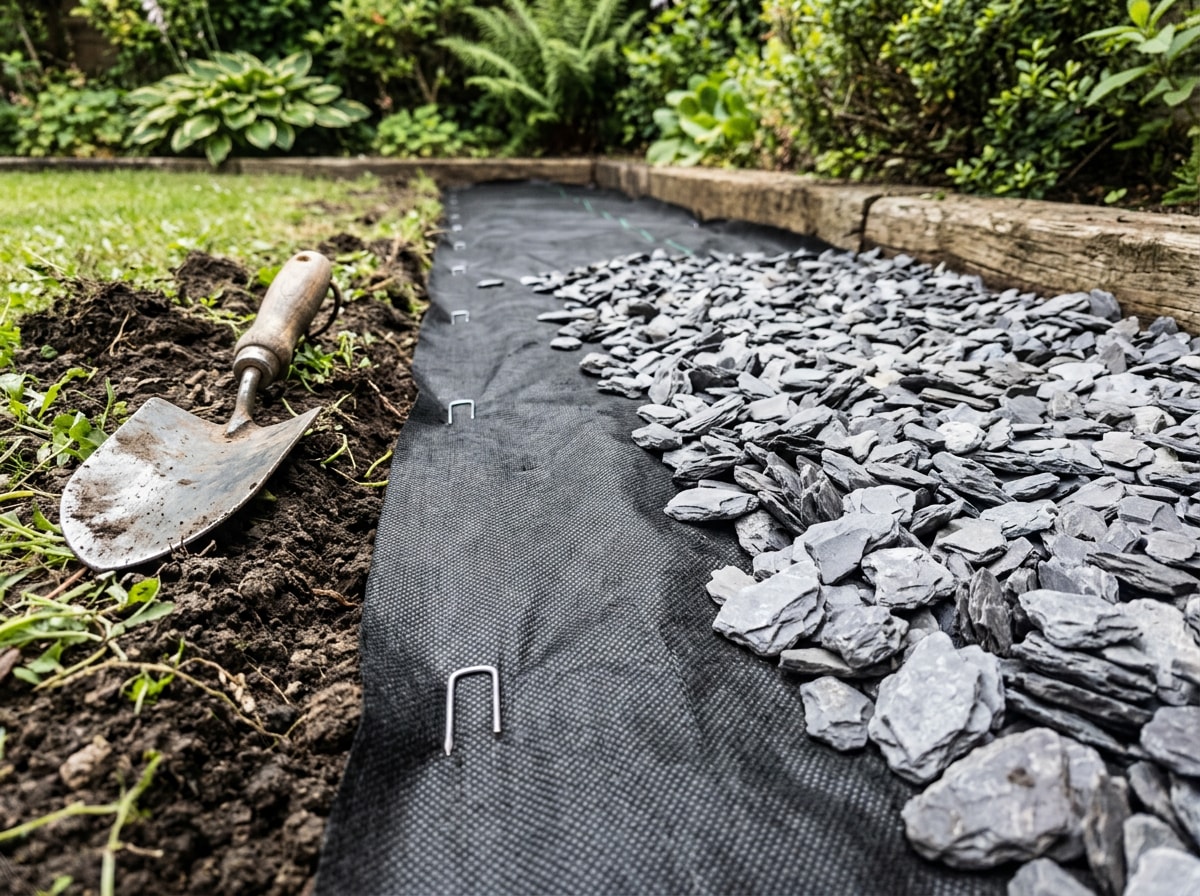
- Lay landscape fabric as a weed barrier. Overlapping strips by a few inches keeps weeds from pushing up through the seams, a detail cooperative extension guidance on water-wise landscaping calls out specifically.
- Address the base. Much of Fairfax County sits on clay-heavy soil that holds water and heaves during freeze-thaw cycles. For pathways, a compacted gravel base under the fabric helps prevent settling and shifting each winter.
- Spread the slate chips to a depth of 2–3 inches for decorative beds, or 3–4 inches for pathways that see foot traffic.
- Rake and edge the surface so the layer sits level, then install edging to keep chips contained.
On sloped beds, a well-cover ground layer like slate does real work. Federal conservation guidance on ground cover notes that surfaces with substantial cover hold more water on-site and slow erosion compared to bare, exposed soil, which is exactly the mechanism that makes flat slate chips useful on a mild grade.
If your project includes a retaining element on a slope, review Garden Wall Installation or Retaining Wall Installation for edging options that hold up over time.
Maintenance Tips for Slate Chips
Upkeep is minimal compared to mulch beds.
- Clear fallen leaves and debris regularly so they don't trap moisture against the fabric below.
- Rake occasionally to redistribute chips scattered by foot traffic or heavy rain.
- Hose down lightly to remove dust or early algae growth, especially in shaded, damp corners.
- Top up the material every few years as chips settle or get displaced.
- Pull any weeds that find their way through fabric seams.
Ready to get a slate chip bed or path installed correctly the first time? Get a free estimate from our Fairfax County crew and skip the trial-and-error.
FAQ
Are Slate Chips Comfortable and Safe to Walk On?
Flat-cut slate chips are generally more comfortable to walk on than sharp, jagged aggregate, since the smooth faces sit underfoot without digging in. Slate can get slippery when wet, so paths on slopes or near water sources deserve extra caution.
Can I Use Slate Chips Around a Pool?
Yes. Slate's water resistance makes it a reasonable choice for pool landscaping since it won't degrade from splashing or humidity. Keep it placed away from the immediate walking edge of the deck, since wet slate near a pool can be slippery.
Can I Use Slate Chips for a Driveway?
Larger jumbo slate chips can work for light-traffic driveways or parking pads, but medium and mini sizes aren't built for regular vehicle traffic and will shift or compact unevenly. For a driveway that sees daily use, a purpose-built surface is the safer long-term investment. See Driveway Installation for options suited to vehicle loads.
How Much Do Slate Chips Cost per Ton?
Expect roughly $150 to $300 per ton delivered in bulk, depending on color, size, and distance from the supplier. Bagged material from a retail store costs more per square foot than a bulk delivery.
Do Slate Chips Need Landscape Fabric Underneath?
Yes, in most cases. Fabric keeps chips from sinking into the soil and slows weeds from pushing up through the layer, though it isn't a permanent weed solution and should be paired with occasional maintenance.
What Size Slate Chips Should I Use?
Mini and medium chips work well in garden beds and low-traffic borders. Medium to jumbo sizes hold up better on pathways that see regular foot traffic.
Whether you're planning a full front-yard refresh or just a slate-edged bed along the walkway, the team at CM Hardscapes can help you plan a layout that fits your yard's drainage and soil. Serving Fairfax County homeowners, we handle everything from material selection to the base prep that keeps slate chips in place for years.