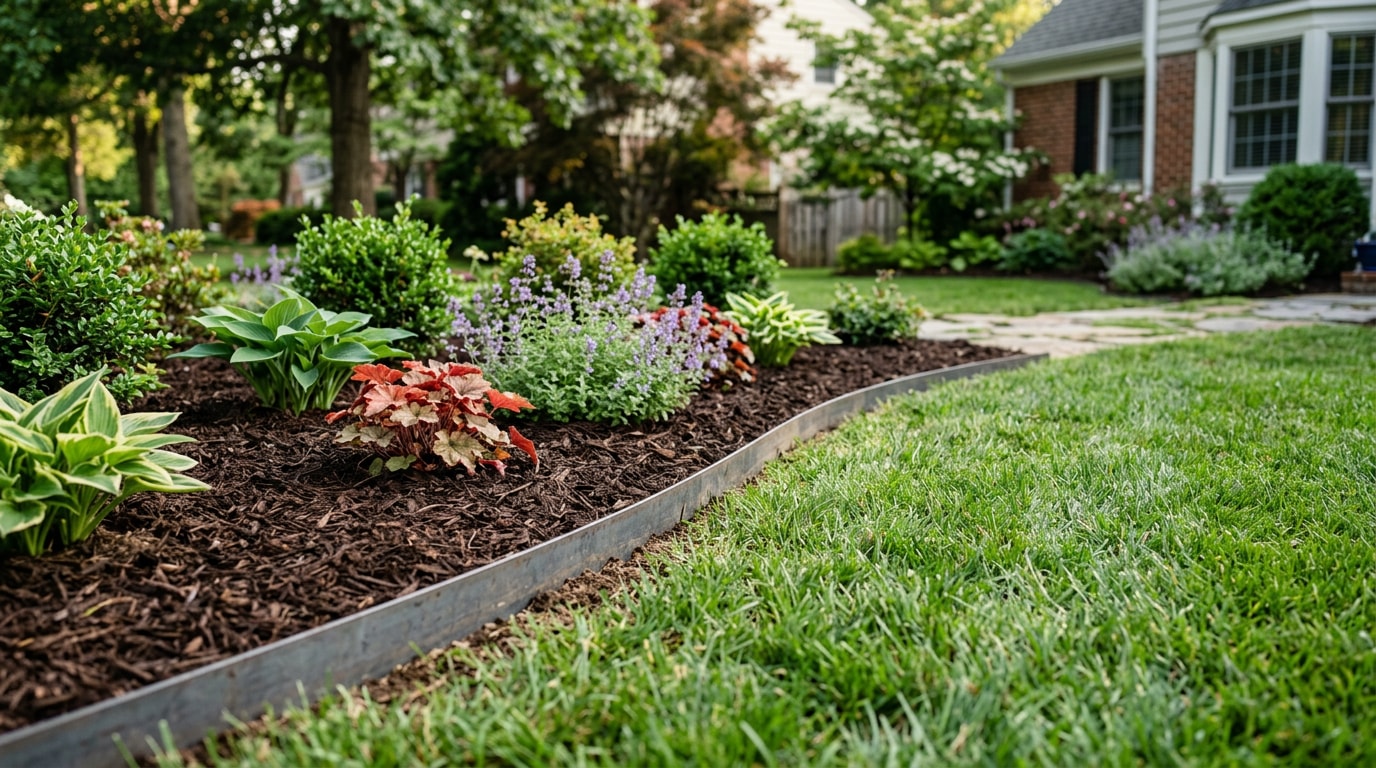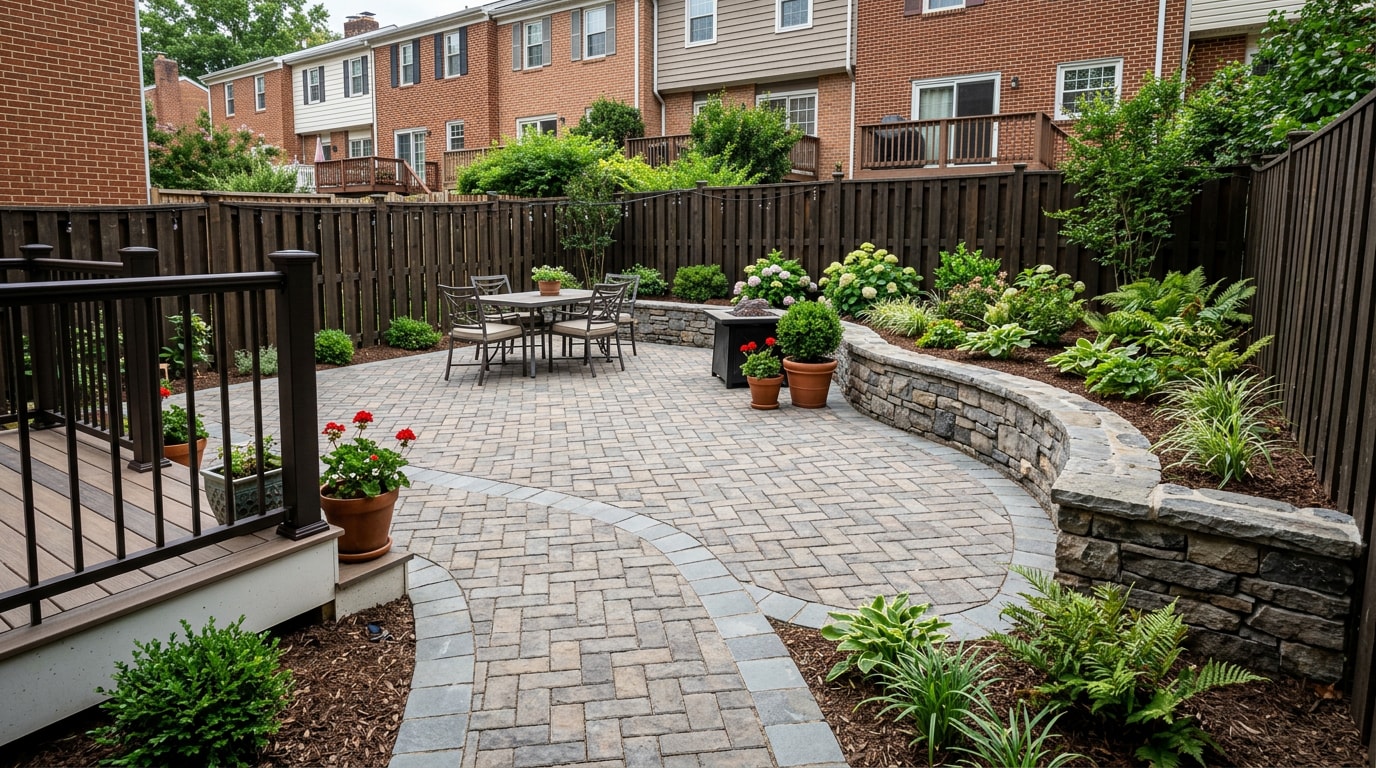
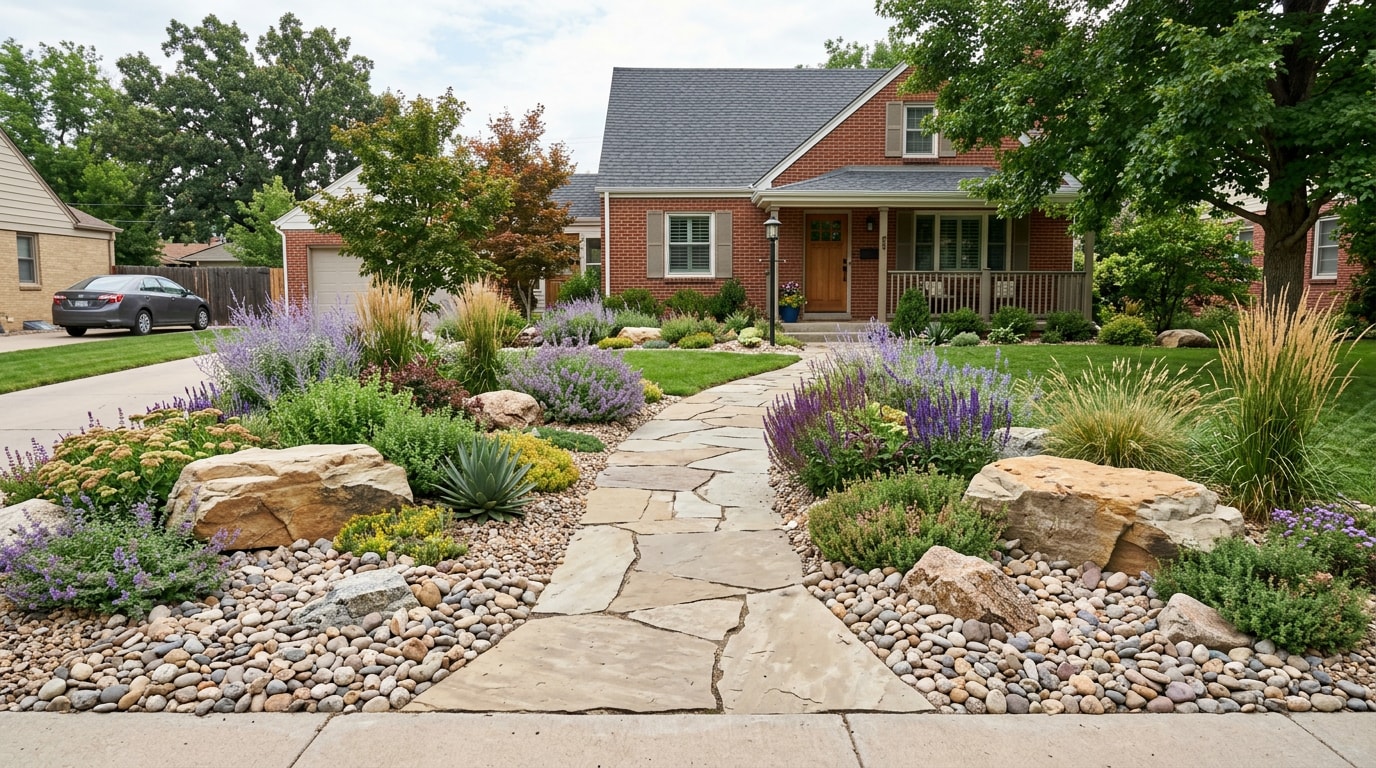
Front yard landscaping with large rocks in Fairfax, VA replaces thirsty turf with boulders, river rock, and stacked stone built for sloped, clay-heavy lots. Done right, it cuts mowing, slows erosion, and gives a flat yard real structure. This guide covers the design ideas, rock types, real costs, and the permit rules Fairfax County enforces before material gets delivered.
On the sloped, clay-dense lots we regrade and build on across Fairfax County, rock almost always outperforms turf on the parts of a yard that fight drainage or grade. That's the starting point for everything below.
Visit CM Hardscapes to see our services and request a free estimate.
Why Rock Works on Fairfax Front Yards
Homeowners swap grass and mulch for rock for a few practical reasons: less upkeep, better drainage, and a design that holds its shape through every season.
- Less maintenance. No mowing, no weekly watering, no yearly mulch top-off.
- Erosion control. Large rock anchors soil on slopes that wash out during heavy rain.
- Year-round structure. Unlike grass, rock beds don't go dormant or go bare in winter.
The trade-off: rock adds less organic matter to the soil than mulch does, so nearby plantings may need a bit more fertilizer over time. For homeowners tired of constant lawn care, that's usually a fair swap.
Types of Landscaping Rock for a Front Yard
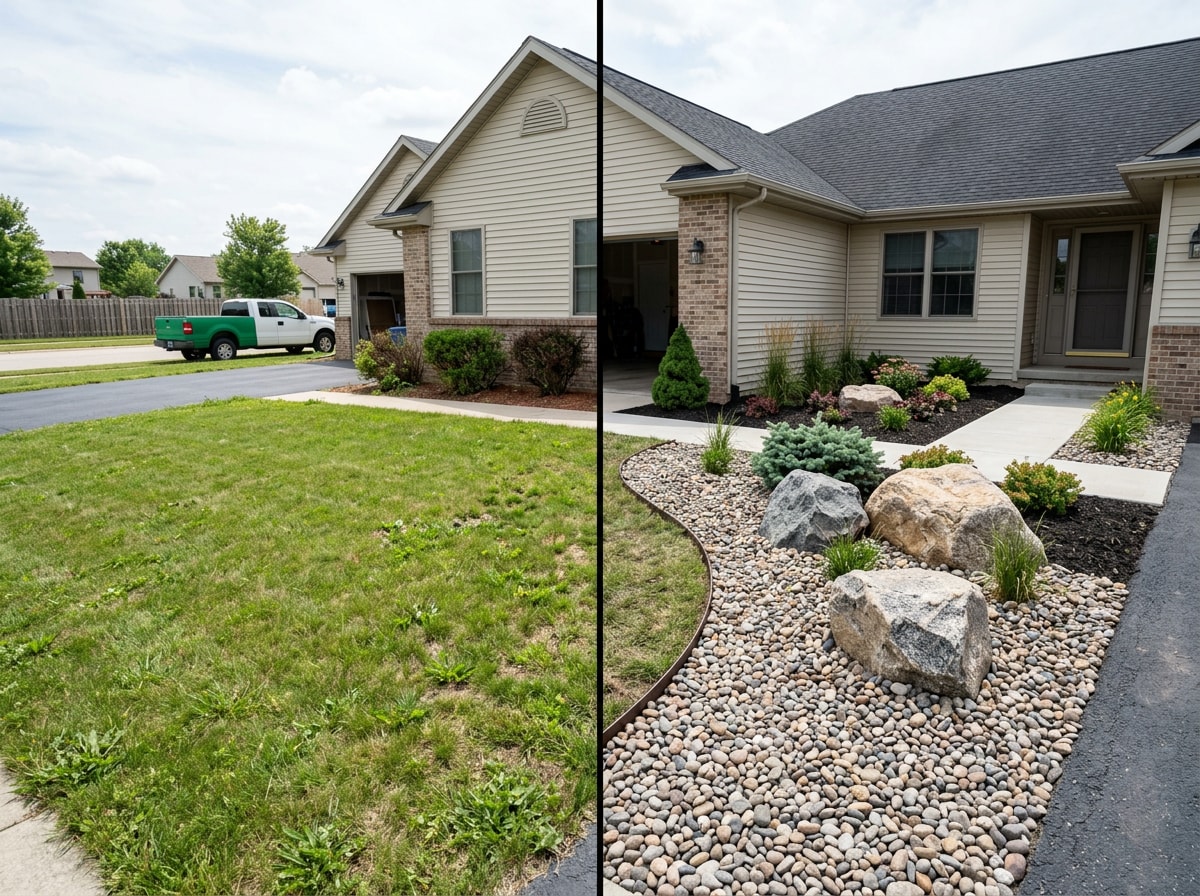
Rock size should scale with the yard itself. Small front entries usually look best with a mix of flagstone and medium river rock, while wider lots can support full-size boulders as a true centerpiece without looking out of proportion.
| Rock Type | Best Use in a Front Yard | Scale |
|---|---|---|
| Boulders | Focal points, retaining walls, slope anchors | Large |
| River rock | Ground cover, dry creek beds, bed fill | Medium |
| Flagstone | Stepping-stone paths, flat steps | Medium-flat |
| Pea gravel | Fill around boulders, planter tops | Small |
| Lava rock | Accent color, mulch alternative | Small |
Mixing one or two large anchor stones with smaller fill rock reads as intentional design rather than material dropped near the curb by a truck. A hardscape contractor can match rock type and size to your lot before anything gets delivered, and our river rock landscaping guide goes deeper on sizing river rock for drainage-heavy beds.
Front Yard Rock Landscaping Ideas That Work in Fairfax
Most Fairfax-area projects fall into four categories: retaining walls, paths or steps, boulder focal points, and layered rock gardens. Each solves a different problem, from managing a slope to adding visual interest to a flat bed.
Build a Rock Retaining Wall
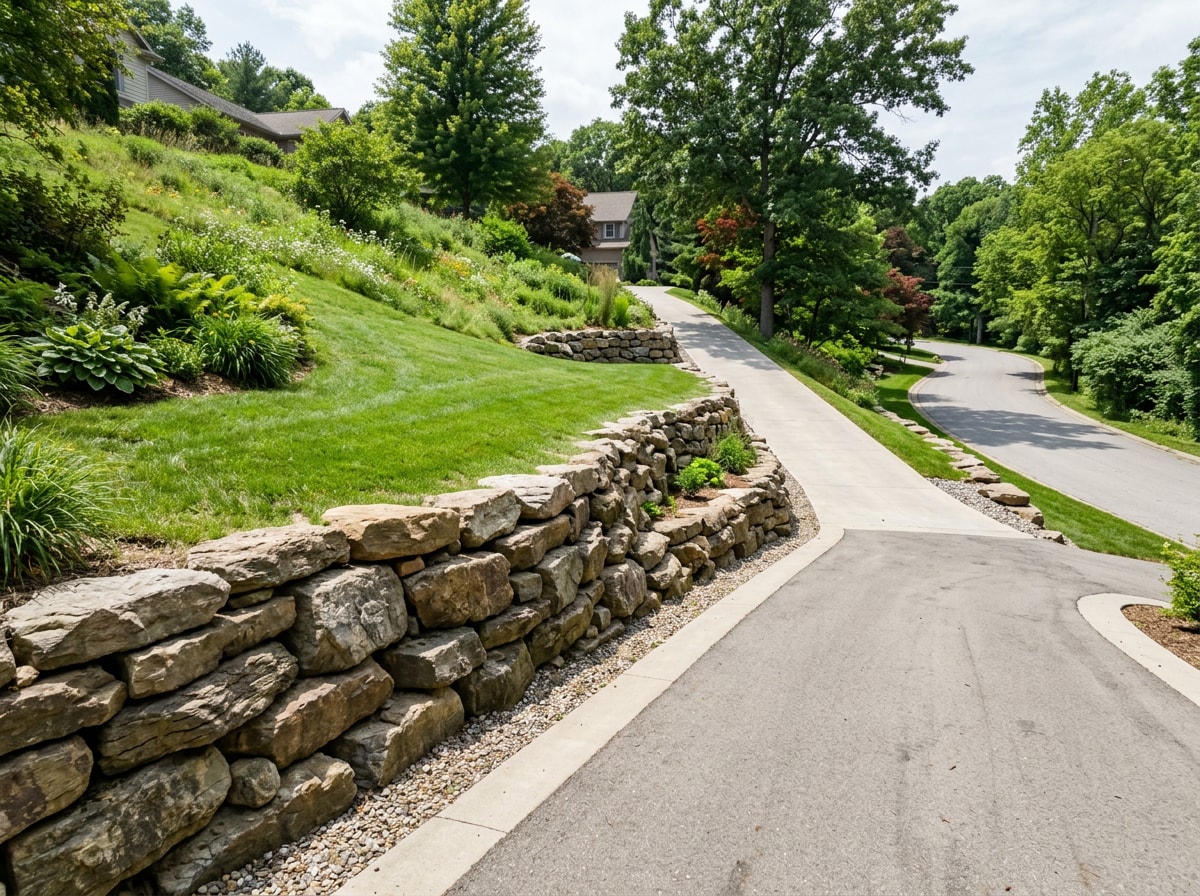
A rock retaining wall uses stacked boulders or large river rock to hold back soil on a sloped yard while adding real curb appeal. It's one of the most common fixes for Fairfax lots where the front yard slopes toward the street or driveway.
Wall height changes what's required before you dig. A retaining wall installation over a couple of feet needs drainage behind the stone, and taller walls may need an engineered design depending on local code (more on permits below).
Use Large Rocks to Create a Path or Steps
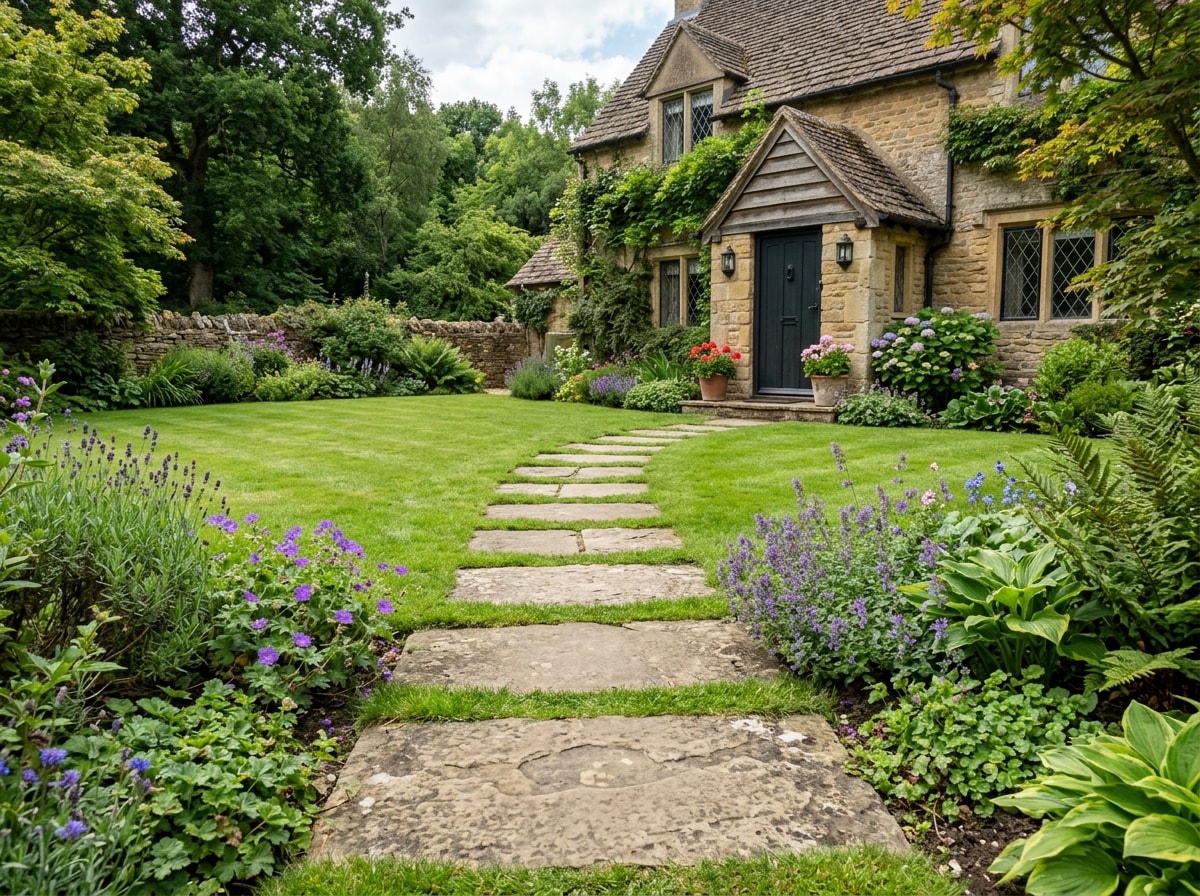
Flat, large rocks make a natural stepping-stone path to the front door, and the same approach adapts into rock steps on a sloped walkway. Stepping stones should be large enough to fit a full stride comfortably and spaced so walking feels natural, not like a hop.
On slopes, each stone needs a stable base beneath it so it doesn't shift underfoot. A walkway installation professional sets a compacted base first; for taller stepped grades, steps and stoops installation uses the same base-first principle at a steeper pitch.
Create a Boulder Focal Point
One large, uniquely shaped boulder can anchor a front yard design even before plantings go in. Smaller boulder clusters tucked into flowerbeds give winter beds year-round visual weight.
Pair an accent boulder with low-growing plants around its base so the stone looks settled into the landscape instead of simply set on top of the soil. This is where stone masonry work, like a short stacked-stone surround, elevates a single boulder into a real design feature.
Plant a Layered Rock Garden
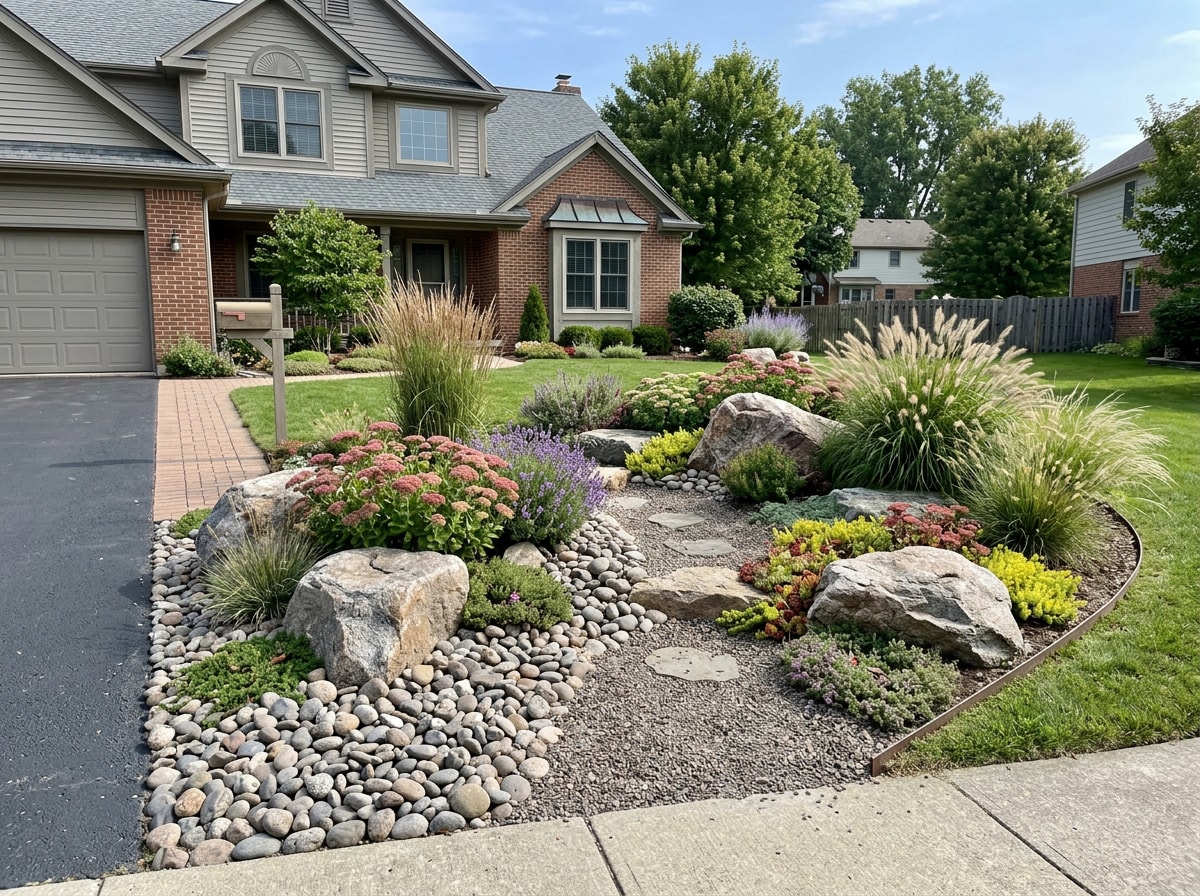
A layered rock garden combines large rocks, river rock, and smaller stones with drought-tolerant plants for a textured, low-water bed. The layering, from boulders down to gravel, gives the eye several points of interest instead of one flat surface.
A sunny spot usually works best, since most drought-tolerant plants need full sun. Two or three boulders are typically enough to anchor the whole design without crowding the bed.
Budgeting for a Rock Front Yard
Landscaping rock is typically priced by the ton for river rock and gravel, while boulders are priced individually by size and shape. Delivery is almost always a separate line item, and it adds up fast on properties with tight or hard-to-reach driveways.
Bulk river rock and gravel generally run in the range of $45 to $110 per ton delivered in this region. Individual boulders can range from roughly $100 to $600 or more apiece, depending on size. A small accent bed might only need a half-ton to a ton of material. Converting a full front yard away from grass can require several tons plus multiple boulders.
| Project Scope | Typical Material Needed | Rough Cost Range |
|---|---|---|
| Small accent bed | 0.5–1 ton rock + 1–2 boulders | $150–$800 |
| Full front yard conversion | 4–8 tons rock + 3–6 boulders | $1,800–$5,500+ |
These figures shift with rock type, delivery distance, and labor if a contractor handles installation. Want an exact number for your lot? Get a free estimate before you order material.
Permits and Local Code in Fairfax County
This is the part most rock landscaping guides skip, and it's the step that causes the most rework when it's ignored. Wall height determines whether you need a permit before you build.
In Fairfax County, a residential retaining wall holding back more than 3 feet of earth but less than 4 feet needs a building permit. Construction of a residential retaining wall retaining more than 3 feet of earth but less than 4 feet requires a permit, and if it's over 4 feet, it follows the commercial retaining wall process. That commercial process calls for engineered plans rather than a standard homeowner permit.
A few practical notes before you dig:
- Wall height is measured from the bottom of the footing to the top of the wall, not just the exposed face.
- HOA communities often layer their own architectural review on top of county rules.
- Short accent walls under 3 feet generally skip the permit step entirely.
Check with Fairfax County's land development office before committing to a wall height, especially if the slope is steep or the wall holds back a driveway.
Tips for Installing Rock in Your Front Yard
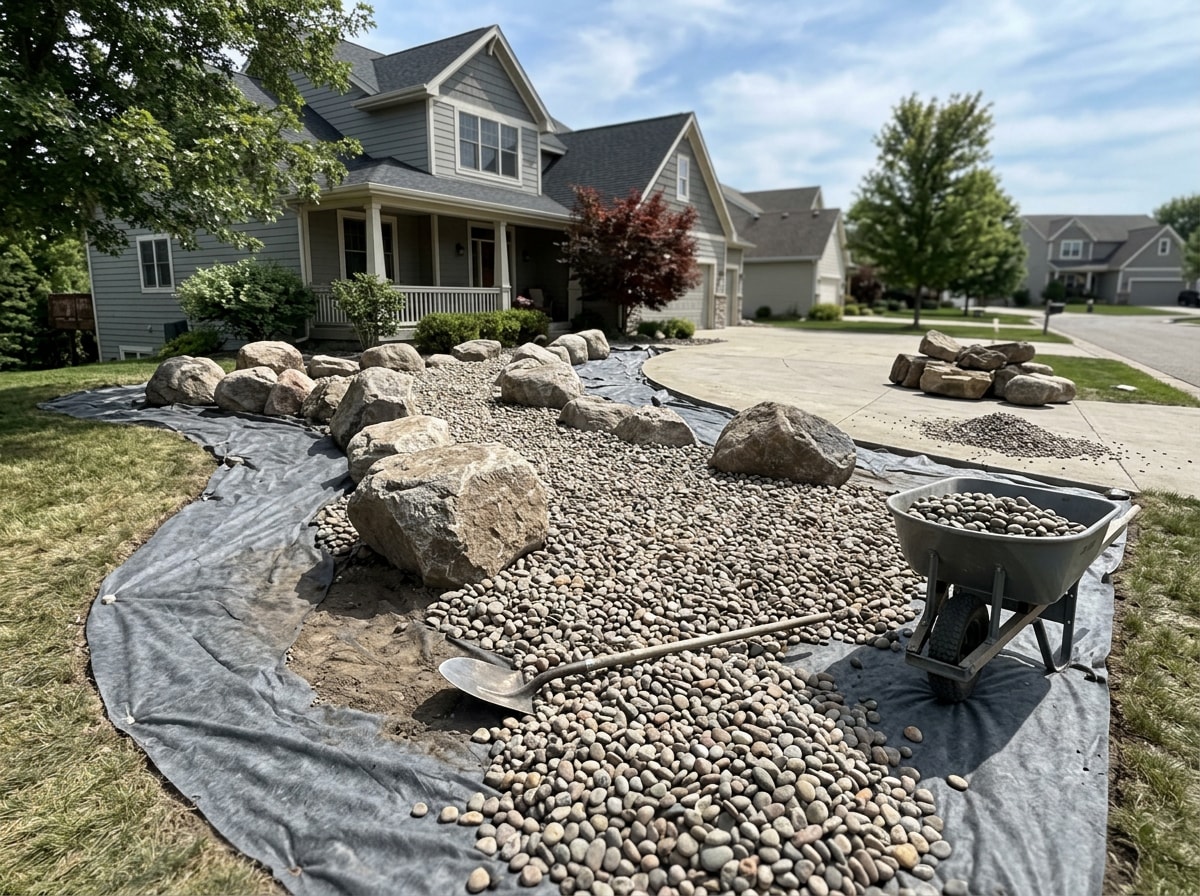
Installing a rock front yard follows the same basic sequence as any landscape project, with a handful of rock-specific steps worth getting right the first time.
- Measure and sketch the area to estimate rock and boulder quantities.
- Clear existing grass or mulch and grade the soil for proper drainage.
- Lay landscape fabric to slow weed growth beneath the rock layer.
- Set large boulders and anchor stones first, before filling in smaller rock.
- Fill around the anchors with river rock or gravel, then set edging to hold the line.
Starting with anchor stones and filling in afterward, rather than dumping all the material at once, is what keeps a finished rock yard looking deliberate instead of dropped in by a truck. Fairfax's heavier soils compound this: clay soil is very thick, like putty, and holds water like a sponge, but when it dries out it becomes hard and solid. That's exactly why grading and fabric placement matter more here than in lighter, sandier soil.
Common Problems and How to Avoid Them
The most common complaints are weeds working through landscape fabric over time, rock shifting out of its borders, and heat building up near plants or foundations.
- Weeds in the fabric. A test patch and a thicker rock layer slow regrowth, though no fabric stops weeds forever.
- Migrating rock. A staked edge line set before material arrives keeps rock off walkways and lawn.
- Heat near the house.
Conventional human-made materials used in outdoor environments tend to reflect less solar energy and absorb and emit more of the sun's heat compared to natural surfaces like soil and plants. Dark rock set close to a foundation or tender plants behaves the same way on hot days.
Choosing lighter-colored stone or keeping a planting buffer near the house reduces that heat effect.
Maintenance and Upkeep
Ongoing care for a rock landscape mostly comes down to occasional debris removal, periodic pressure washing to restore color, and re-leveling stones that shift after heavy rain. Fabric edges may also need refreshing every several years as they wear.
Compared to mulch, which typically needs replacing every year or two, rock landscaping maintenance is far less frequent and less physically demanding over the long run. If boulders settle unevenly or a stacked stone edge loosens, masonry repair can reset them without rebuilding the whole bed.
Rock, Trends, and Property Value
An all-rock yard with no plantings can hurt curb appeal and resale value, since it reads as low-effort rather than intentional. The homes that benefit most from rock use it for structure, walls, paths, beds, while keeping lawn or plantings in proportion.
A practical rule: let rock define edges, slopes, and focal points, and let plants fill the rest. That balance is what separates a front yard that adds value from one that just swaps one maintenance headache for another. If you're planning a full front-of-house redesign rather than a single rock feature, our front garden design guide covers how rock, planting beds, and hardscape fit together.
Ready to plan your layout? Get a free estimate and we'll walk your lot, flag any permit thresholds, and price the rock and hardscape work together. You can also see finished examples in our project gallery.
FAQ
How much does front yard rock landscaping cost?
Most Fairfax-area projects range from a few hundred dollars for a small accent bed to several thousand for a full front yard conversion with boulders. See the budgeting table above for a breakdown by project size.
Is rock landscaping cheaper than mulch over time?
Rock costs more upfront than mulch, but it isn't replenished every year or two like mulch is. Over several years, rock typically works out cheaper since the material itself rarely needs replacing.
How many tons of rock do I need?
As a rough rule of thumb, one ton of landscaping rock covers about 100 square feet at a 2-inch depth, or roughly 75 square feet at a 3-inch depth. Measure your bed's square footage first to estimate tonnage before ordering.
Can I mix different types of rocks in my front yard landscaping?
Yes. Mixing rock types is common and often looks better than one uniform material. The layered rock garden approach above shows how to combine boulders, river rock, and smaller stones without the bed looking cluttered.
Do I need a permit for a rock retaining wall in Fairfax County?
Only if it holds back more than 3 feet of soil. Below that height, most residential walls don't need a permit; at 4 feet and above, the county requires engineered plans.