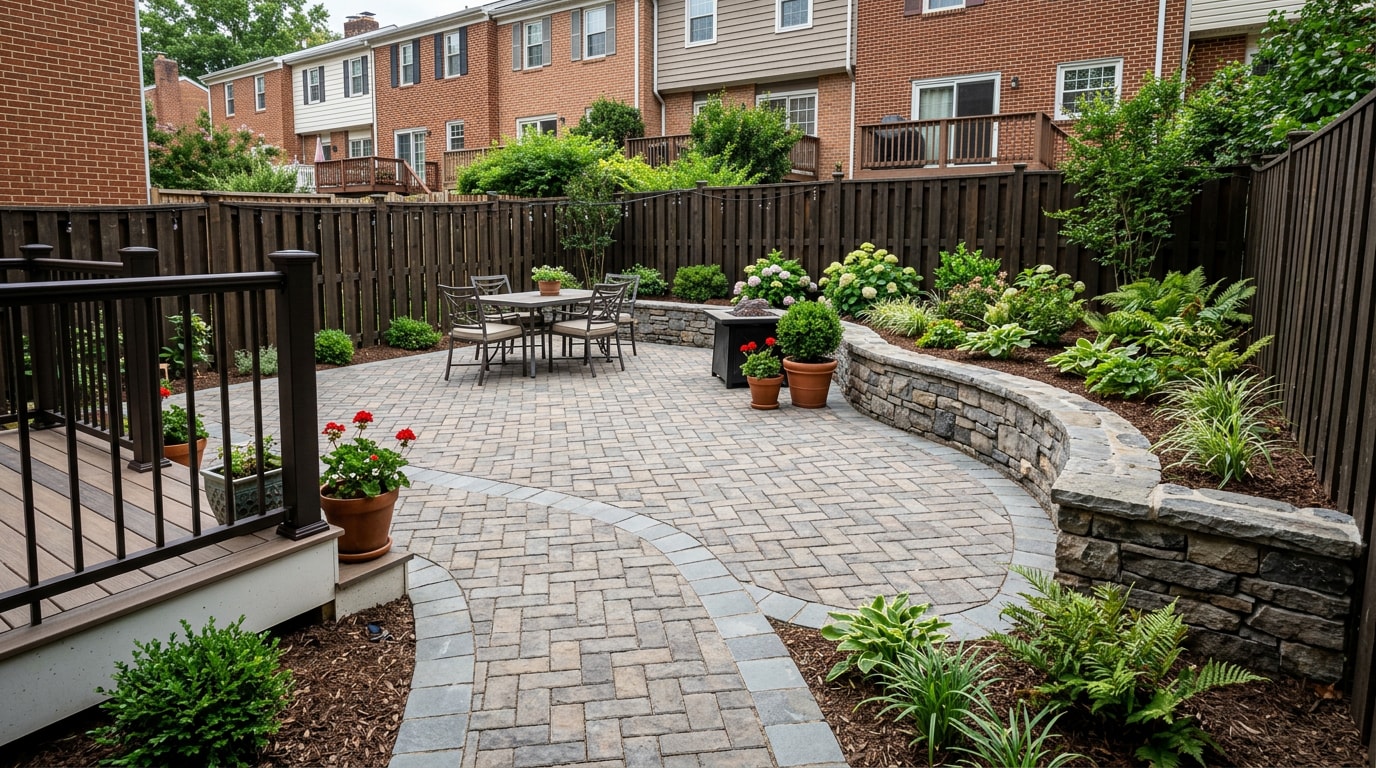
Best garden edging in Fairfax County, VA comes down to three questions: what are you stopping, what's your budget, and how much upkeep do you want. Clay soil and freeze-thaw winters here punish a weak border faster than in milder climates, so the wrong material choice often means redoing the job within a couple of seasons. This guide breaks down cost, lifespan, and install difficulty for every edging type sold in Northern Virginia so you can match a material to your yard instead of guessing.
Quick Answer: Which Garden Edging Is Best?
For most Fairfax County yards, steel or aluminum edging offers the best balance of cost, durability, and looks. It costs more than plastic but outlasts it by more than a decade, and it costs less than brick or stone while still holding a clean line through winter heave.
Match the material to the job instead:
- Stopping aggressive turf or tree roots: steel, aluminum, or poured concrete
- Classic, high-end curb appeal: brick, paver, or natural stone
- Fast, budget-friendly bed borders: no-dig plastic or composite
- Narrow side yards or pet runs: recycled rubber
The full cost table and climate notes for Fairfax County clay soil are below.
What Is Garden Edging (and Why It Matters)?
Garden edging is a physical barrier, usually metal, stone, brick, wood, or plastic, that separates your lawn from flower beds, mulch, and walkways. It keeps mulch from washing into the grass, stops turf from creeping into beds, and gives a property a finished, professional look.
A clean lawn border also makes mowing and trimming easier, since you're not fighting plants that spill over into the grass. A deep, rigid border does the heavy lifting of blocking roots and runners, while a decorative edge mostly adds visual structure. Many yards benefit from a mix of both.
For a closer look at how edging fits into a larger hardscape plan, see our hardscape contractor services page.
Types of Garden Edging Materials
Fairfax County's clay-heavy soil, freeze-thaw winters, and HOA aesthetic rules all influence which edging material makes sense. The sections below cover the main categories, from budget-friendly plastic to long-lasting stone, so you can match a material to your yard and your neighborhood's standards.
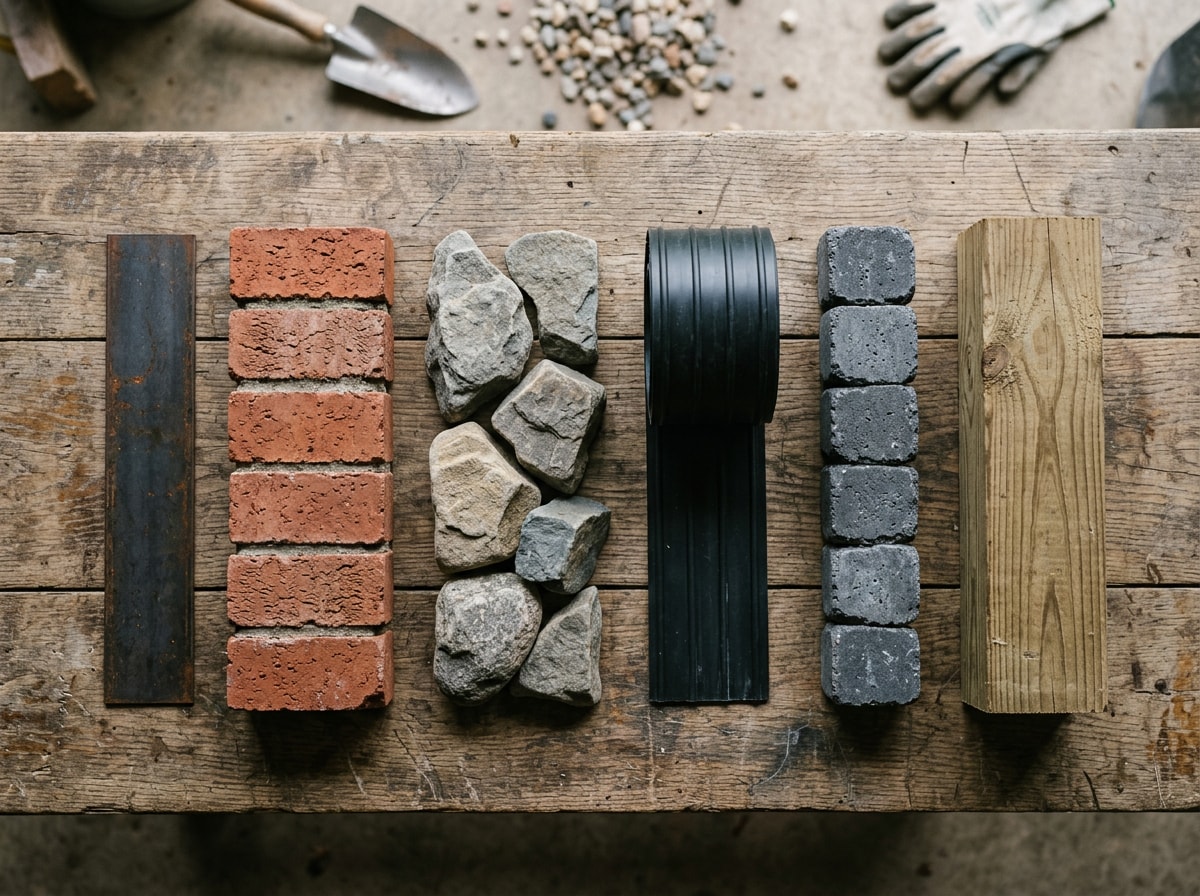
Metal & Aluminum Edging
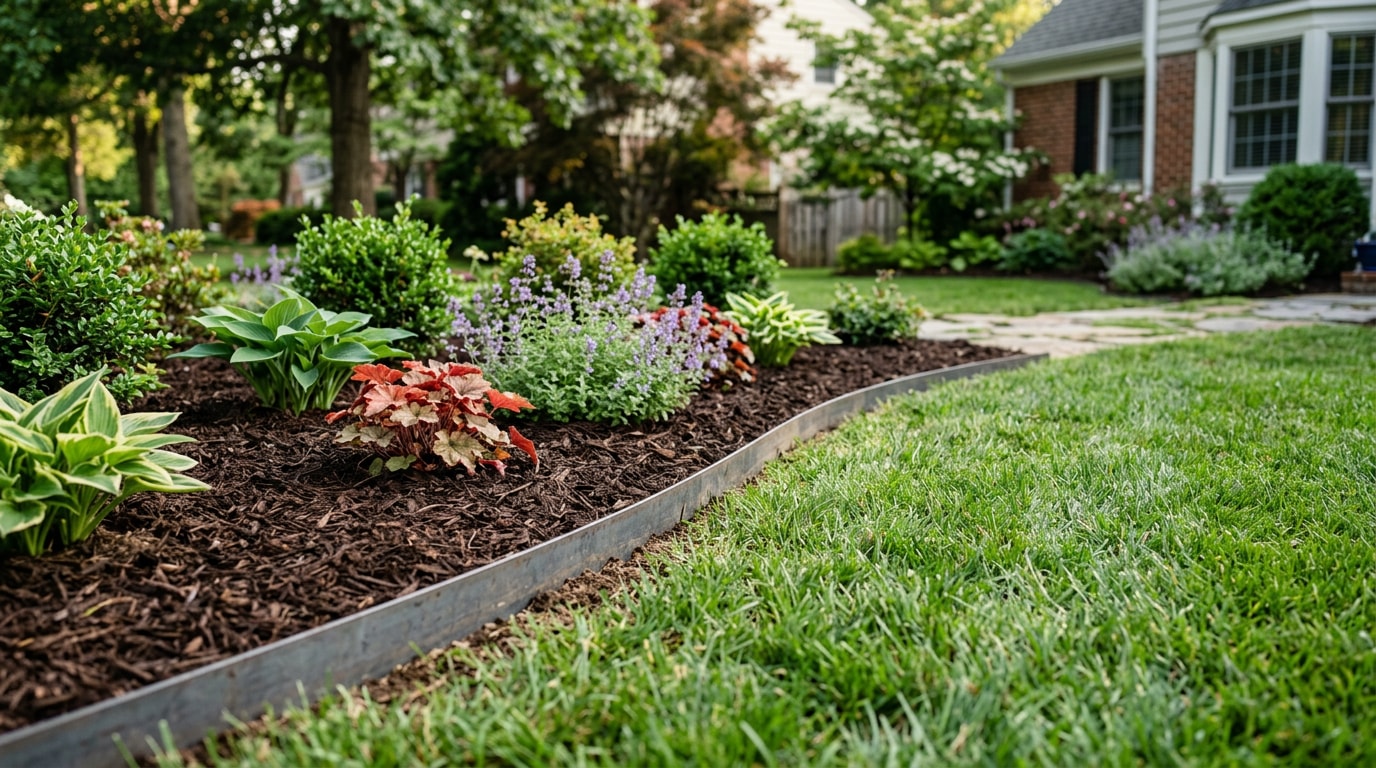
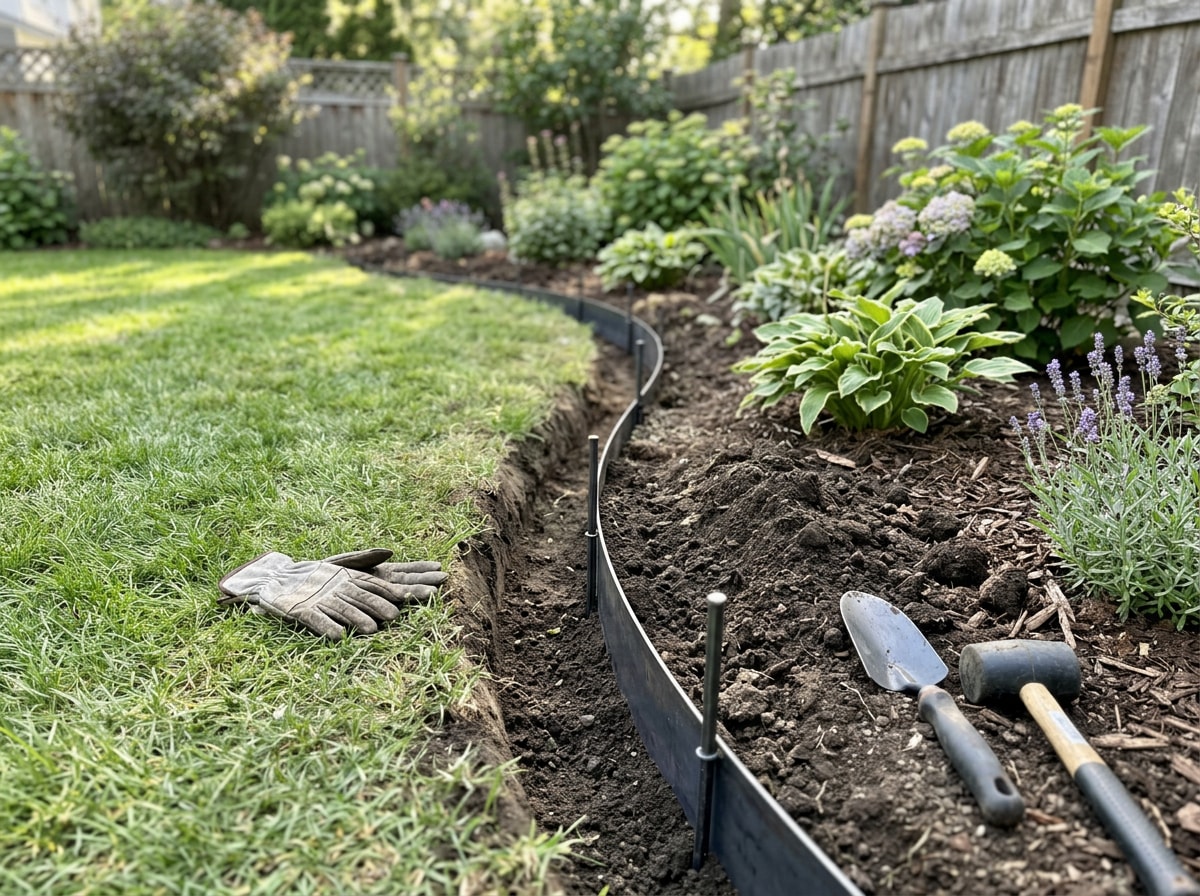
Steel and aluminum edging share the same basic appeal: a thin, nearly invisible line that holds a crisp curve. Steel is heavier and more rigid, which makes it better at resisting lawn mower nicks and soil movement over time. Aluminum is lighter and easier for a homeowner to bend into tight curves, though it can dent more easily.
Both metals hold up well against aggressive grass and root systems. That durability is part of why metal edging is a popular choice among pros working on established lawns.
Brick & Paver Edging
Brick is one of the most common edging choices, and for good reason. A row of bricks set on their side or at an angle creates a clean dividing line between lawn and flower beds, with a traditional look that suits many Fairfax County home styles.
Paver and concrete block edging work the same way but offer more color and shape options, from straight-edged pavers to scalloped concrete pieces. Both need a stable, compacted base to prevent shifting after freeze-thaw cycles, which is a real factor in this region. For a deeper look at costs and install steps, see our guide to brick edging for landscaping.
Natural Stone Edging
Natural stone edging uses irregular fieldstone, flagstone, or cut edging stones instead of uniform bricks or blocks. This gives beds a softer, more organic border that reads as less formal than brick.
Stone edging fits cottage gardens, native plant beds, and wooded lots particularly well. It's heavier to install than most alternatives, which adds labor cost, but a well-set stone border rarely needs replacing. If you want something taller than a flat border, a dry-stacked or mortared garden wall adds structure a simple edge can't.
Concrete Edging
Concrete edging comes in two main forms: poured curbing shaped on-site, and pre-cast concrete blocks that install like oversized bricks. Poured curbing creates a continuous, seamless line with no gaps for weeds or grass to sneak through.
One practical tip applies to pre-cast concrete products: color can vary slightly from batch to batch, so buy all the pieces needed for a project at one time. Concrete is one of the more permanent options on this list, which matters when weighing upfront cost against decades of use.
Plastic, Composite & Rubber Edging
Plastic and composite rolled edging are usually the cheapest way to create a lawn border, and newer no-dig versions use stakes instead of a trench, cutting installation time significantly. Recycled rubber edging is a step up in durability and works well next to driveways, sidewalks, planting beds, or around trees.
Rubber flexes instead of cracking, which makes it a solid pick for areas under fences or around flower beds. The tradeoff with all synthetic options is a shorter lifespan compared to metal, stone, or concrete.
Wood & Timber Edging
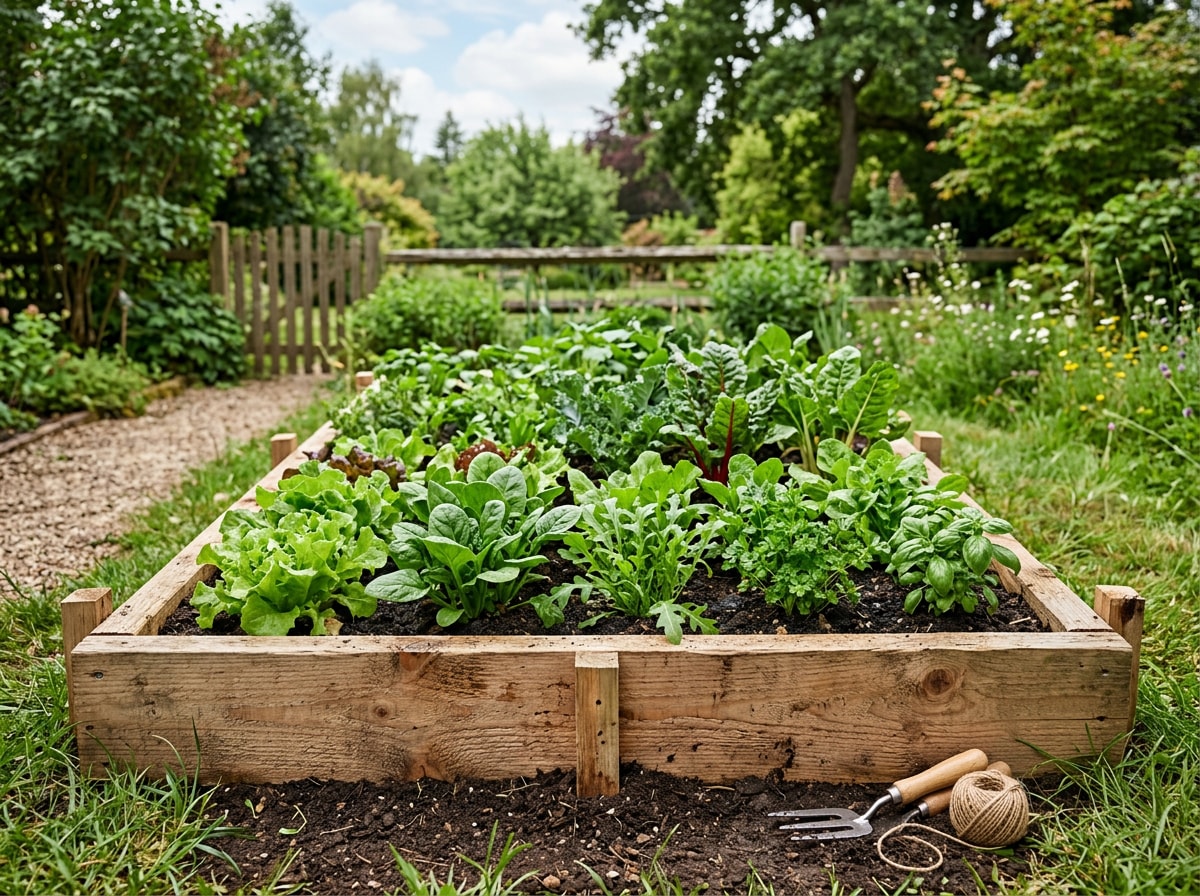
Landscape timbers and cedar boards bring a warm, natural look that pairs well with rustic or cottage-style gardens. Wood edging is relatively inexpensive and easy to cut to custom shapes, but it will eventually rot, especially in Fairfax County's humid summers.
If you're edging a vegetable or herb bed with pressure-treated lumber, plant a few inches back from the boards rather than right against them. The EPA's background on chromated arsenicals in treated wood explains what modern treatments are approved for residential and garden use and why older CCA-treated wood gets handled differently.
Cost Comparison by Material (2026)
Material choice affects both the upfront bill and how often you'll replace the border. The table below reflects typical regional price ranges for materials only; installation labor is separate and varies by yard size and soil conditions.
| Material | Cost per Linear Foot (Materials) | DIY Difficulty | Lifespan |
|---|---|---|---|
| Plastic/Composite | $1–$3 | Easy | 3–7 years |
| Wood/Timber | $3–$6 | Moderate | 5–10 years |
| Metal (Steel/Aluminum) | $4–$9 | Moderate | 15–20+ years |
| Rubber | $2–$6 | Easy | 8–12 years |
| Brick/Paver | $4–$12 | Difficult | 25+ years |
| Natural Stone | $8–$20 | Difficult | 25+ years |
| Concrete (poured/pre-cast) | $6–$16 | Difficult | 25–30+ years |
Steel and aluminum edging wins on value for a typical Fairfax County lot: it costs less than stone or brick but outlasts plastic and wood by a wide margin. Material pricing moves with steel and lumber markets throughout the year, so check the Bureau of Labor Statistics' Producer Price Index before budgeting a larger project; steel mill products and lumber have moved in opposite directions in recent months.
Durability & Local Climate Considerations for Fairfax County
Garden edging in Fairfax County has to handle seasonal heavy rain, winter freeze-thaw cycles, and dense clay soil, all of which can shift or heave a poorly installed border within a year or two. Properties here also tend to feature large lots, mature trees, and naturalistic landscape layouts, which affects how much edging a typical yard needs.
Virginia's own geological survey flags parts of the Commonwealth, including basins and valley areas not far from Fairfax County, as more prone to expansive, frost-heave-susceptible soils than the state average. On properties we've worked across Vienna, McLean, and Great Falls, the edging that fails first is almost always set shallow, two inches deep or less, directly into uncompacted clay; a border bedded on a compacted gravel base holds its line through far more winters than one just pressed into native soil.
Homeowners throughout the county should factor this into material choice. Check our Fairfax County service area page for notes specific to your neighborhood, or request a free on-site evaluation if you're not sure how your soil will behave.
How to Choose the Right Edging for Your Yard
A strong decision starts with three questions: What is the edge's main job, what's the budget, and how much maintenance are you willing to do? If the goal is stopping aggressive turf like Bermuda or zoysia from invading a bed, choose a deep, rigid barrier such as steel, aluminum, or concrete. If the edge is purely visual, a simple trench or a lighter material may be enough.
Matching material to use-case also matters:
- Flower bed borders do well with metal, brick, or stone.
- Driveway and walkway edges benefit from concrete or paver styles that handle foot traffic and occasional vehicle overhang; our walkway installation) page covers base prep for paths that double as a border.
- Budget projects or temporary beds are reasonable fits for plastic or no-dig composite edging.
How to Install Garden Edging
Even premium materials fail early if installation is rushed. Most installs follow the same general sequence:
- Mark the layout with a hose or spray paint.
- Dig a trench to the material's required depth.
- Set the edging so it's level or follows a consistent grade.
- Backfill and compact the soil on both sides.
DIY installation works well for no-dig plastic, rubber, and some wood projects, since the tools needed are usually just a spade, a mallet, and stakes. Metal, poured concrete, stone, and brick installs require more precise grading and compaction equipment, and mistakes are harder to fix after the fact.
For larger properties or materials with a steep learning curve, it's often worth calling in help rather than redoing a section twice. You can see examples of completed edging and border work on our homepage.
Ready to move forward with a quote tailored to your yard? Contact our team for a free garden edging estimate.
FAQ
What Is the Best Material for Garden Edging?
For most homeowners, steel or aluminum offers the best mix of clean looks, durability, and value. Stone and brick suit traditional styles and last longer, but cost more upfront. Plastic is the cheapest option available, though it also has the shortest lifespan of any common material.
How Deep Should Garden Edging Be Installed?
Most garden edging should be buried 4 to 6 inches deep, though deeper installs resist root intrusion and frost heave better. In Fairfax County's freeze-thaw climate, shallow edging is more likely to shift or lift out of the ground within a few winters.
How Long Does Garden Edging Last?
Lifespan varies widely by material: plastic typically lasts 3 to 7 years, wood 5 to 10 years, aluminum and steel 15 to 20-plus years, and stone, brick, or concrete often 25 years or more with proper installation.
What's the Cheapest Way to Edge a Garden Bed?
A hand-cut spade trench costs nothing but needs re-cutting every season. Among physical barriers, roll-out plastic edging is the lowest-cost product you can buy, typically a few dollars per linear foot before labor.
Can I Install Garden Edging Myself?
Yes, for several materials. No-dig plastic, composite, and rubber edging can be installed without trenching, making them manageable DIY projects. Metal, stone, brick, and concrete generally require a trench, a compacted base, and more precise grading work.
Does Garden Edging Increase Property Value?
Garden edging can support curb appeal and make landscaping look more maintained, which buyers often notice. It's not a guaranteed dollar-for-dollar return, but a clean, well-defined lawn border is a low-cost way to make a property show better.