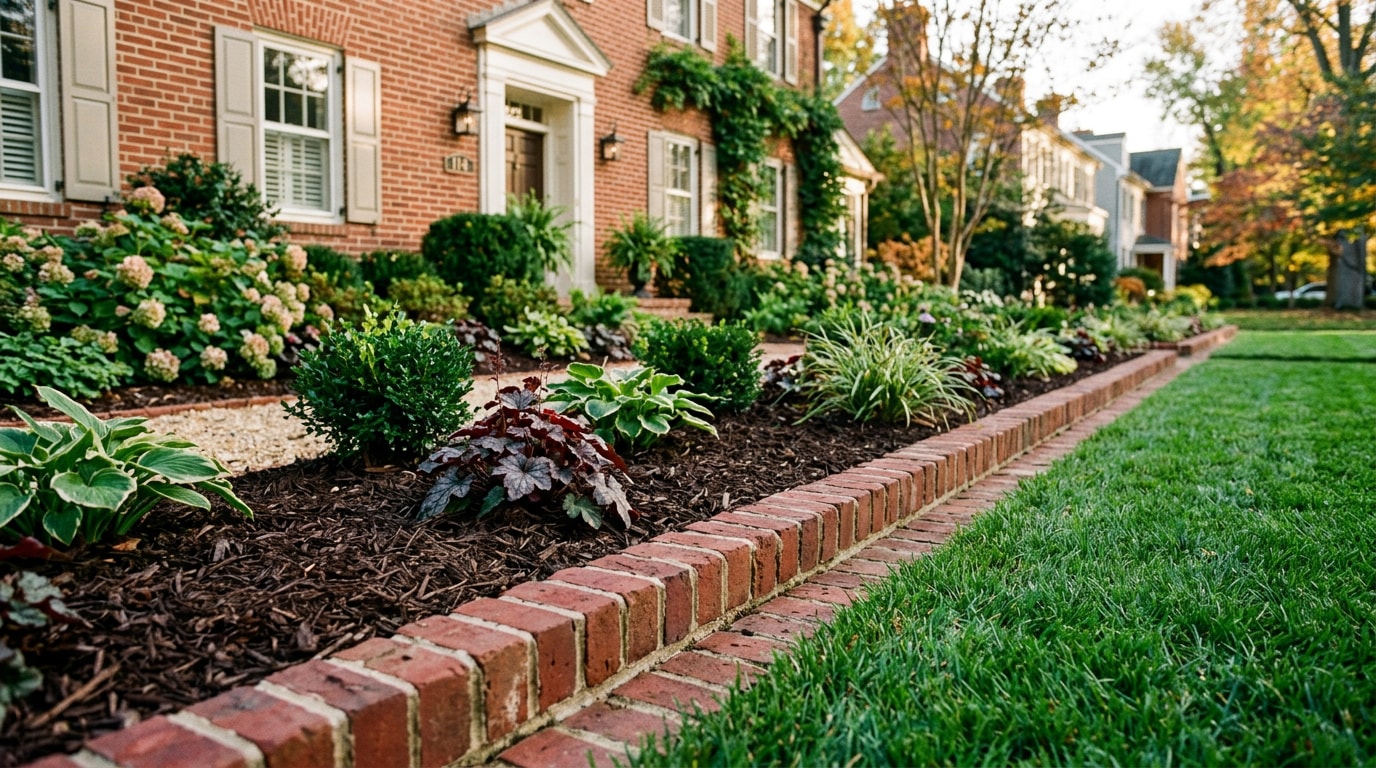
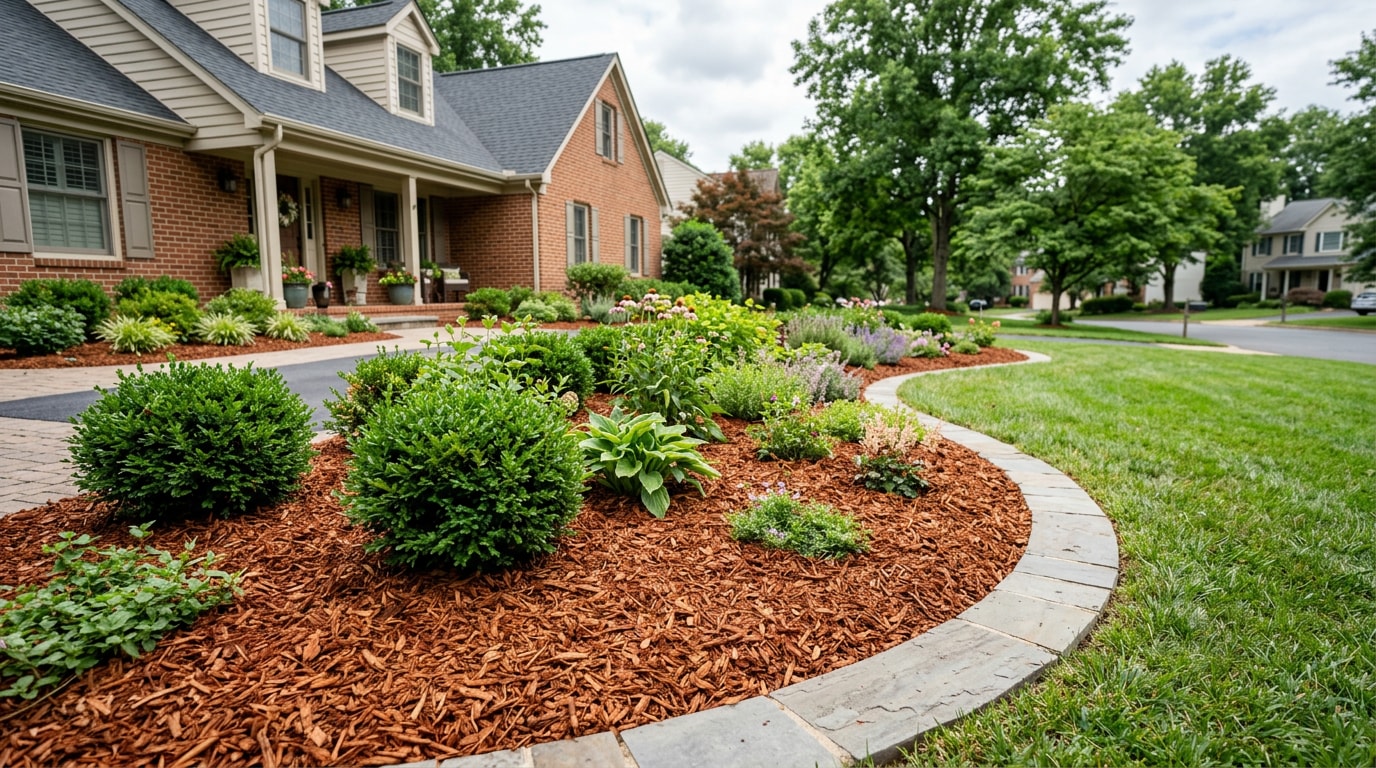
Cedar chips for yard Fairfax, VA landscaping show up everywhere right now, from walkway borders in Vienna to shade beds in Burke. This reddish-brown mulch deters a handful of common pests, slows evaporation through Northern Virginia's sticky summers, and holds its shape longer than cheaper softwood blends. Before you order a truckload, here's what actually works, what doesn't, and what it costs.
What Are Cedar Chips?
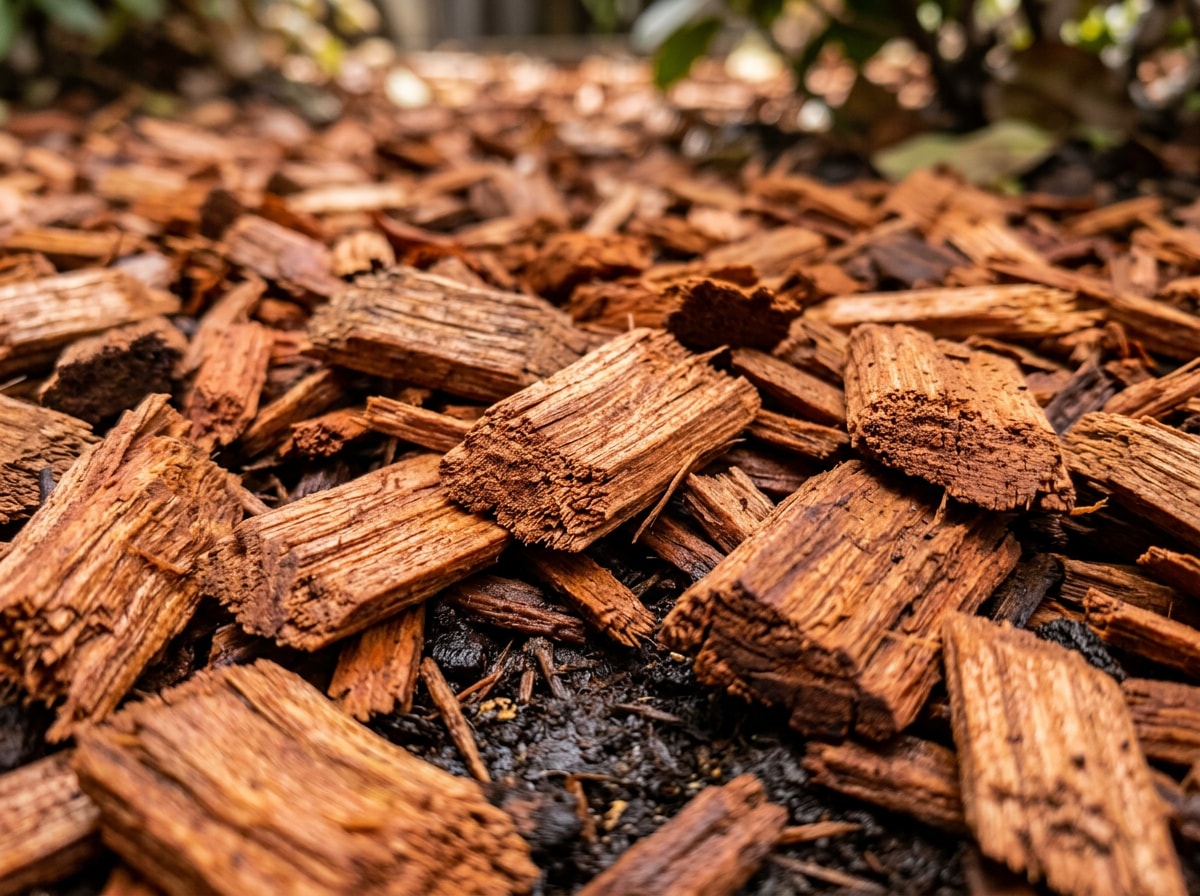
Cedar chips are chunky pieces of shredded or chipped cedar wood, typically cut from Eastern red cedar or white cedar trees. They carry a reddish-brown hue, a distinct woodsy aroma, and serve mainly as landscape mulch or decorative ground cover around beds, trees, and pathways.
Local suppliers usually stock two forms. Coarser cedar wood chips break down slowly and stay put in wind and rain. Finer shredded cedar bark packs down tighter and knits together after a storm. Both show up at garden centers across Fairfax County.
Benefits of Cedar Chips in a Fairfax Yard
Homeowners pick cedar over bargain-bin mulch for a few repeat reasons: pest resistance, water savings, steadier soil temperatures, and a finished look that outlasts dyed alternatives.
Natural Insect and Pest Deterrent
Cedar's reputation as a bug deterrent isn't just folklore. Research from the USDA Agricultural Research Service found that cedarwood oil has been shown to be repellent to several species of ants, including red imported fire ants and little fire ants . The same research notes the cedarwood oil is toxic to black-legged ticks, brown dog ticks, lone star ticks, houseflies and several species of mosquitoes , which matters in a region where tick checks are part of summer routine.
These effects come from aromatic compounds like thujone and cedrol, the same ones that make cedar closets unfriendly to clothes moths. The protection isn't permanent and it isn't total. Cedar mulch is a deterrent, not a barrier, but for homeowners trying to cut back on chemical pest treatments near plantings, it's a reasonable first line of defense.
Moisture Retention During Northern Virginia Summers
A 2 to 4 inch layer of cedar chips slows evaporation from the soil surface. That matters here: the total annual precipitation quantity in Fairfax County is currently approximately 42 inches, based on data from 1991 to 2020 , but most of it doesn't fall evenly. Summer stretches can go dry and hot fast, and a mulched bed buys your plants time between waterings.
Beds mulched with cedar generally need less frequent watering than bare soil, since the chips shade roots and trap humidity underneath. It's a simple upgrade that doesn't require touching your irrigation setup.
Temperature Buffering for Roots
Fairfax summers run hot. July is the hottest month with a current average maximum temperature of 87°F in the county, and pavement-adjacent beds run even warmer. A cedar mulch layer insulates roots from that heat spike, and it does the same job in reverse during winter freeze-thaw cycles that can heave shallow-rooted perennials right out of the ground.
Steadier soil temperatures mean steadier plant growth through the season, with fewer stress-related die-offs during heat waves or cold snaps.
Long-Lasting, Natural Curb Appeal
Cedar's warm, reddish-brown tone gives beds a finished look without the artificial sheen of dyed mulch. It holds that look through more seasons than finer, faster-decomposing mulches, which matters for front-yard beds that are the first thing visitors see.
Pair cedar chips with a defined bed edge, and the whole yard reads more intentional. If you're already planning a broader refresh, our hardscape contractor services cover the structural side, walkways, edging, and retaining walls, that make mulched beds look designed rather than scattered.
Drawbacks to Consider
Cedar isn't flawless. The biggest trade-off is color fading. That rich reddish-brown mellows to gray within a year or so as UV exposure breaks down surface pigments, and the insect-repellent effect fades on a similar timeline as the aromatic oils evaporate.
Cedar also breaks down slowly, which is a feature for longevity but a drawback for soil building, it contributes organic matter more gradually than compost-based mulches. Gardeners sometimes worry about nitrogen tie-up at the soil-mulch interface during decomposition. University extension guidance suggests the concern is real but limited: cedar mulch is recognized as a legitimate mulch with benefits including moisture retention, weed suppression, and longevity without allelopathic effects, though there is some concern still on nitrogen being tied up in the decomposition of the chips .
None of this rules cedar out. It just means you're trading faster nutrient cycling for durability and pest resistance, a fair swap for most ornamental beds.
Cedar vs. Other Mulch Types
Cedar isn't the only mulch option in Fairfax yards. The right pick depends on your budget, your beds, and how much upkeep you're willing to do.
| Mulch Type | Decomposition Speed | Relative Cost | Weed Suppression | Best Use Case |
|---|---|---|---|---|
| Cedar chips | Slow | $$ to $$$ | Good | Beds, borders, high-visibility areas |
| Hardwood mulch | Fast | $ to $$ | Good | Vegetable gardens, fast-cycling beds |
| Pine bark/mulch | Moderate | $ | Moderate | Acid-loving plants, sloped beds |
| Rubber/playground mulch | Does not decompose | $$$ | Excellent | Play areas, non-planting zones |
Cedar's strength is longevity, not speed of nutrient release, a fair trade for most ornamental beds that don't need annual soil amendment.
How to Apply Cedar Chips the Right Way
Getting the depth and placement right determines whether cedar chips perform as promised or just look nice for one season.
Clear weeds and debris from the bed first. Then spread cedar chips following these general depths:
- Flower beds and perennials: 2 to 3 inches
- Shrubs and trees: 2 to 3 inches, extending wide
- High-traffic pathways: up to 4 inches
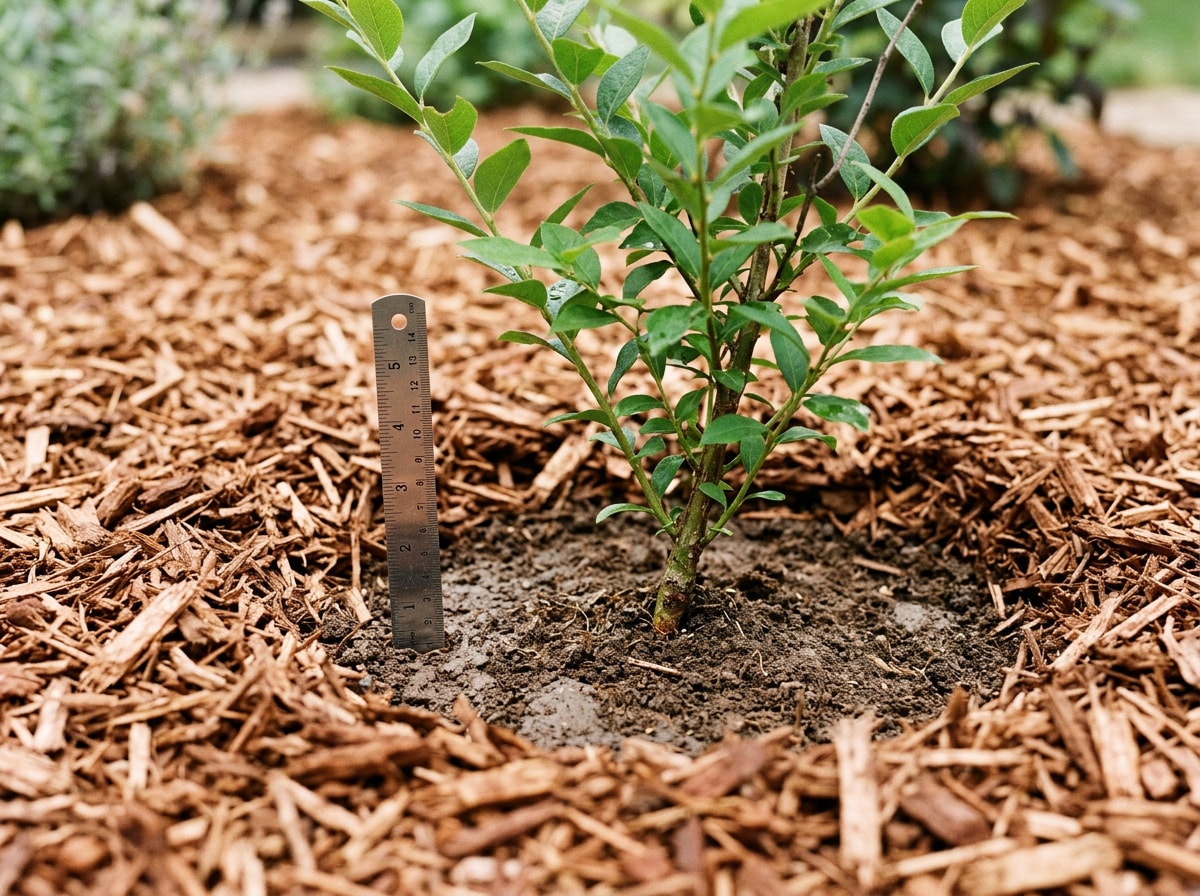
Virginia Cooperative Extension's mulching guidance backs this up directly: for trees and shrubs, apply a 2- to 3-inch layer extending at least 2 to 6 feet out from the tree trunk or shrub stems, and never pile mulch directly against the trunk or stems . For smaller plantings, the same guidance recommends a lighter touch: for smaller annual and perennial plants, apply a 1- to 2-inch layer extending 3 to 12 inches out from the plant's crown .
Keep mulch pulled back a few inches from stems and trunks. Piling it against bark traps moisture and invites rot and pests, a mistake we see constantly on properties around Fairfax County. Water the bed lightly after installation to help the layer settle.
Choosing Between Cedar Chips and Shredded Cedar
Chunky cedar chips hold up better in wind and heavy rain than finely shredded cedar bark, since larger pieces resist washing out of beds during seasonal storms. Shredded cedar mats together more tightly, which some homeowners prefer for a neater, more uniform surface.
Compared with pine mulch, cedar chips generally stay put better on sloped beds and don't float as readily after a downpour. If your yard has hillside plantings or low spots prone to runoff, the heavier chip format is usually the safer bet. For a deeper look at a different mulch strategy, our guide on mulching in Alexandria, VA breaks down costs and application timing for the wider region.
What Cedar Mulch Costs in Fairfax, VA
Pricing for bulk cedar mulch in the Northern Virginia market typically runs higher than basic hardwood, with bagged cedar costing more per cubic foot than bulk delivery for larger beds. Exact rates shift by supplier, season, and delivery distance, so treat any number you see online as a starting point rather than a quote.
The most reliable way to get an accurate figure for your property is to measure your beds and ask directly. Get a free estimate and we'll walk the site, calculate yardage, and give you a real number before anything gets ordered.
Bulk Cedar Mulch Delivery for Fairfax County Yards
Cedar mulch works well as a durable bottom layer in beds that don't get refreshed every season, since it decomposes slower than hardwood and holds its structure longer. That makes it a practical choice for larger properties or beds you'd rather not re-mulch annually.
We deliver and install bulk cedar mulch throughout Fairfax, VA and the surrounding area, often alongside bed edging, walkway, or patio work from the same visit. Browse recent completed projects to see how mulch, stone, and hardscaping come together on real properties, or visit our homepage to see current service areas. When you're ready to move forward, contact us for a free, no-obligation estimate.
FAQ
Does Cedar Mulch Repel Insects?
Cedar mulch reduces the presence of some pests thanks to natural aromatic oils released as the wood weathers. USDA research found the cedarwood oil is toxic to black-legged ticks, brown dog ticks, lone star ticks, houseflies and several species of mosquitoes . The effect weakens over time as those oils evaporate from the surface layer, so it's a deterrent, not a permanent barrier.
Can You Use Cedar Chips in Vegetable Gardens?
Opinions are mixed. University extension experts note that cedar mulch is now recognized as a legitimate mulch, with benefits including moisture retention, weed suppression, and longevity without allelopathic effects , though there is some concern still on nitrogen being tied up in the decomposition of the chips . If you're growing vegetables, many gardeners use cedar as a pathway mulch between rows rather than directly over planting soil, or let it age for a few months before applying it near seedlings.
How Much Does Cedar Mulch Cost in Fairfax, VA?
Cedar mulch typically costs more than basic hardwood, with bulk pricing varying by supplier, season, and delivery distance. Request a current quote from your supplier or contact CM Hardscapes for an estimate based on your bed sizes.
What Is Mulch Made Of?
Organic mulches like cedar, hardwood, pine, and leaf litter are made from plant material that breaks down over time, enriching soil as it decomposes. Inorganic options, such as stone, rubber, or landscape fabric, don't decompose and are chosen mainly for long-term durability over soil benefits.
How Long Does Cedar Mulch Last Before It Needs Replacing?
Cedar lasts longer than hardwood or straw before it needs a refresh, since it decomposes slowly. Even so, color fades within a year or so as UV exposure breaks down surface pigments. If you want a fresh look each season, extension guidance suggests topping off existing mulch to reach the recommended depth rather than stripping and replacing the whole bed.
Is Cedar Mulch Safe Around Pets?
Cedar mulch is generally considered safer than cocoa mulch, which can be toxic to dogs. That said, some pets are sensitive to strong aromatic oils, and chips can be a choking hazard for dogs that chew mulch. If your pet has sensitivities, ask your vet before using any wood mulch in areas they access.
What's the Difference Between Cedar Chips and Shredded Cedar Mulch?
Cedar chips are coarser, chunkier pieces that resist washing out in wind and rain. Shredded cedar mulch is finer and mats together tighter after watering, which some homeowners prefer for a neater, more uniform surface. Chips tend to last longer and perform better on slopes; shredded cedar looks tidier in small, flat beds.