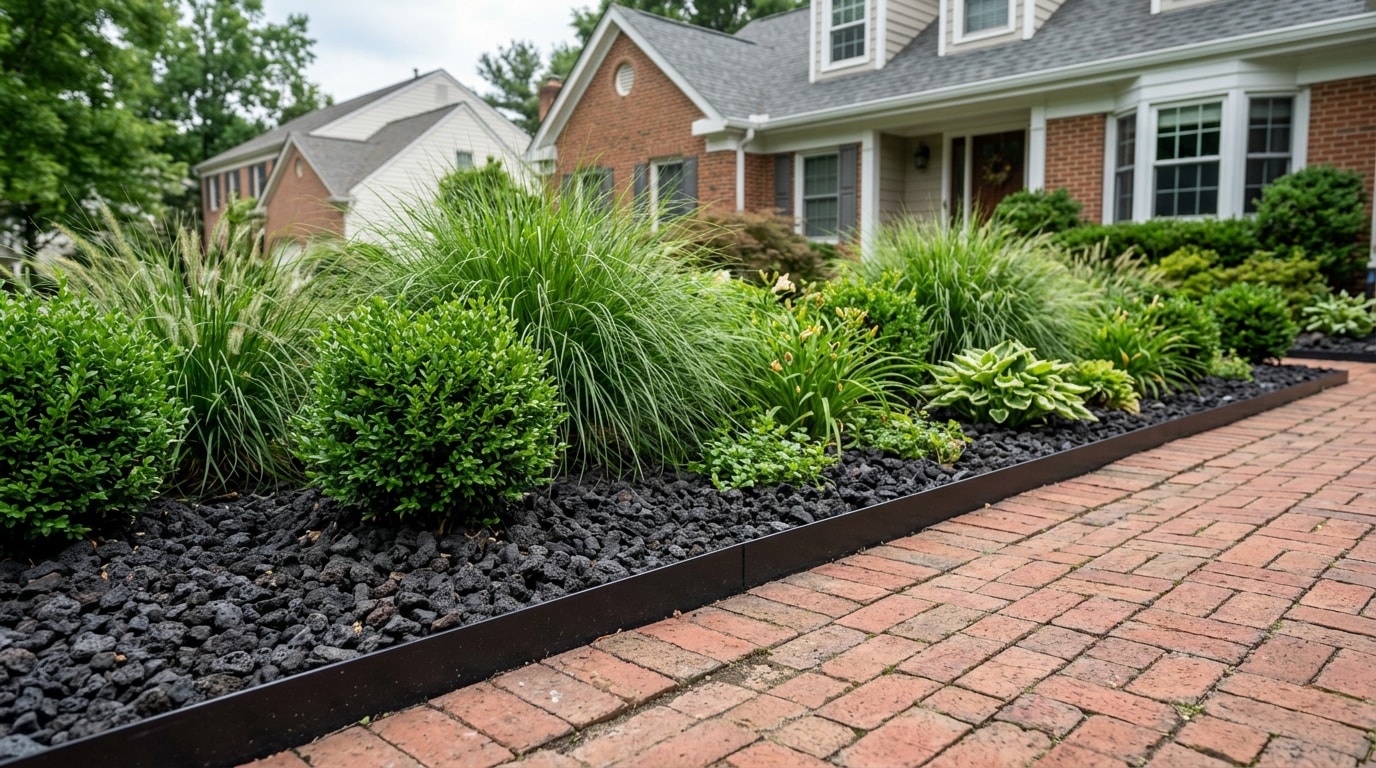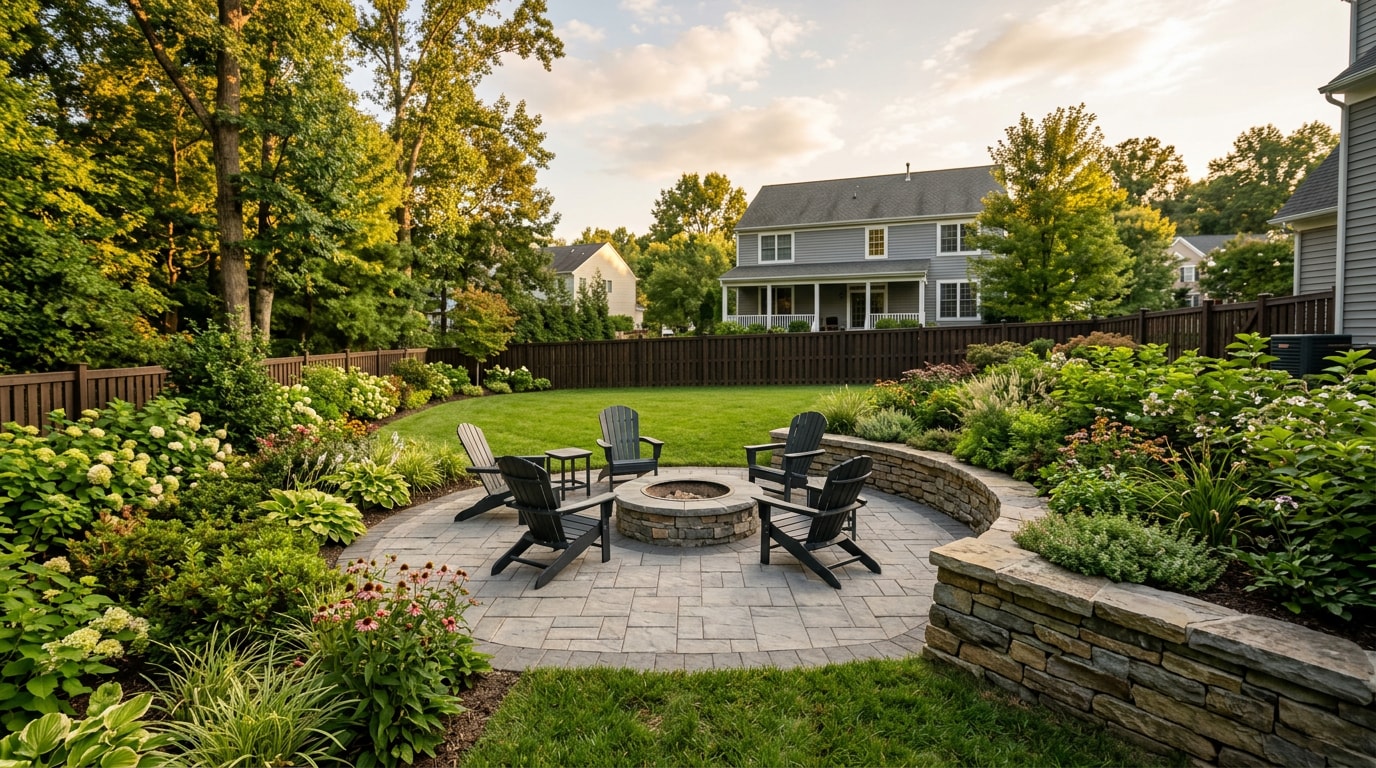
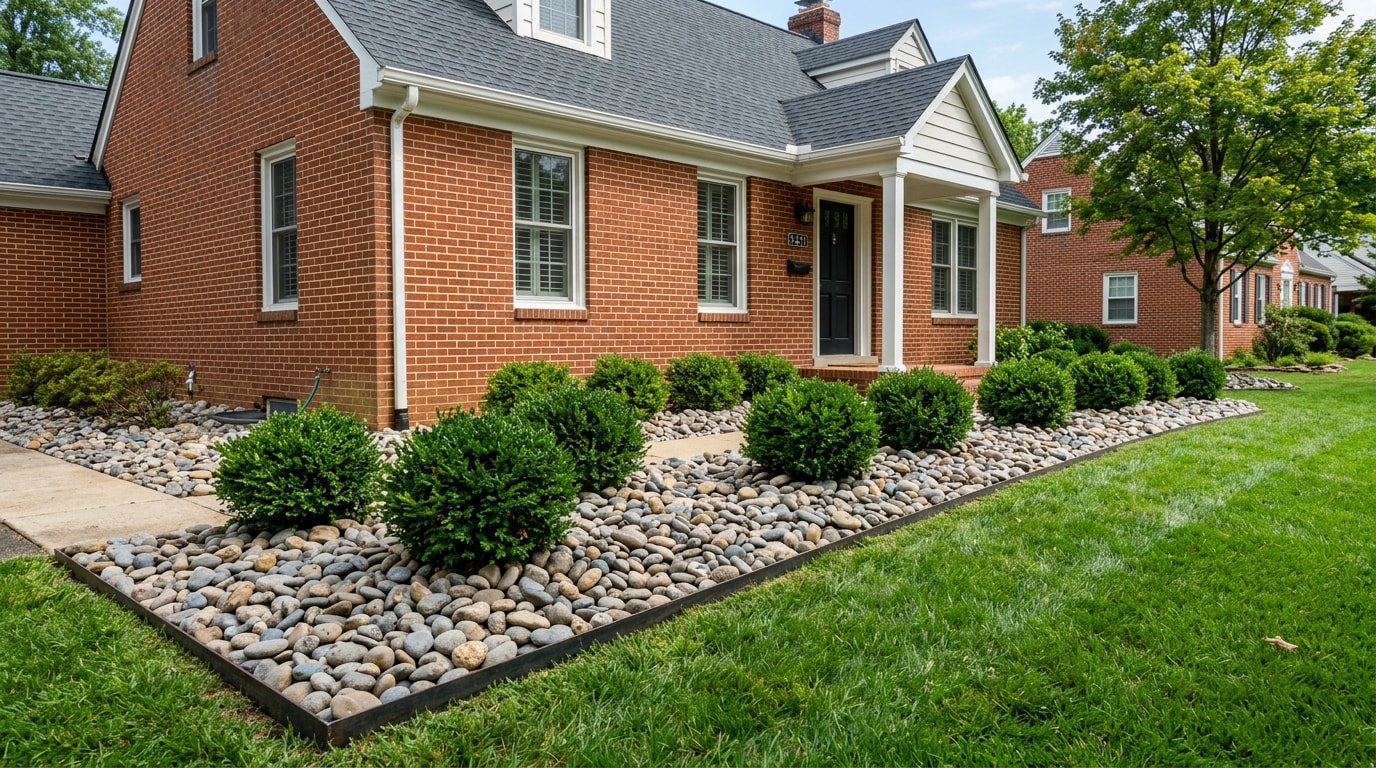
River rock landscaping in Arlington, VA solves a problem mulch never fixes: clay soil that holds water until it doesn't, then erodes the first time a summer storm rolls through. After grading and setting stone beds on dozens of Arlington lots, we've seen which installs hold their line for years and which ones wash out by the second season. Here's what separates the two.
Why Arlington's Soil and Storms Make River Rock a Smart Choice
Arlington sits on heavy clay with pockets of sandy loam, and neither drains particularly well on its own. Add the region's rainfall pattern and you get beds that stay soggy, then crack and shed stone or mulch once they finally dry out.
Northern Virginia's climate region averages about 38 inches of precipitation a year , spread across humid summers and cold, wet winters. That volume of water, concentrated in sudden downpours, is exactly what erodes bare or thinly mulched slopes.
Stone doesn't solve drainage by sitting there. It works because:
- Rounded river rock resists washout better than loose mulch on a grade.
- A properly compacted base sheds water instead of trapping it against the soil.
- Larger stone in dry creek beds and swales slows runoff velocity before it reaches a storm drain or neighboring yard.
That last point matters more in Arlington than in most Virginia suburbs. The county's land disturbance and stormwater management permit is intended to reduce pollution from sediment runoff, and it's required for any activity that disturbs 2,500 square feet of land or more. Most residential rock beds fall well under that threshold, but a full-yard regrade with new drainage swales can trip it. It's worth a five-minute call to the county before a large-scale project, not after.
River Rock Installation Services for Arlington Yards
A full-service install covers more than dropping stone in a bed. The applications we see most often in Arlington include:
- Decorative rock and gravel beds around foundations, tree rings, and mailbox islands
- Dry creek beds that direct runoff away from siding and crawl spaces
- Drainage rock installation in low spots that stay soggy after storms
- Stone borders and walkways that replace edging maintenance entirely
- Erosion control on slopes, especially on lots graded toward a neighbor's property
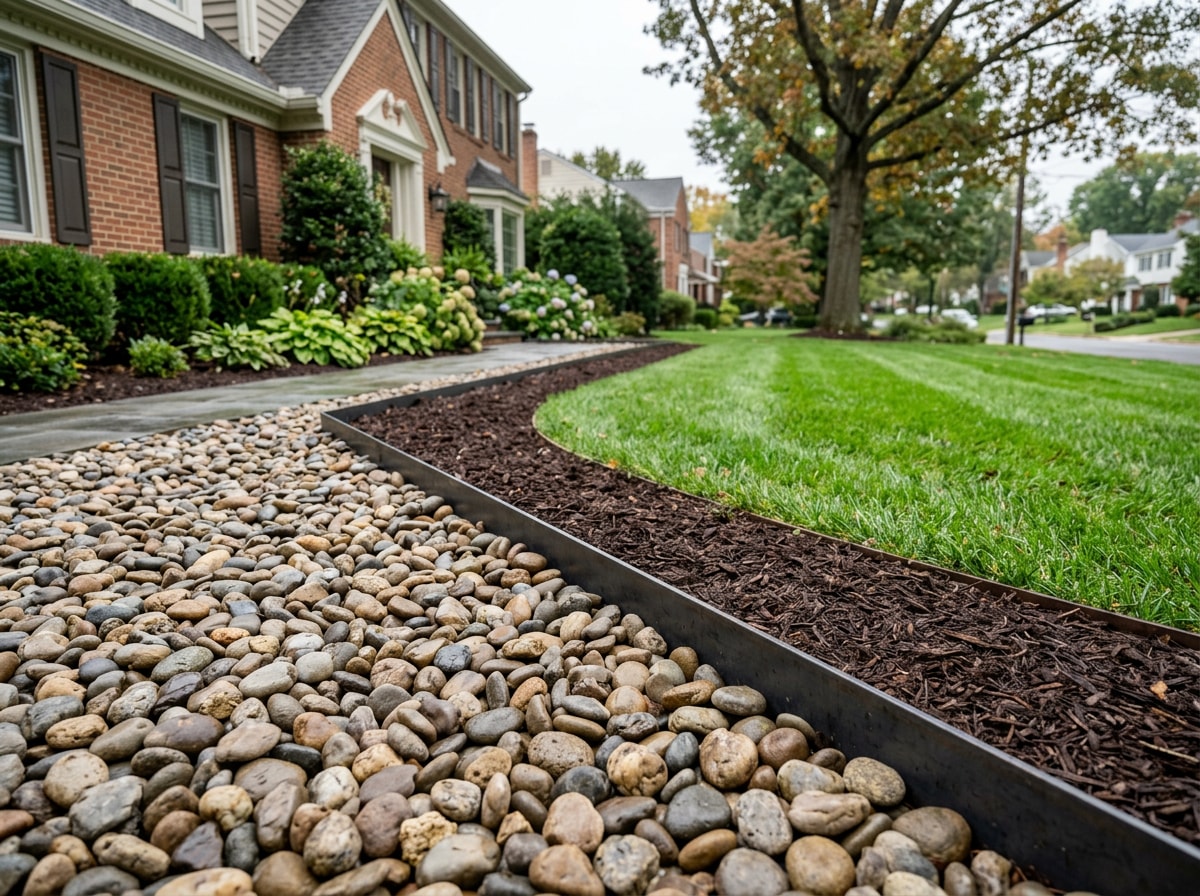
Rock beds pair naturally with other hardscape work. A dry creek bed that ties into a new patio installation keeps water moving away from the slab instead of pooling at the edge, and a stone border alongside a walkway installation gives the path a finished edge without ongoing trimming. On sloped lots, a retaining wall installation often handles the grade change while rock manages the surface drainage above it. You can review the full scope on our hardscape contractor services page before requesting a quote.
Types of River Rock & Decorative Stone
"River rock" covers several distinct products, and the right pick depends on whether you're solving drainage, building a path, or filling a decorative bed.
| Stone Type | Size Range | Drainage | Best Use |
|---|---|---|---|
| Pea Gravel | 3/8"–1/2" | Moderate | Walkways, patio joints, play areas |
| Small/Decorative River Rock | 3/4"–1.5" | High | Borders, foundation beds, light accents |
| Standard River Rock | 1.5"–3" | Very High | Dry creek beds, drainage swales |
| Large River Rock / Rip Rap | 3"–5"+ | Very High | Steep slopes, erosion-prone channels |
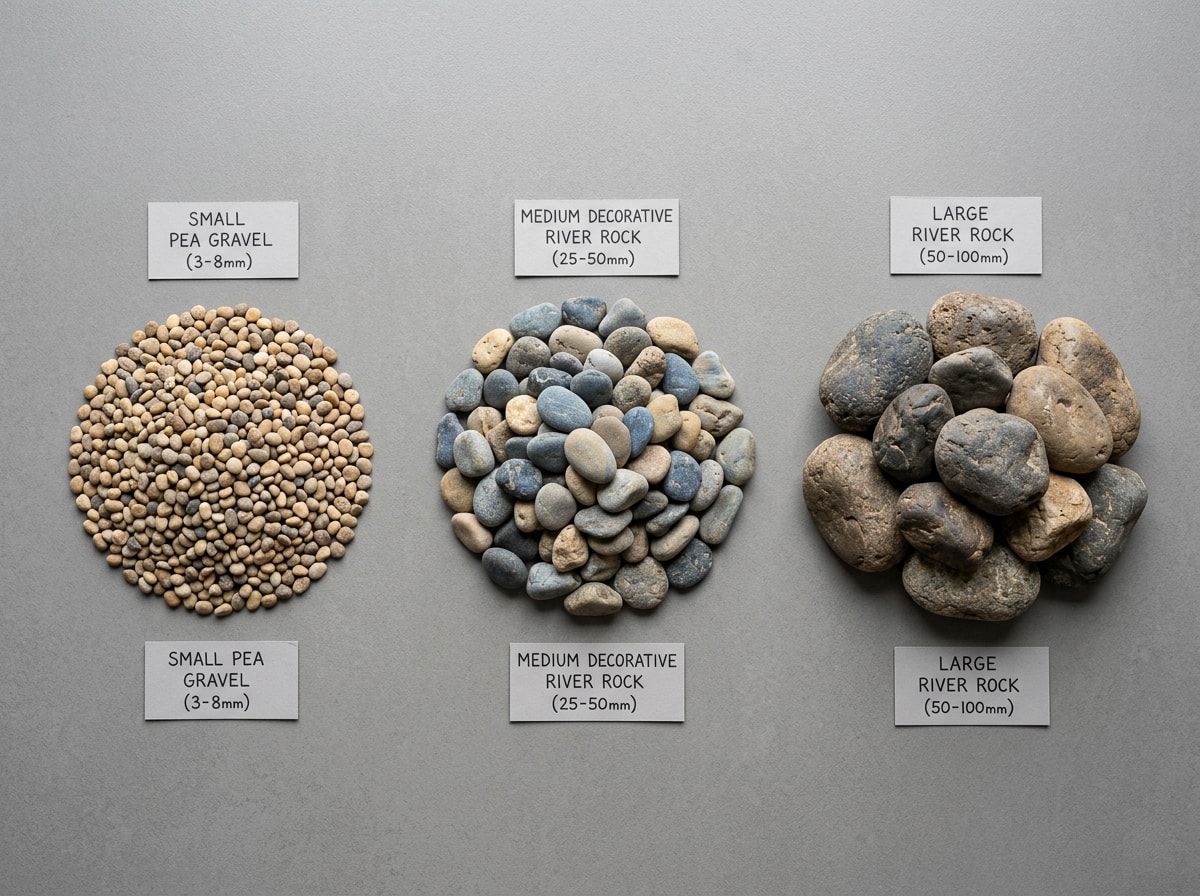
Bigger stone stays put on a steep grade because its weight resists the push of moving water. Smaller stone looks tidier in flat decorative beds but shifts more easily if it's used on a slope without edging.
Pea Gravel vs. River Rock: Which One Fits Your Project
Pea gravel compacts into a surface you can actually walk on, which makes it a strong choice for pathways, patio ground cover, and play areas where people and pets move around often.
River rock doesn't compact the same way. It's rounder and larger, so it rolls underfoot more than pea gravel does, but it drains faster and resists erosion better on slopes. The short version: pick pea gravel for anywhere people walk regularly, and river rock for anywhere water needs to move fast.
How Much River Rock Do You Need?
This is the step most homeowners skip, then order twice. One ton of river rock covers roughly 55 to 135 square feet , depending on the stone size and how deep you spread it.
A quick way to estimate:
- Measure the bed's square footage (length × width).
- Decide on depth, typically 2 to 3 inches for decorative beds, 4+ inches for drainage channels.
- Divide the square footage by the coverage rate for your chosen depth to get tons needed.
Ordering 10 to 15 percent extra covers settling and the inevitable low spot you missed on the first pass.
What River Rock Landscaping Costs in Arlington
Material prices vary by size, color, and delivery distance, but national pricing gives a reliable baseline. Landscaping rock costs homeowners an average of $650 per project, typically ranging from $50 to $125 per ton or $45 to $130 per cubic yard .
| Project Scope | Typical Cost Range |
|---|---|
| Material only, per ton | $50–$125 |
| Delivery, per load | $50–$150 |
| Installed small bed (100–150 sq ft) | $400–$900 |
| Installed dry creek bed with grading | $800–$2,500+ |
Site prep drives most of the swing in installed pricing. A bed that needs excavation, fabric, and edging on a slope costs more than a flat foundation border with none of that.
Installation Steps That Prevent Shifting and Weeds
The single most common callback we get on rock beds is settling or shifting that traces back to a skipped base layer. The sequence that actually holds up:
- Excavate 3 to 4 inches below the finished grade.
- Compact a crushed-stone base so the layer underneath doesn't act like a sponge.
- Lay landscape fabric to block weeds from pushing up through the stone.
- Install edging to keep rock from migrating onto lawns or walkways.
- Spread and grade the finish stone to the target depth, sloping it away from the house.
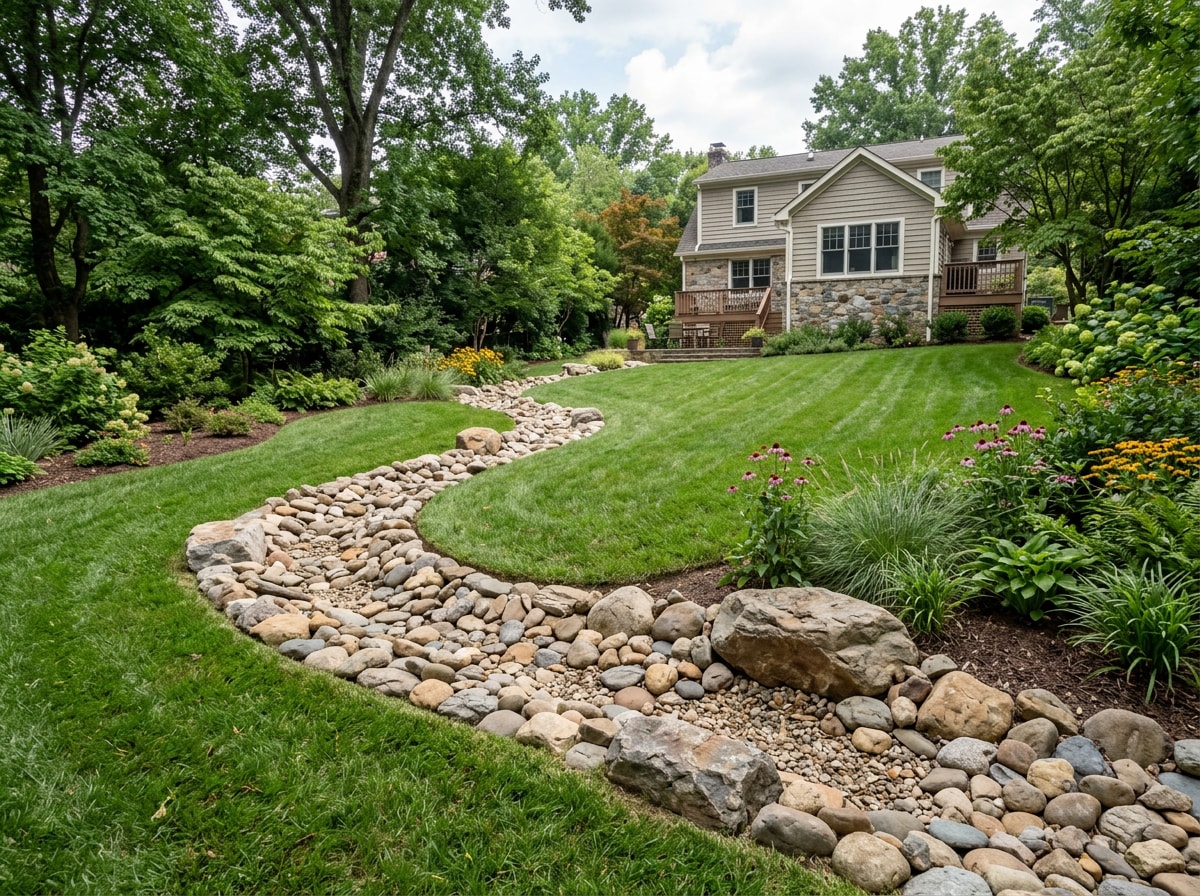
Skipping the base course is how a bed looks great for one season and heaves by the second winter. Freeze-thaw cycling, where water seeps between loose stones, freezes, and expands, gradually pushes stone up and out of a bed that was never properly graded underneath.
Service Area & Maintenance
We serve homeowners throughout Arlington, VA as well as nearby Fairfax, VA and Alexandria, VA. If your yard already has a deck or patio, pairing it with rock beds and borders is one of the fastest ways to finish the whole outdoor space at once, an approach we cover in more depth in our guide to deck landscaping in Arlington.
Maintenance is minimal but not zero. Top-dress high-traffic paths and thinning spots once a year with matching material. It's a short task that keeps coverage even without a full redo, and it's far less work than re-mulching every spring.
Want to see finished rock beds, dry creek installs, and paired hardscape work before you commit? Browse our project gallery or head to our homepage to see the full range of services we bring to Arlington yards.
FAQ
Does river rock stop weeds?
Rock alone slows weed growth but doesn't stop it completely. Landscape fabric under the stone blocks most weeds from pushing through; skip the fabric and you'll be pulling weeds out of the rock within a year.
What stone works around plants?
Granite and other neutral, non-reactive stones work safely around most plants. Limestone is the exception. Limestone-based materials raise soil pH within a few months once they're in contact with the ground , so it should be avoided near azaleas, rhododendrons, and other acid-loving plants.
What stone is best for pathways?
Crushed stone and pea gravel work best for pathways because the angular edges lock together underfoot, creating a firmer walking surface. Rounded river rock shifts more under footsteps, making it less stable as a standalone path material.
Does river rock need to be replaced?
Stone almost never needs full replacement since it doesn't decompose like mulch. Most homeowners simply top up spots that thin out over the years, which keeps long-term maintenance low.
How much does river rock landscaping cost?
Material runs roughly $50 to $125 per ton, with most installed residential projects landing between $400 and $2,500 depending on bed size, grading needs, and site prep. Request a free estimate for a price based on your actual yard.
Do I need a permit for a river rock project in Arlington?
Most small decorative beds don't require one. Arlington County's stormwater permit applies to land-disturbing activity of 2,500 square feet or more , which typically only affects large-scale regrading or new drainage systems, not a standard foundation bed or walkway border.
Ready to stop fighting drainage and erosion every time it rains? Contact us for a free design estimate built around Arlington's soil and climate.