Hellebores bloom when almost nothing else in a Northern Virginia garden does. That's why landscaping with hellebores in Arlington, VA is one of the most common shade-garden questions we hear from homeowners planning winter color. Before you plant, though, there's a local wrinkle most national plant guides skip entirely, and it affects which hellebore you should actually buy.
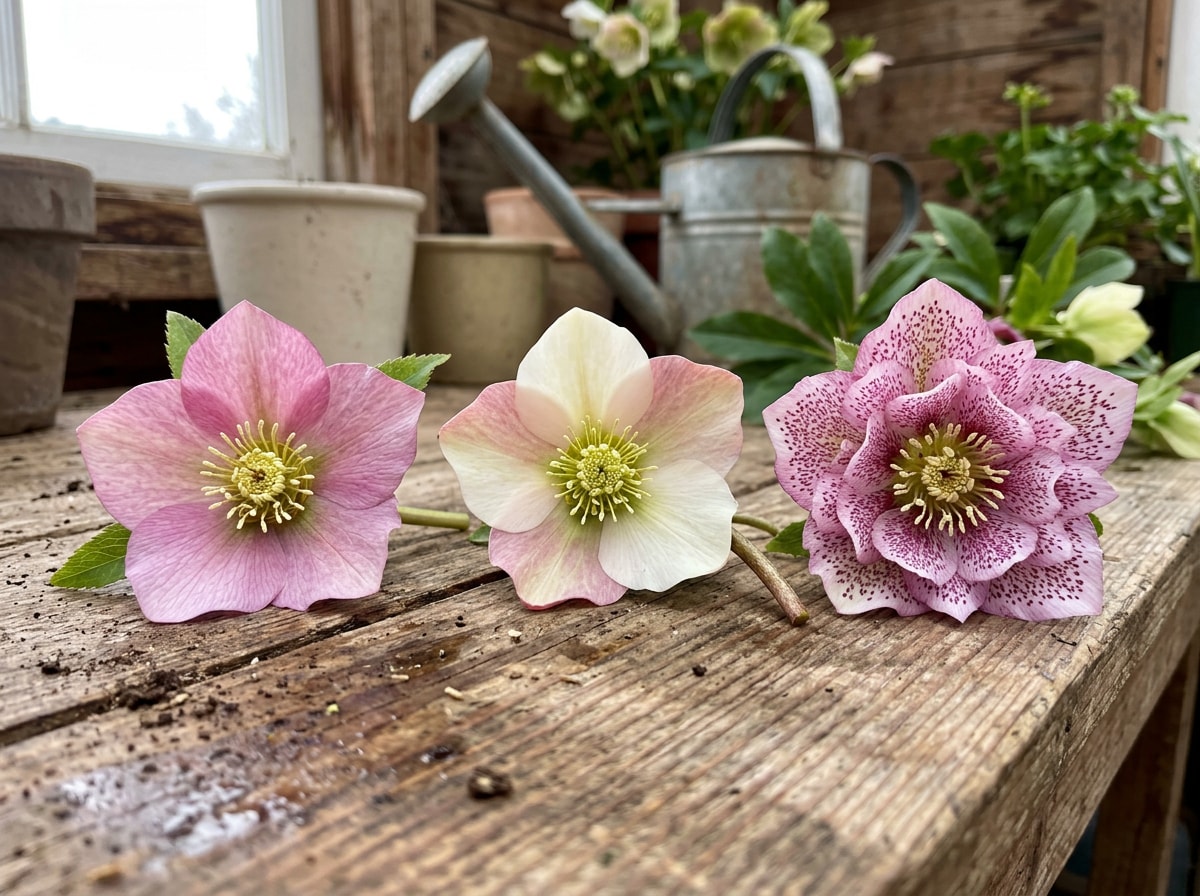
Types of Hellebores
Shoppers in Arlington typically run into four main types of hellebore. Knowing the differences up front makes the rest of the planting and design advice easier to apply.
| Type | Scientific Name | Bloom Color/Habit | Arlington Note |
|---|---|---|---|
| Lenten rose | Helleborus orientalis | Outward-facing blooms in many colors | Flagged by Arlington County, see below |
| Christmas rose | Helleborus niger | Early white flowers that age to pink | No local advisory |
| Stinking hellebore | Helleborus foetidus | Greenish blooms, finely cut foliage | Flagged by Arlington County, see below |
| Hybrid hellebores | Helleborus x hybridus | Wide color range, including doubles | No local advisory |
Hellebores and Arlington's Invasive Plant Guidance
Two of the four types above come with a catch. Lenten rose and stinking hellebore have been identified by Arlington County as a potential threat to natural areas. The county's criteria flag a plant when it has shown invasive behavior elsewhere, or when regional monitoring has picked up early warning signs of spreading. Local horticulturists have responded by discouraging new plantings of these two species near woodland edges.
This isn't an isolated opinion. Lenten-rose, listed under its scientific name Helleborus orientalis, appears on the non-native invasive plants list for Arlington County maintained through EDDMapS, the invasive species tracking database run by the University of Georgia's Center for Invasive Species and Ecosystem Health. The City of Alexandria lists Lenten rose on its own invasive plant list too, which tells you this is a Northern Virginia natural-areas concern, not a one-county quirk.
None of this is a planting ban. It's a call for responsible siting:
- Keep Lenten rose and stinking hellebore away from woodland buffers, stream edges, and undeveloped natural areas.
- Deadhead spent blooms before seed drops to limit self-seeding into nearby green space.
- Choose Christmas rose or hybrid hellebores instead if your lot backs onto parkland or conservation easements.
For the full regional guidance, the Master Gardeners of Northern Virginia's hellebore overview is maintained in partnership with Virginia Cooperative Extension and covers both the county designation and shade-garden care. Homeowners in our Arlington, VA service area can also get a site walk-through before planting near a wooded buffer.
How to Plant Hellebores
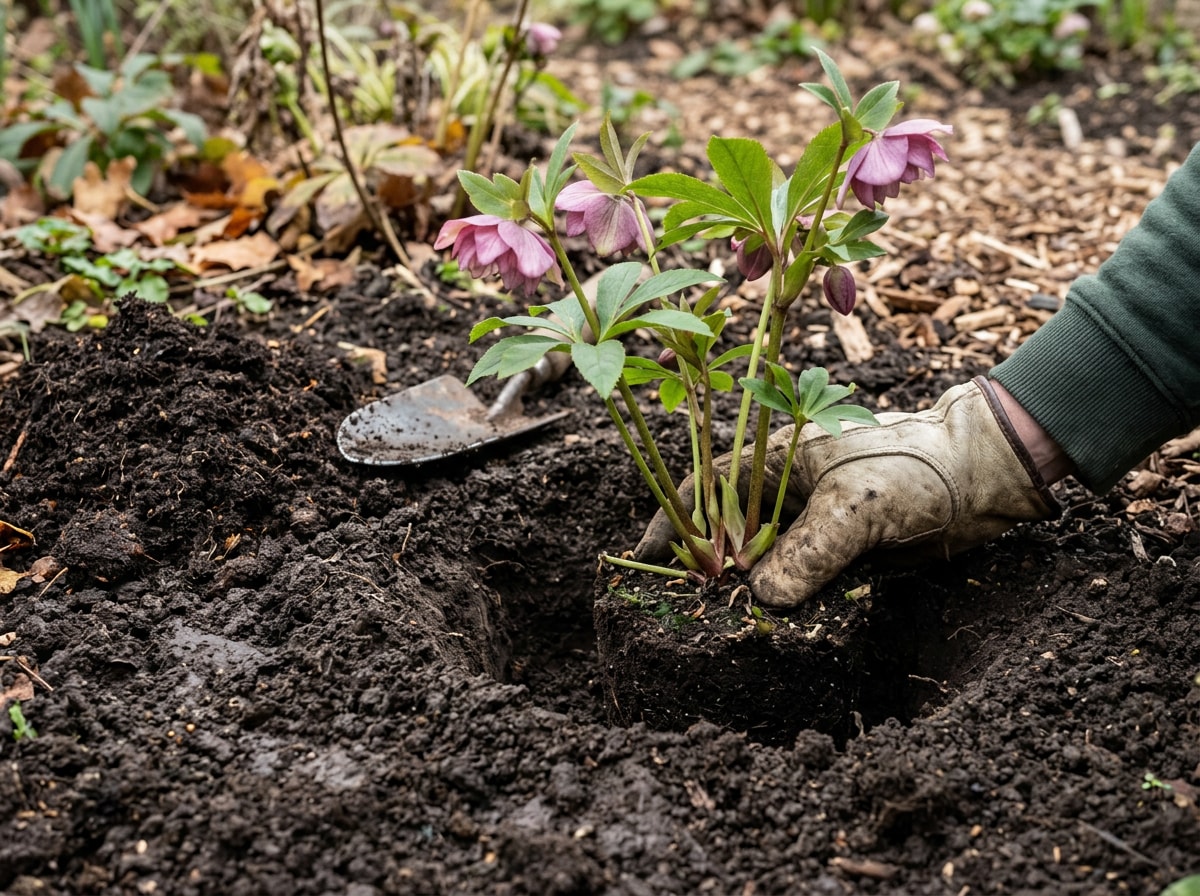
Pick a site with dappled or partial shade and well-drained soil. Hellebores thrive beneath deciduous trees, where winter sun reaches bare branches and summer shade keeps roots cool.
To plant:
- Loosen the native soil and work in compost for better drainage and fertility.
- Dig a hole twice as wide as the root ball but no deeper.
- Gently loosen any circling roots before placing the plant.
- Set the crown just below the soil surface. Planting too deep can hold back flower production.
- Backfill, firm the soil gently, and water thoroughly.
Clay-heavy yards in Arlington often need more than compost to drain well. If standing water is a recurring problem in your planting bed, our river rock landscaping guide for Arlington, VA covers stone drainage solutions that pair well with shade plantings.
Hellebore Care
Hellebores do best in rich, well-drained soil and work well along garden borders, under deciduous trees, or tucked between shrubs. They tolerate full shade, but a few hours of morning sun produces fuller blooms. Trim back tattered old foliage each spring to make room for fresh growth. This also doubles as light deadheading.
Once established, hellebores are a drought-tolerant perennial. Across the genus, they're winter-hardy from roughly USDA zones 4 to 9, depending on species. Arlington's own zone designation shifted with the 2023 USDA Plant Hardiness Zone Map: the area now falls mostly within zone 7a to 7b, warmer than the 2012 map showed. Either way, Arlington sits comfortably inside the range where hellebores grow well.
Pests and Diseases
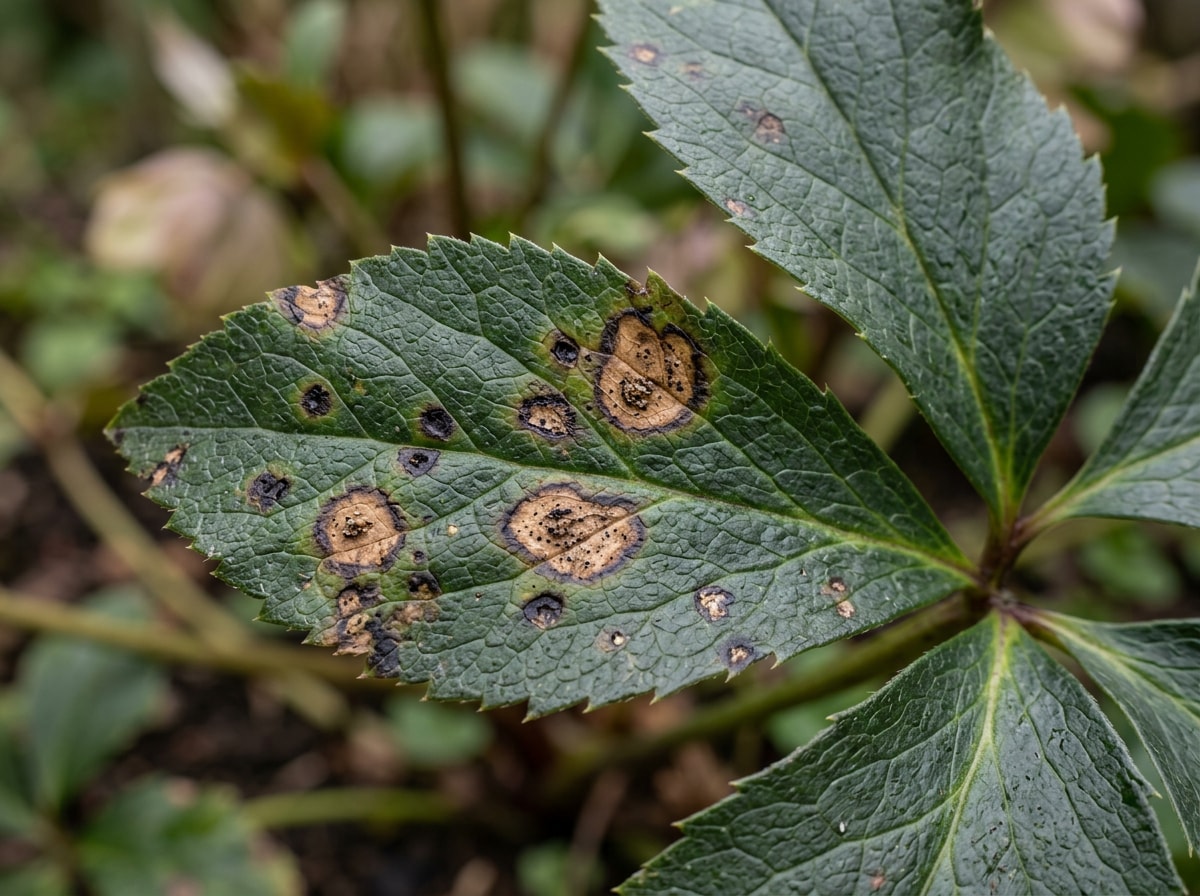
Hellebores are generally pest-resistant, but humid Virginia summers can invite aphids, slugs, or fungal leaf spot. Good air circulation between plants and watering at the soil line instead of overhead both go a long way toward preventing these issues.
If you notice dark, irregular spots spreading across leaves, that's often a fungal leaf spot rather than a pest problem. The NC State Extension Plant Toolbox entry on Lenten rose is a solid reference for confirming identification and treatment before the problem spreads to nearby plants.
When Do Hellebores Bloom?
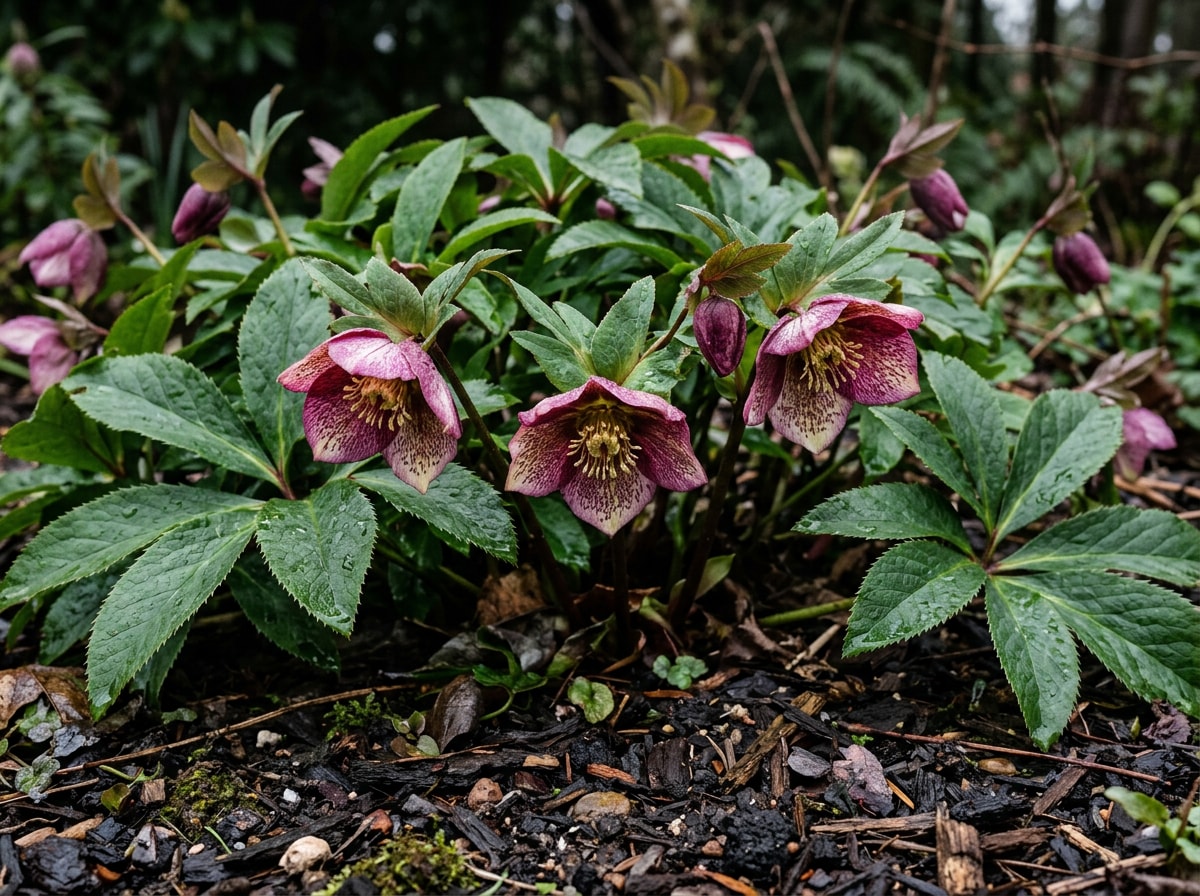
Hellebores typically start blooming in late December or early January and can keep flowering through May or June. That makes them one of the longest-blooming perennials available for shade. Blooms range across reds, pinks, whites, greens, purples, and even unusual grey and near-black hues, giving a shade bed color when little else is flowering.
Landscaping Ideas for Hellebores in Arlington, VA
Hellebores slot into several landscaping roles once you know where to put them:
- Plant them beneath deciduous trees or large shrubs for seasonal interest.
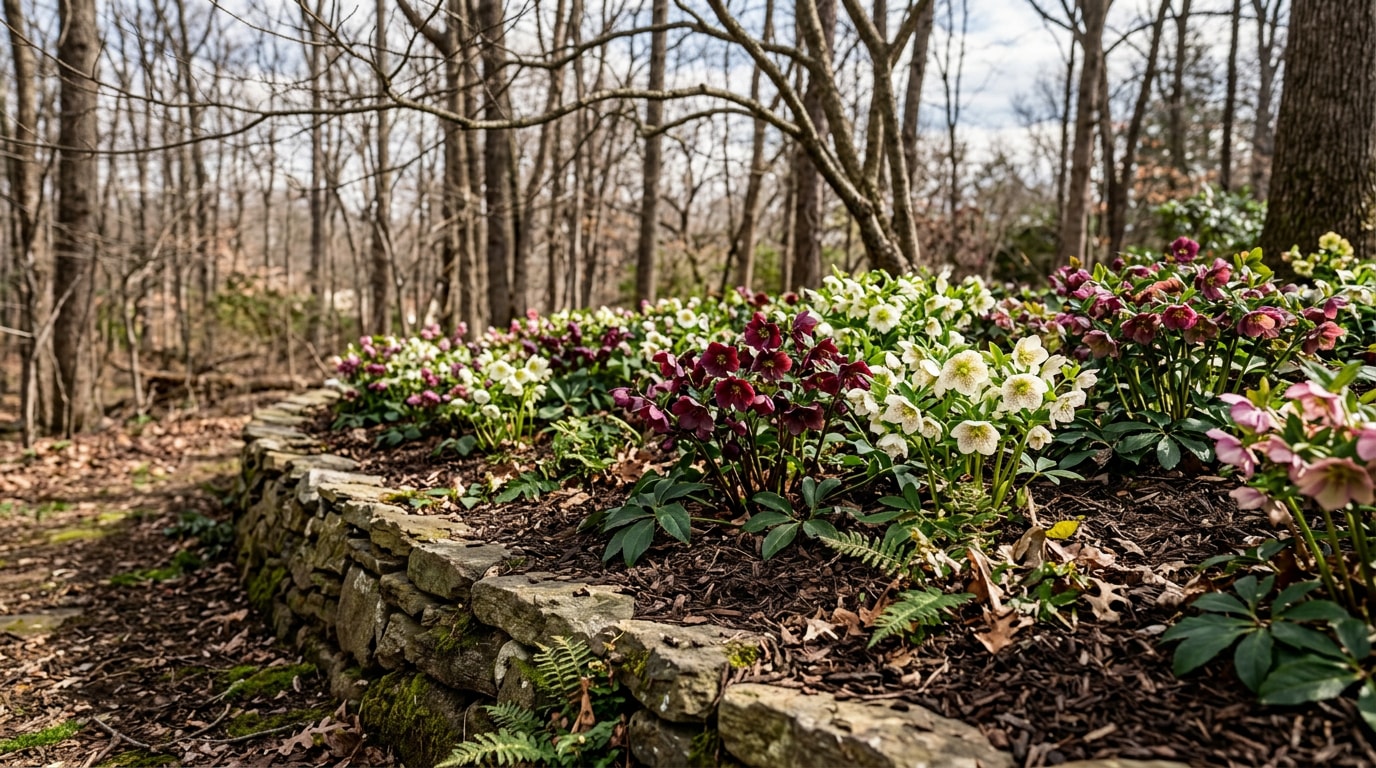
- Pair them with ferns and hostas in a woodland-style bed.
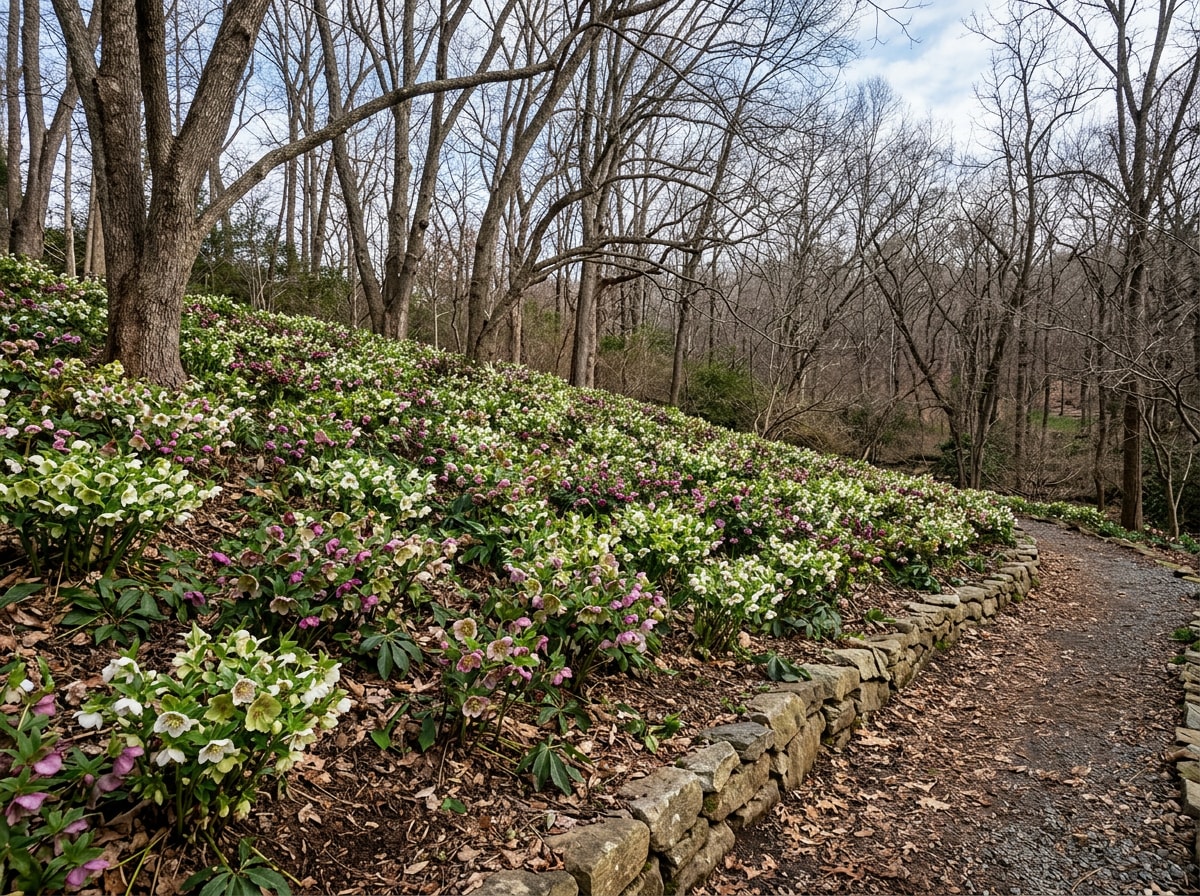
- Group them in drifts for a lush groundcover effect.
- Grow them in shaded containers for early-season color near an entryway.
Because hellebore blooms nod downward, placement matters more than it does with upright flowers. A gentle slope or raised bed puts the blooms closer to eye level instead of leaving you looking down at foliage. On Arlington lots with a sloped shade garden, a low retaining wall or a garden wall solves two problems at once: it stops soil from washing downhill, and it lifts the hellebore bed into better view. We've seen this tie-in solve a lot of "my hellebores look great in photos but not from the patio" complaints in real Arlington yards.
A shaded walkway running through a hellebore drift also keeps foot traffic off root zones while giving you a reason to slow down and actually see the blooms in January.
Early Spring Companions
One reliable pairing: Virginia bluebells create soft drifts of pastel color that feel effortless alongside hellebores, with nodding blue-pink blooms weaving between hellebore mounds at a slightly taller height. Lungwort (Pulmonaria) often blooms at the same time, adding overlapping color at a different height and texture.
This is one approach among several, not the only way to pair hellebores. If your yard has more sun than shade in other beds, our lavender landscaping guide for Arlington, VA covers a sun-loving companion option worth considering for the rest of the property.
Common Mistakes When Designing Around Hellebores
Planning only for spring, then forgetting summer. A frequent design mistake is building a bed entirely around spring companions like Virginia bluebells and certain bleeding hearts, both of which disappear completely by summer. Without a plan for that gap, the bed looks sparse for months. Mix in evergreen foliage plants or summer-blooming perennials alongside hellebores to keep the bed full year-round.
Overcrowding the bed. Hellebores spread slowly into healthy clumps, and planting them too close together limits air circulation, the same condition that invites leaf spot. Give each plant roughly 18 to 24 inches of space, and divide crowded clumps every few years to keep the bed healthy.
Ignoring the slope. Flat beds with nodding blooms often get planted and then forgotten because nobody can see the flowers from a standing position. If you're reworking a shaded slope anyway, it's worth getting a free estimate on a retaining wall or terrace before you buy plants, not after.
Hellebores are a small piece of a bigger shade-garden plan. If you're weighing a full redesign around mature trees, our team at {{SITE_URL}}/ can walk the site with you and figure out where hardscape should carry the structure so the planting doesn't have to do all the work.
FAQ
Are Hellebores Poisonous?
Yes. All parts of the hellebore plant contain compounds that can be harmful to humans and pets if ingested. Keep them out of reach of curious kids and pets.
Are Hellebores Rabbit and Deer Resistant?
Yes. Hellebores resist both deer and rabbits because their toxic foliage makes them unappealing to browse. That makes them a reliable choice for Arlington yards bordering wooded areas where deer pressure is common.
Do Hellebores Prefer Full Shade?
Hellebores tolerate full shade but perform best in partial, dappled shade, typically under deciduous trees that offer winter sun and summer cover.
What Grows Well With Hellebores?
A layered approach works best: shrubs for structure, early spring bloomers for seasonal color, and low foliage plants for texture. See the Early Spring Companions section above for specific pairings like Virginia bluebells and lungwort.
When Do Hellebores Bloom?
In the Arlington area, hellebores typically start blooming in late December or early January and keep flowering into May or June, making them one of the longest-blooming shade perennials available.
Are Hellebores Considered Invasive in Arlington, VA?
Two species, Lenten rose and stinking hellebore, are flagged by Arlington County as a potential threat to natural areas and are tracked on regional invasive species lists. They aren't banned, but local guidance discourages planting them near woodland edges or natural buffers. Christmas rose and most hybrid hellebores don't carry this designation.