A lawn overseeder in Alexandria, VA is the fastest way to thicken a patchy fescue lawn before winter, but picking the wrong machine for the city's clay-heavy soil wastes both seed and rental money. This guide covers what these machines actually do, what they cost to rent, and the fall timing window that makes or breaks germination. By the end you'll know whether a broadcast unit, a slice seeder, or a professional crew is the right call for your yard.
What a Lawn Overseeder Actually Does
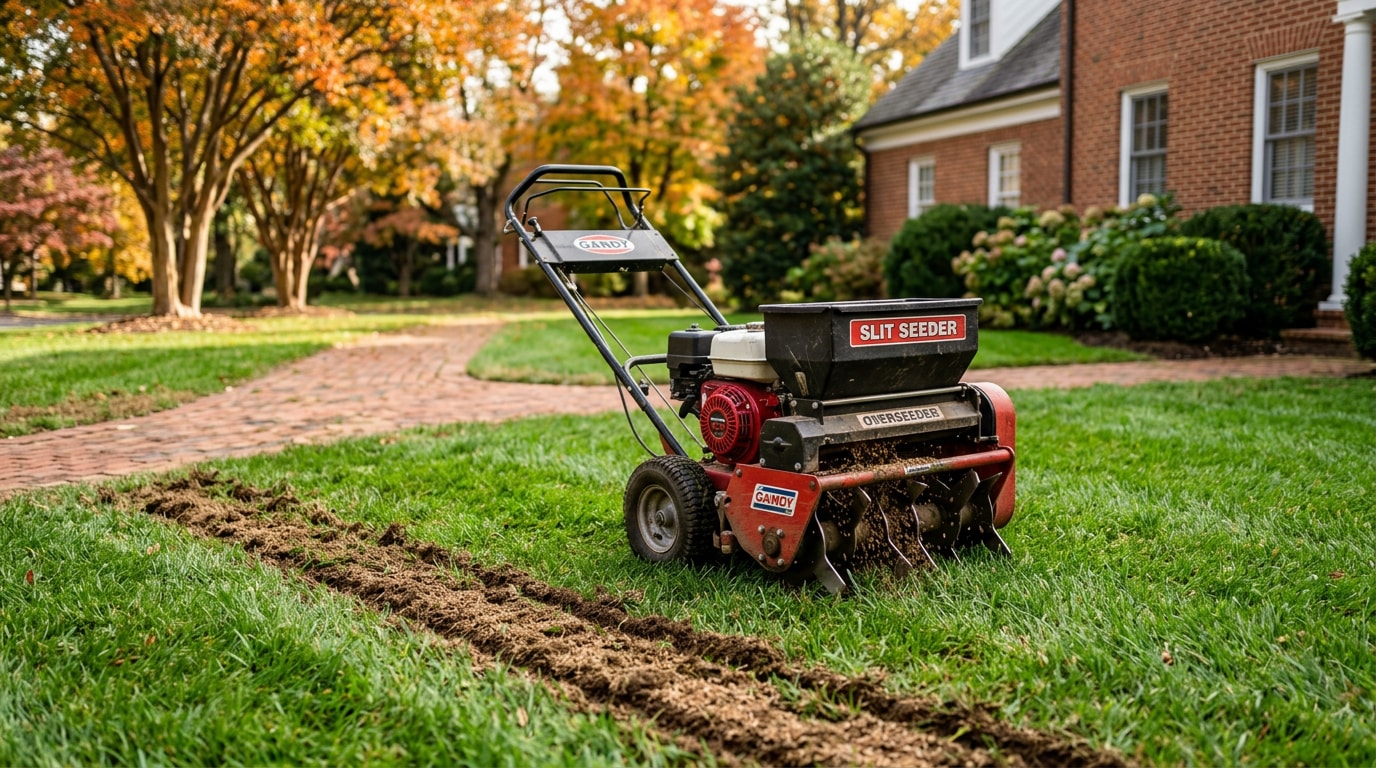
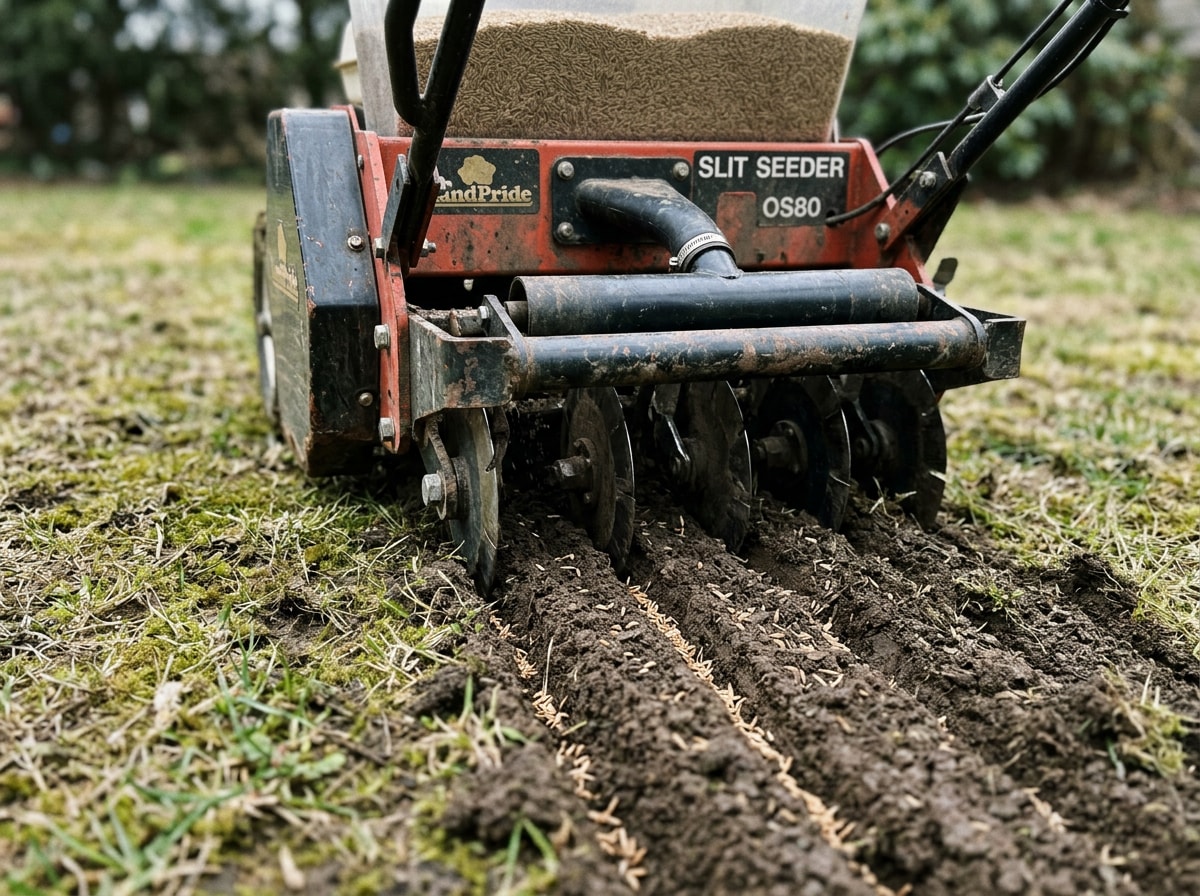
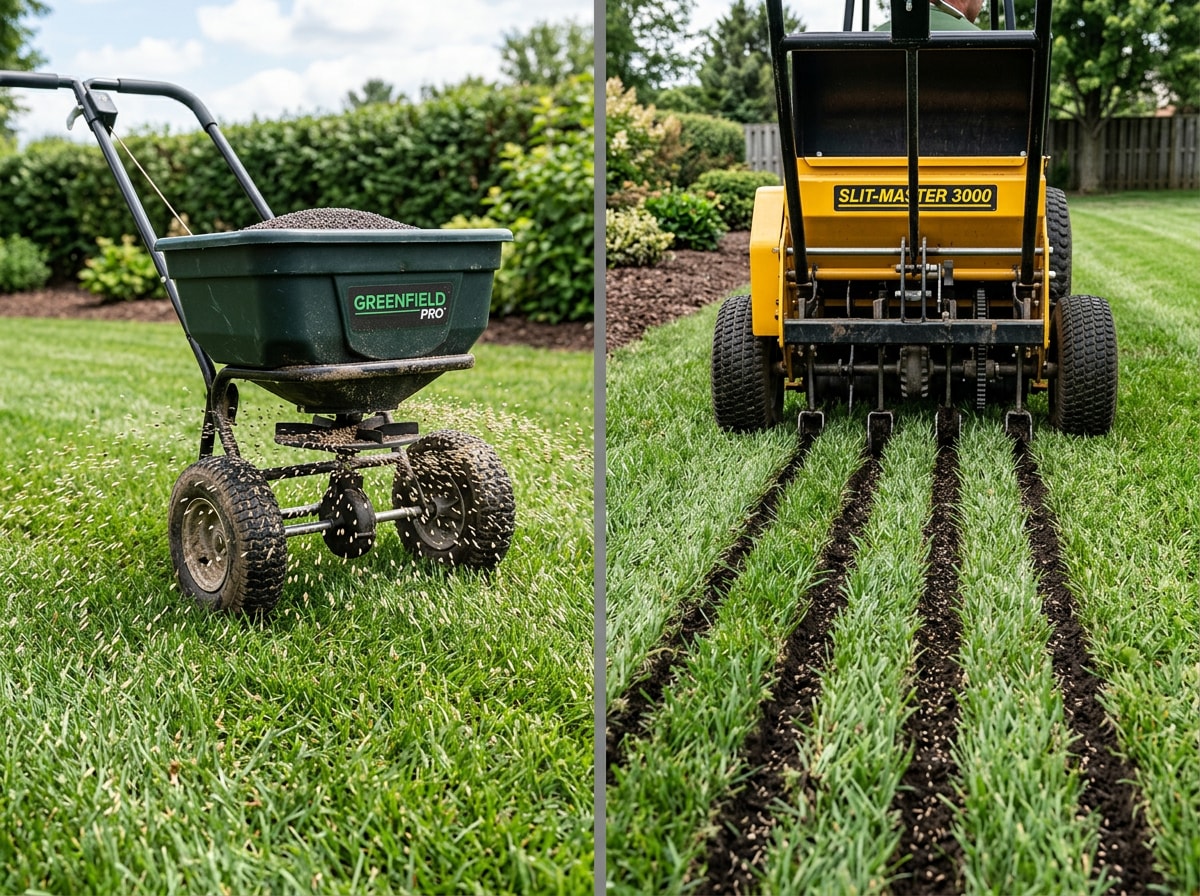
An overseeder spreads or slices grass seed into an existing lawn without tearing up the whole yard. Broadcast-style units scatter seed across the surface, while slicing-style units (also called slit seeders) cut narrow grooves into the soil and drop seed directly into the slit for better seed-to-soil contact.
Alexandria's clay subsoil compacts hard, especially in yards graded tight to a foundation, driveway, or retaining wall. On the grading and hardscape jobs we handle around the city, compacted clay along walkways and foundations is one of the most common reasons overseeded lawns fail to fill in evenly, because seed sitting on crusted ground never reaches soil it can root into.
Best Time to Overseed in Alexandria, VA
Fall is the only reliable window for cool-season lawns in this region. In Northern Virginia and the areas of Western Virginia at lower elevations, the best seeding dates are mid-to-late March for spring seeding, and the last week of August to mid-September for fall seeding.
Local Extension guidance narrows that further for cool-season grass: early-mid September, but no later than October 15. Waiting past that date cuts into the six to eight weeks new seedlings need to root before a hard freeze.
Seeding rate matters as much as timing. For over-seeding, apply 4 to 6 lbs. of grass seed per 1,000 square feet. Pour on more than that and you risk overcrowded seedlings competing for the same light and water.
DIY Rental vs. Hiring It Out
Renting equipment makes sense if you're comfortable with a half-day to full-day project and have a lawn under about half an acre. Hiring a crew makes more sense on larger lots, tough clay, or if you'd rather not operate a gas-powered machine on a slope.
Rental pricing for related equipment gives a useful benchmark. Core aerators can be rented at garden centers for about $80/day or $60/4 hours. Slicing-style overseeders and combo aerator-seeder units typically rent for somewhat more than a basic core aerator, since they carry a seed hopper and a drive system in addition to the coring or slicing tines. Light push-behind broadcast spreaders are the cheapest option and are often available for well under $50 a day at home improvement rental counters.
| Equipment Type | Best For | Seed-to-Soil Contact |
|---|---|---|
| Push broadcast spreader | Light, even overseeding on healthy turf | Low to moderate |
| Core aerator | Relieving compaction before seeding | N/A (prep step) |
| Slit/slice seeder | Bare patches, clay soil, full renovation | High |
| Combo aerator-seeder | Small to mid-size lots needing both steps | High |
If the math of renting, hauling, and running equipment yourself doesn't pencil out, our guide to aeration and overseeding in Alexandria, VA walks through what a professional visit typically involves and how to compare quotes.
How to Overseed a Lawn: Step-by-Step
- Mow the lawn short and bag the clippings.
- Core aerate or verticut to break up compacted soil.
- Choose a cool-season seed blend (tall fescue for sun, fine fescue for shade) that matches your existing turf.
- Run the overseeder in a crosshatch pattern, north-south then east-west, for even coverage.
- Water lightly every day until germination, then taper to a deeper, less frequent schedule.
On watering: irrigate lightly and frequently until germination is complete. This is one of the few times it's fine to break the usual "water deeply, less often" rule, because the goal is keeping the top half-inch of soil consistently moist, not soaking the root zone.
Choosing the Right Equipment for Alexandria's Clay Soil
A broadcast spreader is fine for a lawn that's otherwise healthy and just needs seasonal thickening. It's the wrong tool for bare patches, heavy thatch, or soil that's been compacted by foot traffic or construction equipment.
A slicer or slit seeder is the better choice when:
- The lawn has visible bare or thin patches larger than a dinner plate.
- Water puddles on the surface instead of soaking in.
- You're renovating more than a third of the yard at once.
- Previous broadcast-seeding attempts produced spotty, uneven growth.
Safety Checklist Before You Run a Rented Overseeder
Rental counters hand over the machine; they don't always walk through operating it safely on a slope or near a property line. A few basics apply across any gas-powered lawn equipment:
Wear protective goggles when using blowers; wear ear protection when using power equipment.
Wear gloves when handling seed bags or clearing jams, and remove them before restarting the engine.
- Keep hands and feet clear of the tine or blade housing while the engine is running.
- Mow slopes back and forth, not straight up and down, to avoid losing footing or control.
For a fuller rundown of equipment hazards and required protective gear, OSHA's landscaping hazards and solutions page is a solid reference before you operate any rented power equipment.
When Overseeding Isn't Enough: Fix the Grading First
New seed will not hold if water keeps running off before it soaks in. If a lawn sheds water toward a foundation, driveway, or low corner, regrading or adding an edge to hold soil in place solves more than overseeding alone ever will.
That's the part of a yard renovation that falls outside what a rental counter can advise on. If drainage, a failing walkway, or a retaining wall is undermining your lawn year after year, it's worth having that looked at alongside the seeding plan. Our teams handle retaining wall installation and walkway installation across Alexandria, often as part of the same project that gets a lawn back on track.
Get a free estimate if you want a second opinion on grading, edging, or drainage before you spend a weekend on rental equipment. You can see the kind of work we've completed around the city on our projects page, and our full service area details are on the Alexandria, VA page. For the bigger picture on our work, visit CM Hardscapes.
FAQ
How much does it cost to rent a lawn overseeder in Alexandria, VA?
Basic broadcast spreaders often rent for under $50 a day. Core aerators can be rented at garden centers for about $80/day or $60/4 hours, and combo aerator-seeder or slit-seeder units typically cost more than a standalone aerator because they carry a seed hopper and drive mechanism.
Should I aerate before or after overseeding?
Aerate first. Aerate first, then compost. Aerating opens channels in compacted soil so seed can settle in and make contact, rather than sitting on top of crusted ground.
How often should an Alexandria lawn be aerated and overseeded?
Most cool-season lawns in this region benefit from aeration and overseeding once a year, and at minimum every other year, especially on clay soil that compacts quickly from foot traffic and lawn equipment.
Do I need to water after overseeding?
Yes. Irrigate lightly and frequently until germination is complete. Taper to a normal, deeper watering schedule once the new grass is established, usually after two to three weeks.
What size overseeder do I need for my yard?
A handheld or push broadcast spreader covers lawns under about 5,000 square feet. Mid-size yards up to half an acre are better suited to a walk-behind slit seeder or combo unit, which cuts the number of passes needed to get even coverage.
Is a deposit required to rent lawn seeding equipment?
Most rental counters hold a refundable deposit or a card authorization, ranging from roughly $50 for a basic spreader up to a few hundred dollars for a slit seeder or tow-behind unit.