
Lavender landscaping in Arlington, VA can give a front yard season-long fragrance, pollinator traffic, and a tidy, drought-tolerant border, but only if you work around the one detail most generic plant guides get wrong for this area: the growing zone. Arlington isn't the warm Zone 8b some national plant tags assume; it's mostly Zone 7b with a few warmer pockets near the Potomac, and that difference changes which varieties and planting dates actually hold up here. Get the zone, soil, and drainage right and lavender becomes one of the toughest, lowest-water plants you can put in a Northern Virginia bed.
Does Lavender Grow Well in Arlington, VA? Climate & Zone Facts
Start with the zone, because it's the detail most homeowners get wrong before they ever buy a plant. Arlington and Alexandria are mostly in Zone 7b. The 2023 USDA map update did shift things slightly: some Alexandria and Arlington zip codes to the east and south are now in the warmer half zone 8a, while zip codes to the west and north remain in zone 7b. You can confirm your exact zip code on the USDA's official Plant Hardiness Zone Map.
That half-zone difference matters less than most people think, though. Winter cold rarely kills lavender in this area. Central Virginia's clay soil, wet springs and summers, and lots of humidity are what make growing lavender a real challenge. Thick, muggy Mid-Atlantic summers trap moisture around lavender's roots and foliage, inviting root rot and fungal disease far more often than frost does.
On the ground, that growing season is shorter and wetter than a lot of planting calendars assume. Arlington's last spring frost usually falls between April 10 and 21, the first fall frost lands between November 8 and 28, and the native soil is clay, poor quality, and needs amendments.
On our own Arlington projects, we build lavender and herb borders the same way we build patio and walkway sub-bases: with a few extra inches of compacted gravel under the planting soil so water moves away from the crown instead of sitting in it. If you're already planning a bed regrade or drainage fix alongside your planting, our Arlington, VA crew handles both the grading and the hardscape in one visit.
Lavender Care Tips for Arlington's Clay Soil and Humidity
Once the bed is sited and drained correctly, lavender care in Arlington comes down to a short list of non-negotiables:
- Full sun. Give it six to eight hours of direct sun a day. Shade is one of the top reasons lavender gets leggy and stops blooming.
- Soil pH.
Lavender likes a neutral pH of 6.5 to 7.5, so Virginia's naturally acidic clay usually needs lime added before planting. A soil test through your local Cooperative Extension office will tell you exactly how much.
- Drainage first, always.
Well-drained soil is key to success with lavender; it does not like wet feet, and without proper drainage it will develop root rot.
- Skip the wood mulch.
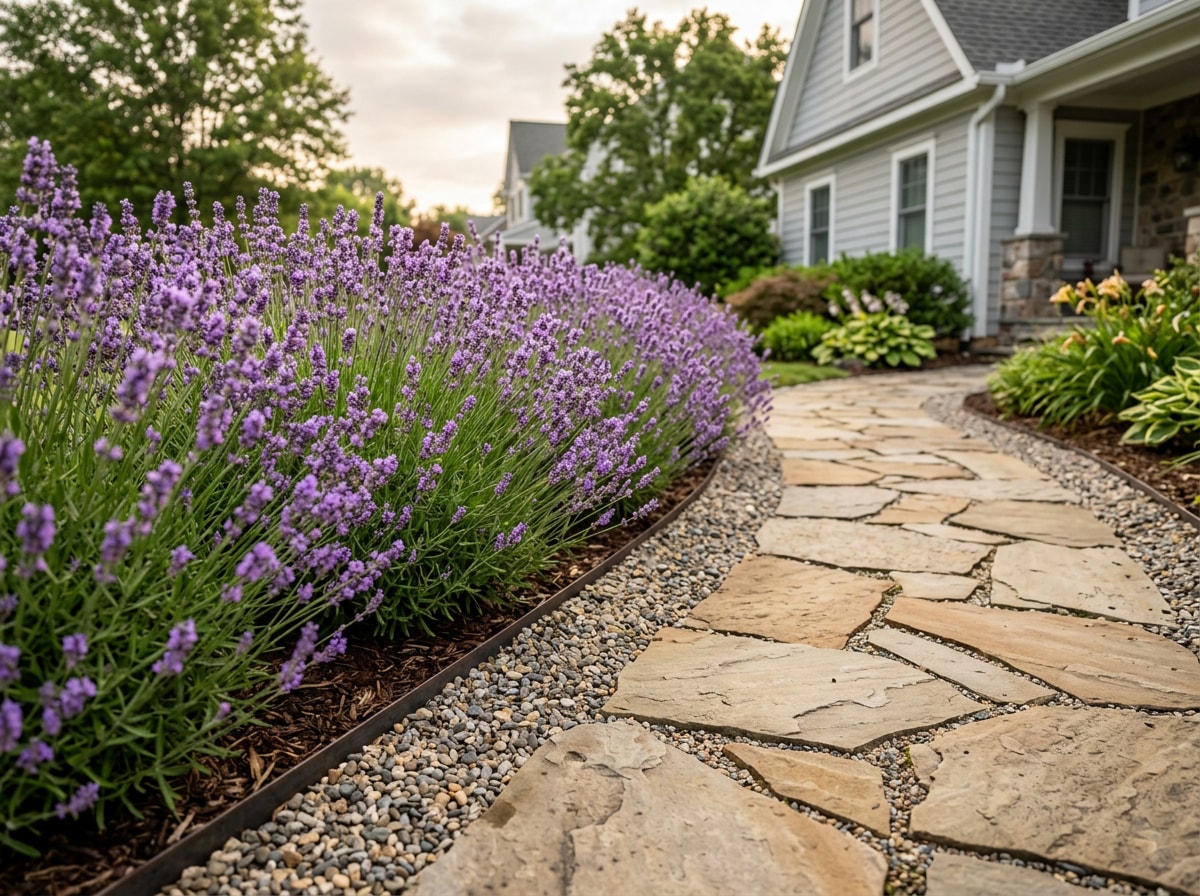
Don't mulch lavender with regular wood mulch, because that holds in moisture and can cause root rot. Use pea gravel or crushed stone instead.
- Water sparingly once established. Lavender is highly drought-tolerant after its first season. If a plant looks stressed or sparse, too much water or too much shade is almost always the cause, not too little care.
- Prune in spring, not late summer. Cut plants back to about 6 inches in early spring every 2 to 3 years to keep a tidy shape and prevent woody, hollow centers.
For a deeper breakdown of Virginia-specific lavender soil prep, the Piedmont Master Gardeners' growing guide is one of the few regional resources written for our exact clay-and-humidity combination.
Where Lavender Works Best: Design Ideas for Arlington Yards
Lavender reads best in a landscape when it's placed with intention, not scattered through a mixed bed where it competes for airflow with thirstier plants.
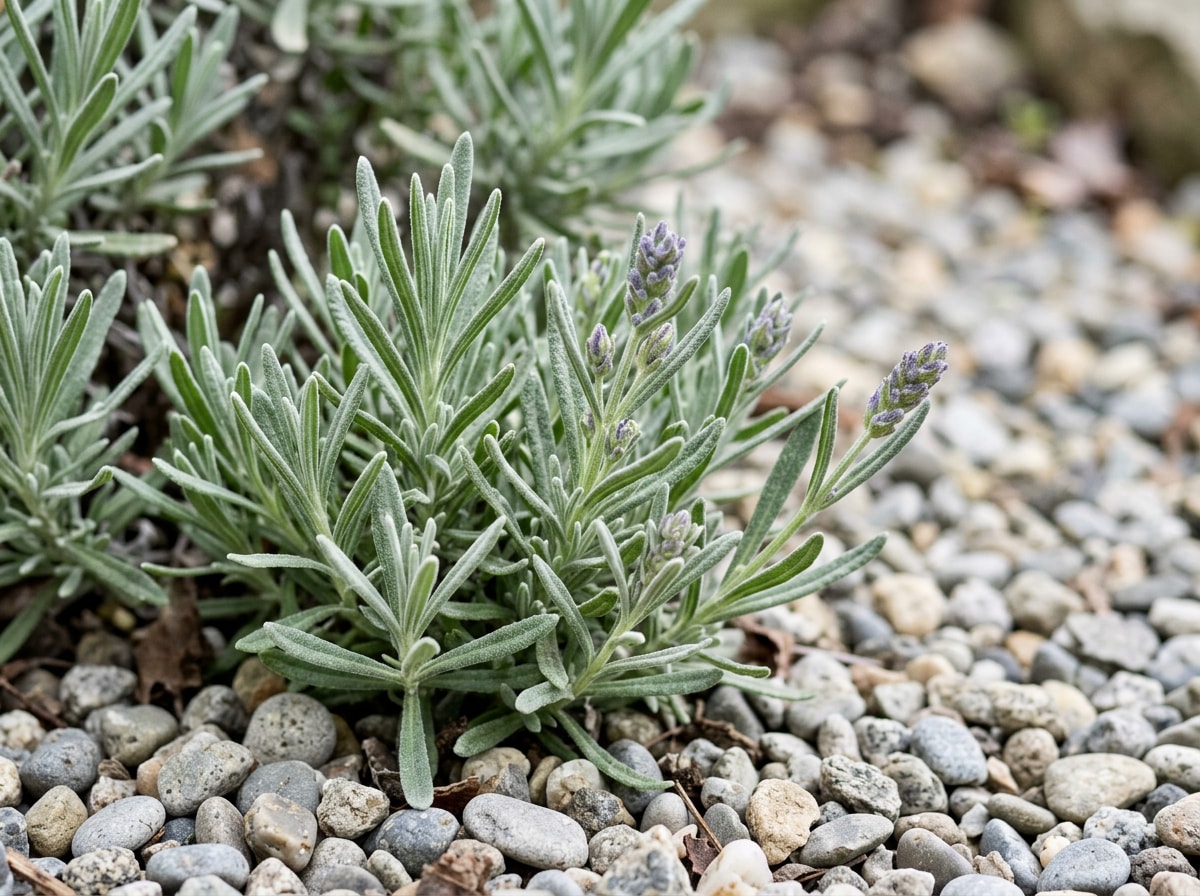
- Along a walkway. A gravel or flagstone path edged in lavender reinforces the sharp drainage the plant needs while finishing the hardscape. Our walkway installation team regularly builds this exact combination for Arlington clients.
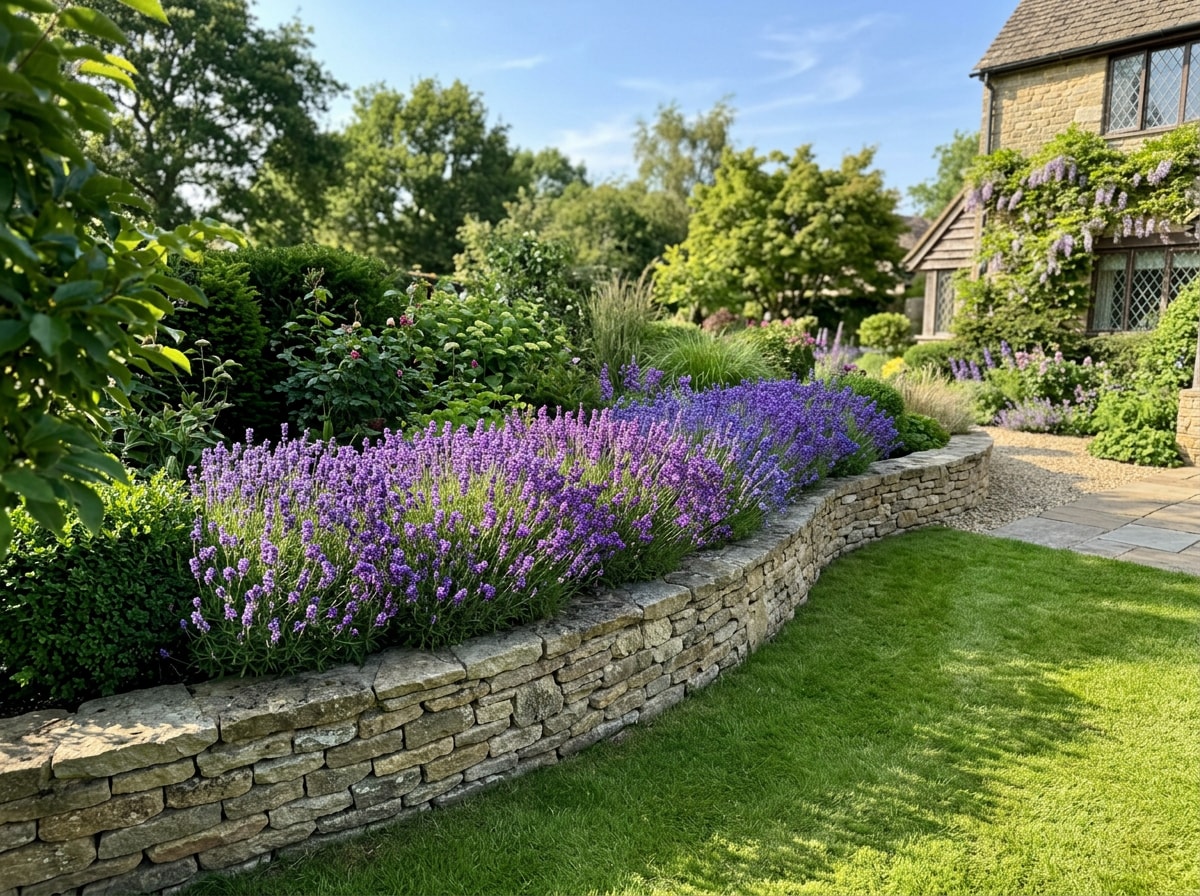
- On a raised or mounded bed. Lavender planted a few inches above grade sheds water instead of sitting in it. A low garden wall is an easy way to hold that mounded soil in place without it washing out after a heavy rain.
- Along the top of a retaining wall. On sloped Arlington lots, a retaining wall creates a naturally dry, full-sun shelf that's close to ideal lavender conditions.
- Mass planted, not scattered. A wave of the same variety along a low wall or walkway reads as intentional. Mixing five different cultivars in one short run usually looks busy instead of cohesive.
- Paired with climbing roses or a stone wall. The combination adds height and texture without crowding lavender's need for open airflow at its base.
If you're also replacing mulch or gravel elsewhere in the yard, our river rock landscaping guide for Arlington, VA covers stone options that double as drainage for beds like this.
Best Lavender Varieties for Arlington, VA (Zone 7b Gardens)
Not every lavender sold at a big-box garden center is built for this climate. English lavenders and the hardier lavandin hybrids are the two groups most likely to survive an Arlington summer with good drainage in place.
| Variety | Type | Bloom Color | Mature Height | Best Use in Arlington Yards |
|---|---|---|---|---|
| Hidcote | English (L. angustifolia) | Deep purple |
12 to 20 inches
| Low hedges, culinary use, tight borders | ||||
|---|---|---|---|---|
| Munstead | English (L. angustifolia) | Blue-purple | 12 to 18 inches | Early bloom, compact front-yard edging |
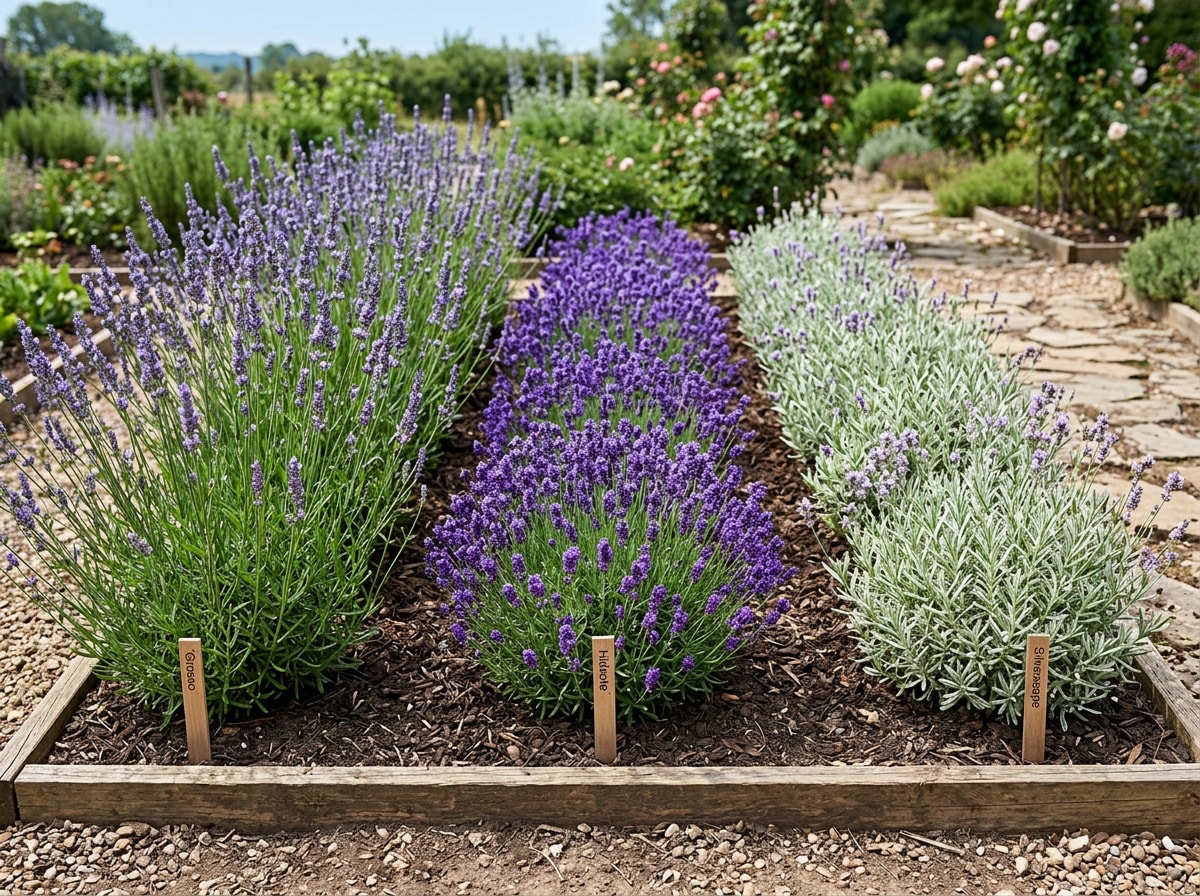
| Grosso | Lavandin (L. x intermedia) | Bluish-purple | 24 to 30 inches | Mass planting, cut flowers, strongest fragrance |
| Phenomenal | Lavandin (L. x intermedia) | Lavender-blue | 24 to 30 inches |
Known for its resilience in Virginia's humidity
| Silver Edge | English, variegated | Lavender-blue | 12 to 18 inches | Formal edging, silver-foliage contrast |
Hidcote and Munstead are the two most commonly recommended English types for this region, while Grosso and Phenomenal tend to shrug off humid stretches better than most pure English cultivars. Silver Edge is a good pick if you want foliage interest even when the plant isn't in bloom.
Planning a full redesign around a mature lavender bed, a new patio, or a retaining wall to hold a raised planting area? Get a free estimate from our design team before you break ground, so the drainage and the hardscape get planned together instead of fixed after the fact.
FAQ
Do deer eat lavender in Arlington, VA?
Rarely. Rutgers NJAES Cooperative Extension's Landscape Plants Rated by Deer Resistance lists lavender among the plants deer typically avoid because of its strong aromatic oils. No plant is fully deer-proof, but a lavender border is a reasonable first line of defense for nearby vegetables and ornamentals. You can check companion plants on the Rutgers deer resistance publication directly.
Does lavender grow well in Virginia's humidity?
It can, but it takes more effort than it would in a dry Mediterranean climate. The bigger risk in Arlington is wet, heavy clay combined with humid air, not cold winters. Raised beds, gravel mulch, and enough spacing for airflow matter more here than which variety you pick.
What is the best lavender variety for Arlington, VA?
English types like Hidcote and Munstead, along with hardy lavandins like Grosso and Phenomenal, are the varieties most consistently recommended for Zone 7b gardens. See the comparison table above for height, color, and best use in a yard.
When is the best time to plant lavender in Arlington, VA?
Spring, after the soil has warmed and the risk of frost has passed. Arlington's last spring frost usually falls between April 10 and 21 , which gives roots a full growing season to establish before the first fall frost arrives in November.
How often should I water established lavender?
Very little. Once lavender has been in the ground for a full growing season, it only needs supplemental water during extended dry stretches. Overwatering, not underwatering, is the more common cause of a struggling plant.
Can I use wood mulch around lavender?
No. Regular wood mulch holds in moisture and can cause root rot in lavender. Pea gravel, crushed stone, or a light layer of coarse sand are better choices for keeping the crown dry.
Looking for help designing the hardscape around your lavender beds, from a new walkway to a retaining wall that holds a raised planting bed? Visit CM Hardscapes to see completed projects in Arlington and nearby, or get a free estimate to start planning.