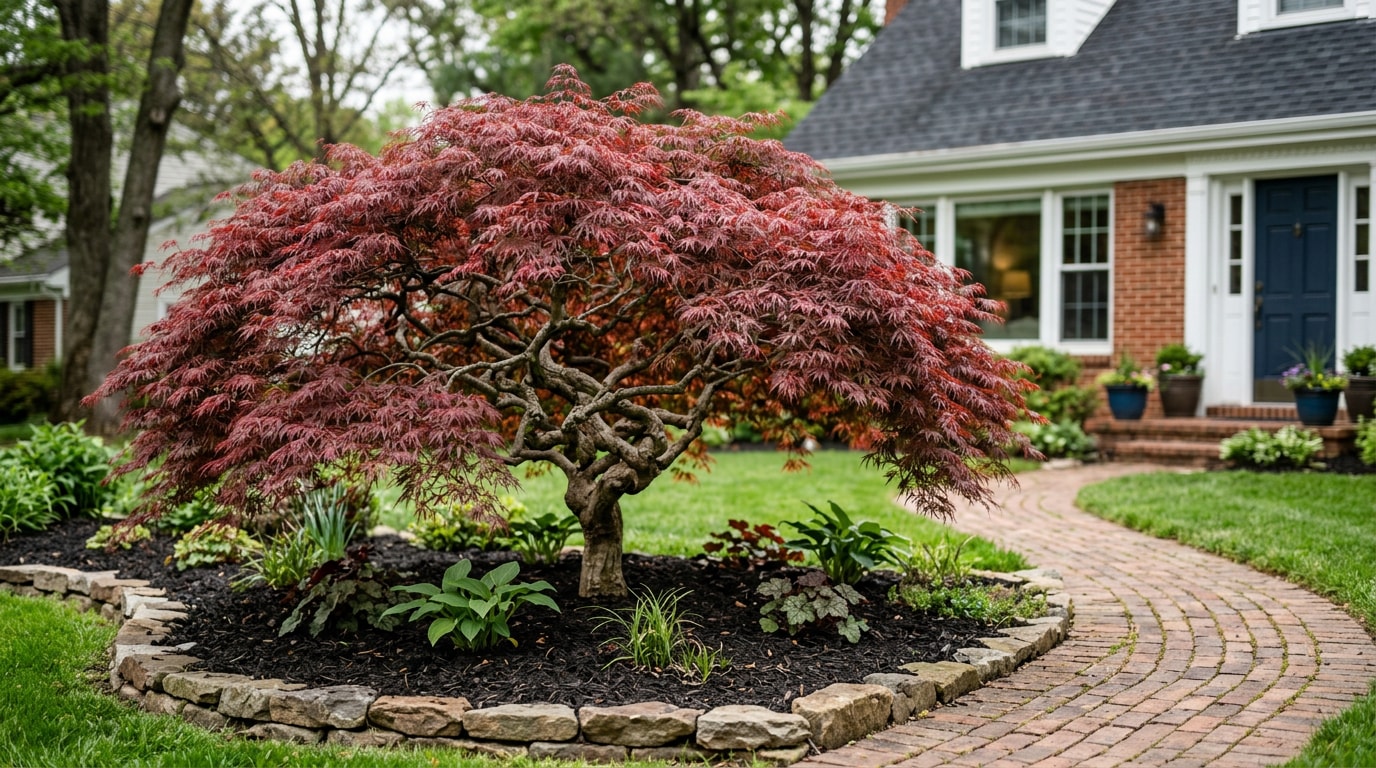
Landscaping with a dwarf Japanese maple in Fairfax County, VA works in almost any yard once you match the cultivar to your soil, sun, and space. These compact trees handle our clay soil and humid summers better than most homeowners expect. Here's what actually matters before you dig the hole.
Will a Dwarf Japanese Maple Thrive in Fairfax County, VA?
Short answer: yes, if you pick the right cultivar and spot.
Fairfax County falls within USDA Hardiness Zones 7a and 7b, depending on how close you are to the urban heat pockets along the Beltway versus the more exposed areas farther west. The USDA Plant Hardiness Zone Map is the standard by which gardeners and growers can determine which perennial plants are most likely to thrive at a location, based on the average annual extreme minimum winter temperature. You can confirm your exact zone by ZIP code on the official USDA map before buying.
Most dwarf Acer palmatum cultivars are rated for zones 5 through 8, which puts all of Fairfax County comfortably in range. The bigger local challenge isn't winter cold, it's our clay-heavy Piedmont soil and the humid, still-air afternoons of July and August. When our crews excavate planting beds for patios and walkways across Fairfax County, we routinely hit dense clay within the first foot, and that same clay is what stresses a newly planted maple if the hole isn't amended and slightly raised.
Dwarf Japanese Maple Varieties for Northern Virginia Yards
Dwarf Japanese maples generally split into two growth habits, weeping and upright, plus a foliage-color choice. Here's how some widely planted cultivars compare for size and look.
| Variety | Growth Habit | Mature Size (H x W) | Foliage Highlight |
|---|---|---|---|
| Shaina | Upright, dense | 6-8 ft x 5-6 ft | Red-purple leaves that hold color in part shade |
| Crimson Queen | Weeping (laceleaf) | 6-10 ft x 8-12 ft | Deep red, finely cut foliage all season |
| Tamukeyama | Weeping (laceleaf) | 6-8 ft x 8-10 ft | Reliable red color with good summer heat tolerance |
| Coonara Pygmy | Upright, compact | 4-5 ft x 4-5 ft | Green summer leaves, orange-red fall color |
| Waterfall | Weeping (laceleaf) | 5-6 ft x 6-8 ft | Bright green foliage, gold fall color |
| Green Mace | Weeping, cascading | 4-6 ft x 5-7 ft | Finely cut green leaves, gold-orange fall |
Mature size and spread vary by cultivar and growing conditions, but most dwarf types reach that 4 to 10 foot range over 10 to 15 years rather than shooting up quickly.
Weeping (Laceleaf) Dwarf Japanese Maples
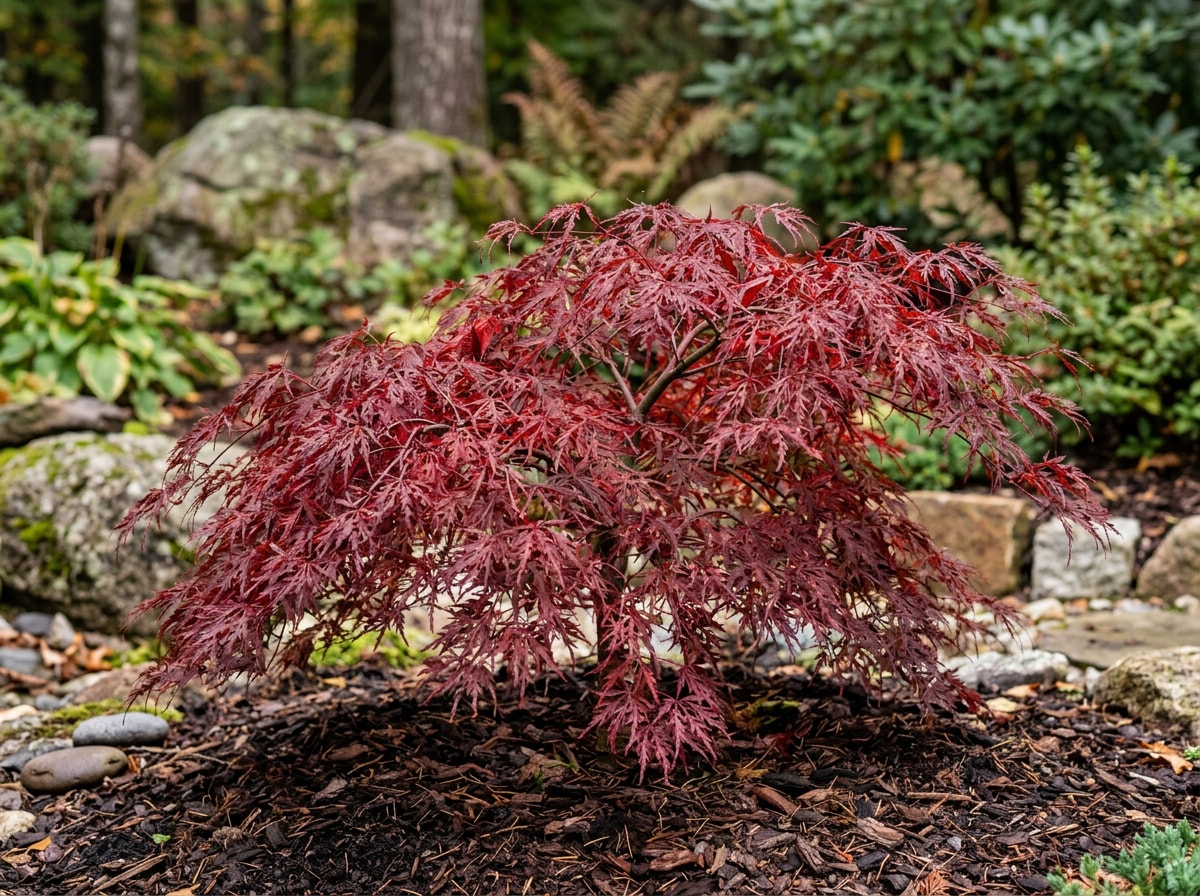
A weeping Japanese maple forms a mounding, cascading canopy instead of growing upright. The drooping branches work well along border edges, raised beds, or near a water feature where the form can spill over naturally.
Upright Compact Dwarf Japanese Maples
Upright dwarf cultivars grow with dense, tidy branching instead of a weeping habit. That shape fits foundation plantings, narrow side yards, or any spot that needs a small accent tree without a sprawling canopy.
Choosing Foliage Color
Green-leafed cultivars hold bright green color through spring and summer before shifting to gold or orange in fall, which blends more neutrally into mixed plantings. Red and burgundy cultivars give stronger contrast against lawns and evergreens, but some varieties bleach out in strong afternoon sun, so confirm heat tolerance before planting one in an exposed, south-facing bed.
Planting a Dwarf Japanese Maple: Soil, Sun, and Spacing
Good results start with soil and light, before any design decisions get made.
Soil Requirements and pH
Dwarf Japanese maples want well-drained soil rich in organic matter, with a target pH in the slightly acidic range of roughly 5.5 to 6.5. Much of Fairfax County sits on dense clay, so it's worth running a soil test before planting. A routine soil test package includes analyses for soil pH, phosphorus, potassium, calcium, magnesium, zinc, manganese, copper, iron and boron, along with fertilizer and lime recommendations for specified plants. You can get a kit through Fairfax County's soil testing program for a few dollars, and results typically come back within a few business days.
If your test shows heavy clay or poor drainage, work compost or aged bark into the planting bed, and raise the root ball slightly above grade so it doesn't sit in standing water after a storm.
Sunlight and Watering
Most dwarf cultivars prefer partial shade, especially protection from harsh afternoon sun in peak summer. Giving the tree afternoon shade reduces leaf scorch risk in our humid climate. Keep a consistent watering schedule, especially during the first two growing seasons while roots establish, then taper off once the tree is settled.
How Far From the House to Plant
Most smaller-maturing cultivars should sit at least 6 feet from a foundation, sidewalk, or driveway. That spacing accounts for mature canopy width and keeps roots from interfering with nearby hardscaping.
Designing with a Dwarf Japanese Maple in the Landscape
These trees work best treated as design elements, not just plants, whether as a focal point, an accent, or part of a layered bed.
Placement Ideas
A dwarf Japanese maple makes a natural centerpiece next to stone or gravel, since its form reads clearly against a hard surface. If you're building a rock garden or a dry creek bed around one, pairing it with natural stone through a stone masonry accent or a low garden wall gives the tree a defined frame instead of letting it float in open mulch.
Companion Planting
Low groundcover like Irish moss or creeping thyme pairs well beneath a dwarf maple's canopy, filling space without competing for root room. For homeowners leaning toward lower-maintenance, regionally adapted plantings around the tree, our guide to natural landscaping in Fairfax County covers native companion options that pair well with an ornamental specimen like this.
Container Plantings
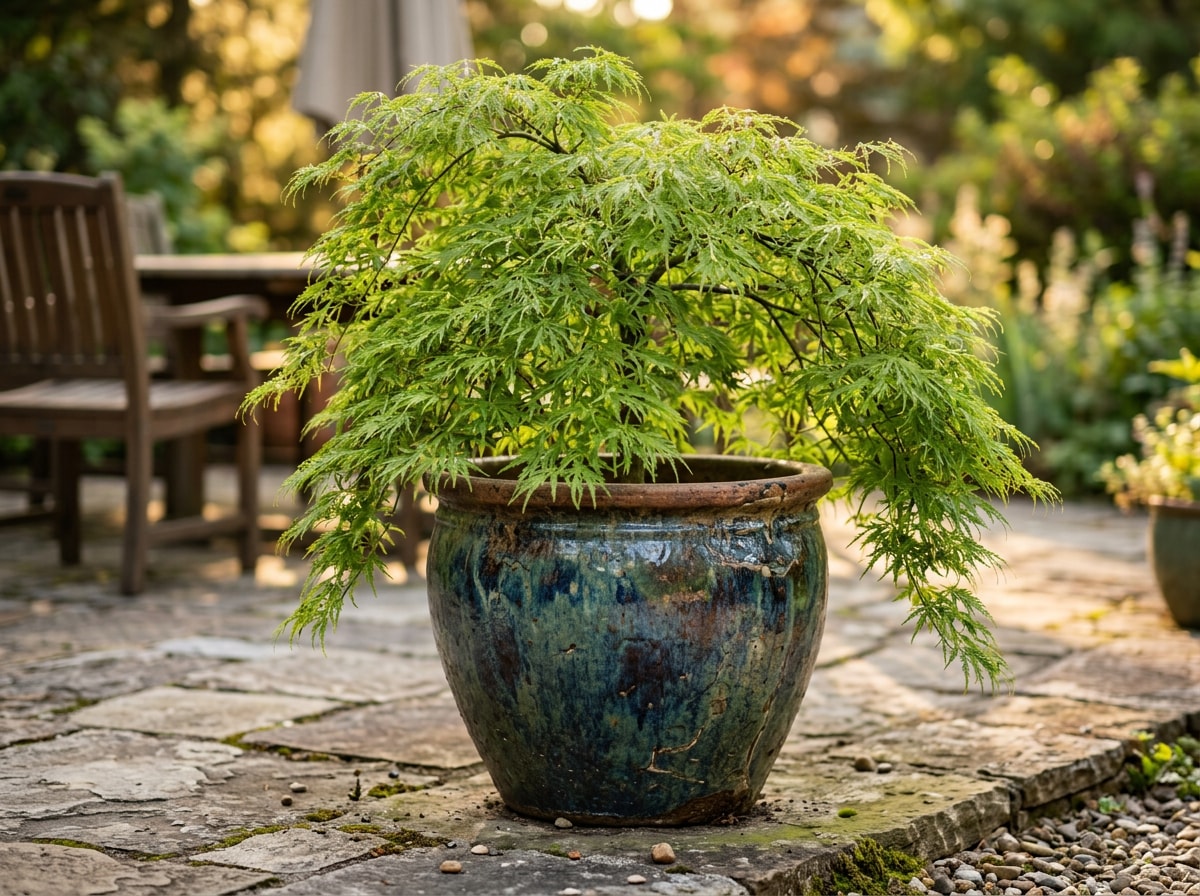
A dwarf Japanese maple also works in a large container on a patio or entryway where ground space is limited. If you're adding a new patio and want the tree built into the layout from the start rather than squeezed in afterward, our patio installation team can plan planting pockets and drainage into the design.
Pruning and Seasonal Care
Once established, dwarf Japanese maples need little upkeep, but a couple of seasonal tasks matter for long-term shape and health.
Prune mostly to remove dead or crossing branches during the dormant winter season, using clean, sharp shears sanitized between cuts to avoid spreading disease. No more than 25% of the crown should be removed at once, and less for mature trees. You can review full technique guidance from the International Society of Arboriculture's pruning resources before making structural cuts on an older specimen.
Watering, light pruning, and an annual mulch refresh are really all a healthy dwarf maple needs. If you want the whole bed designed around the tree rather than tackled piece by piece, start with a free estimate and we'll walk the site with you.
FAQ
How close can you plant a dwarf Japanese maple to a house?
At least 6 feet from a foundation, sidewalk, or driveway. This spacing accounts for mature canopy width and keeps the root system from interfering with hardscaping or the home's foundation.
Can a dwarf Japanese maple take full sun?
Some cultivars tolerate full sun better than others, but in Fairfax County's hot, humid summers, most benefit from partial shade during peak afternoon hours. Without it, foliage on thinner-leafed varieties can develop leaf scorch.
How big does a dwarf Japanese maple get?
Mature size varies by cultivar, but most dwarf types reach 4 to 10 feet tall with a similar spread at maturity, usually over 10 to 15 years.
Can you water a Japanese maple too much?
Yes. Overwatering in heavy or poorly draining soil can lead to root rot. Deep, infrequent watering in well-draining soil is safer than frequent light watering, especially once the tree is established.
How fast do dwarf Japanese maples grow?
Slowly. Most dwarf cultivars gain well under a foot per year, which is exactly why they stay manageable in small yards for decades without crowding nearby plantings or hardscaping.
Do dwarf Japanese maples lose their leaves in winter?
Yes. They're deciduous, so they drop foliage in late fall after a final color display and leaf back out in spring. The bare branch structure on weeping cultivars is still an attractive winter feature in the landscape.
---
About the author: This guide was written by the team at CM Hardscapes, a hardscape and masonry contractor serving Fairfax County, Arlington, and Alexandria, VA. Our crews work around established and newly planted ornamental trees on patio, walkway, and retaining wall projects throughout Northern Virginia, which is where the soil and placement notes in this guide come from. Questions about designing a bed, patio, or wall around a specimen tree? Contact us or browse recent projects for ideas.