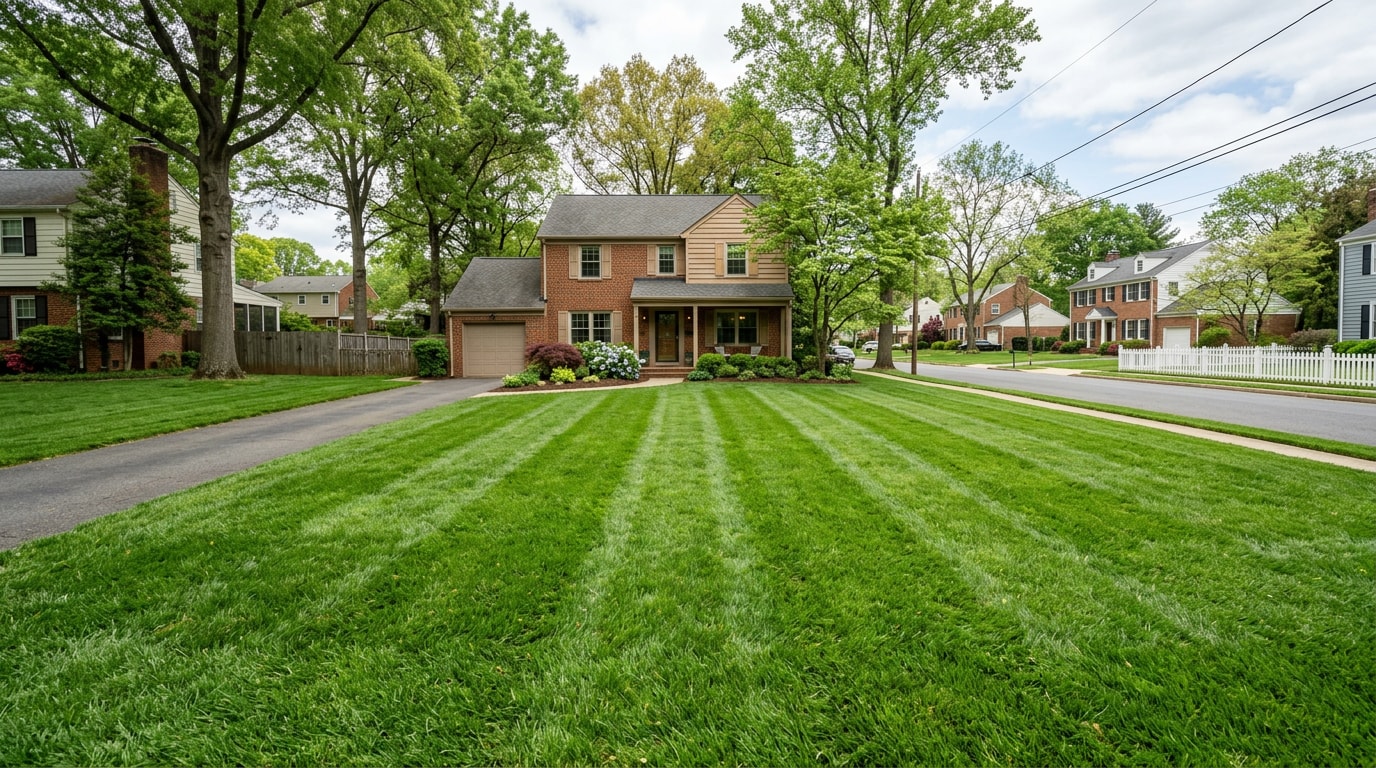
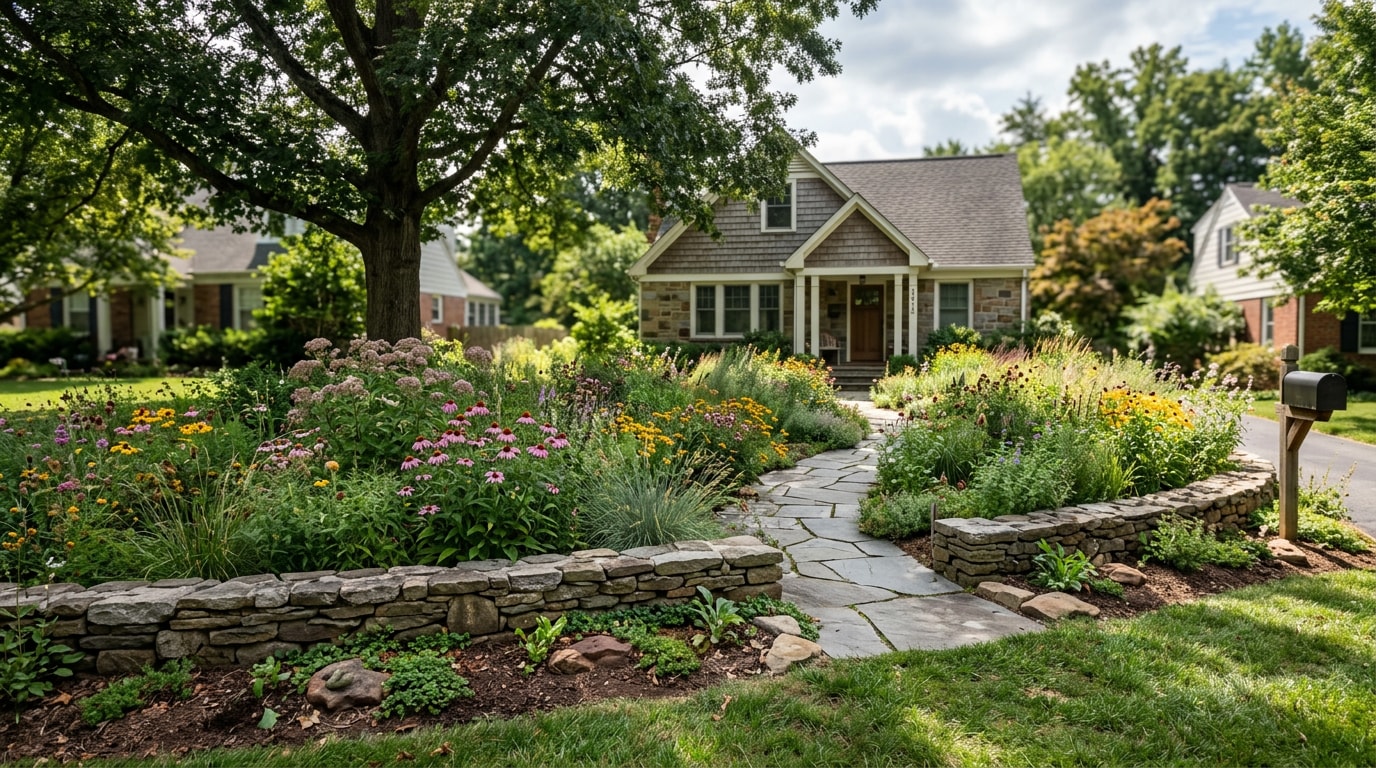
Natural landscaping in Fairfax County, VA means designing with Piedmont clay, mature tree canopy, and cold winters instead of fighting them. Fairfax County itself runs an official Natural Landscaping Policy for public property, built on the same native-plant principles a homeowner can use in a front or back yard. This guide covers what actually qualifies as natural landscaping here, which plants hold up, and where hardscaping fits into the plan.
What Fairfax County Means by "Natural Landscaping"
The term has a specific local meaning, not just a marketing phrase. The Fairfax County Board of Supervisors adopted a Natural Landscaping Policy and associated manual in 2007 directing staff to use native plant species at county facilities . The county's manual states that it is official policy to apply natural landscaping concepts and techniques to the design, installation, and maintenance of county-owned property.
In practice, that means meadow- and woodland-style plantings that mimic how native plant communities grow on their own, rather than a few native shrubs dropped into a conventional foundation bed. On a private lot, the same approach applies: group plants the way they'd cluster naturally, match species to the sun, shade, and moisture already on site, and let seasonal bloom succession do the work a lawn mower used to do.
Piedmont clay soils, partial canopy shade from mature hardwoods, and a cooler Zone 7a winter range mean a generic Mid-Atlantic plant list will not automatically thrive in Fairfax County. A plan built around these specific conditions is what makes natural landscaping genuinely low-maintenance over time, not just low-input on paper.
Why Natural Landscaping Works in Fairfax County
Two benefits matter most for homeowners: lower upkeep and better handling of water on clay soil. A third, less talked about, is resale value.
Less Water and Less Mowing
Watering matters most during the first three weeks after planting, since that establishment window determines whether roots take hold at all. Watering is probably the most important maintenance practice for successful plant establishment, and the most critical period for watering all plants is right after planting and for three weeks after planting. After that window, the maintenance load drops sharply. Once established, most native plants do not need frequent or regular watering.
That is not the same as zero maintenance. Weeding, occasional thinning, and keeping invasive species out of a meadow bed still take time every season.
Erosion Control on Clay Slopes
Fairfax County's clay soils drain slowly and erode fast on any real grade. The county's own plant list for drainage problems recommends native species for erosion control, noting that most are good for moist, shaded conditions, which are often the conditions found in eroding yards . Deep native root systems hold that soil in place in a way turf grass simply cannot. Their deep roots help prevent soil erosion, and because native plants are already suited to local conditions, they typically require less water, fewer fertilizers, and fewer pesticides than ornamental alternatives.
On the retaining walls and walkways we build across Fairfax County's sloped lots, we routinely see bare cut banks erode within a season while adjacent native plantings hold firm. For slopes steeper than a gentle grade, a structural fix like a retaining wall still does more than any plant alone.
Property Value and Canopy Goals
Natural landscaping is not just an ecological choice. Professional, healthy landscaping can increase a home's resale value by 10% to 15% and help it sell up to six weeks faster. That return is part of why the county tracks its own canopy numbers closely: in 2021, the existing forest and neighborhood trees in Fairfax County covered approximately 55% of the land area , and the county is working toward 60% by 2030. A yard planted to work with that shade, not against it, ages better than one planted to resist it.
Best Native Plants for Fairfax County Yards
Plant selection depends on the conditions already in your yard. Sun, shade, moisture, and deer traffic all determine which Northern Virginia natives will actually survive.
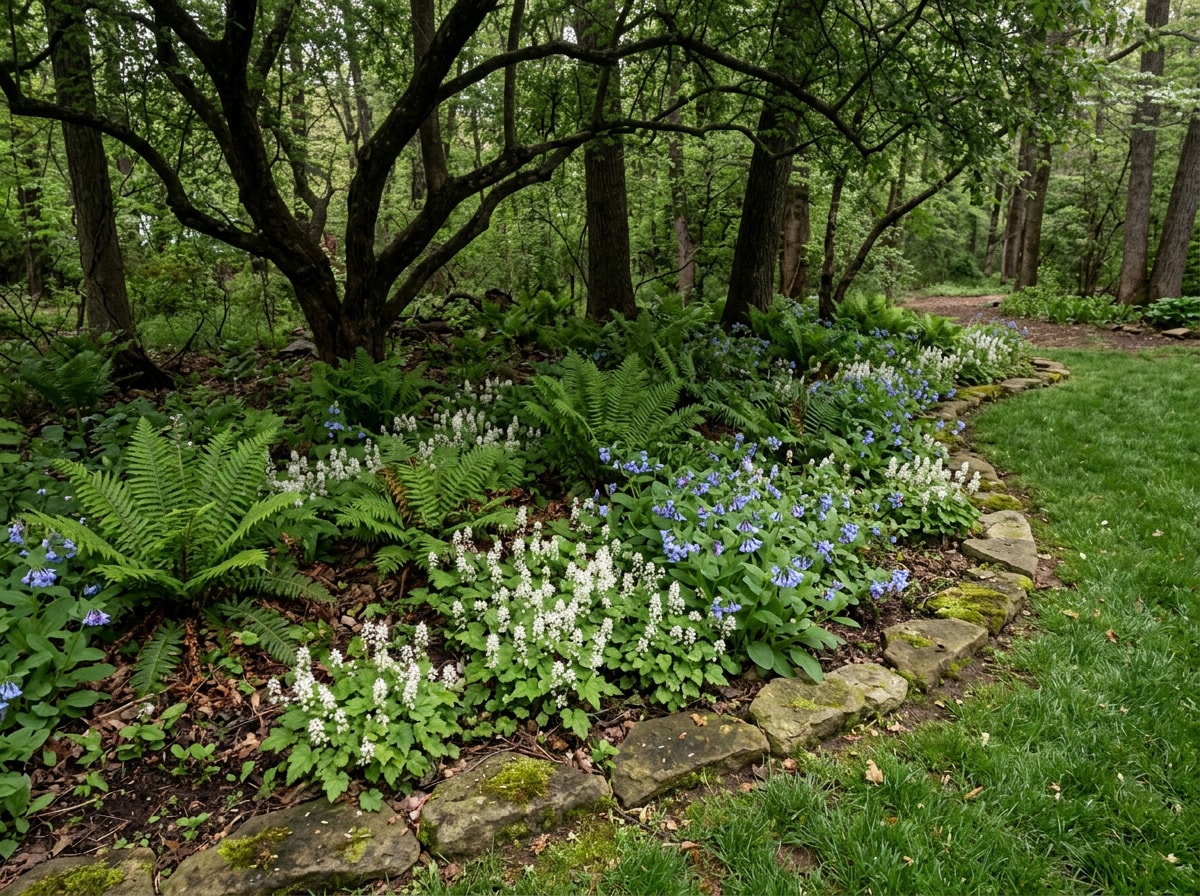
For shaded yards (most of Fairfax County):
- Christmas fern and cinnamon fern for deep shade and clay tolerance
- Virginia bluebells for a spring bloom under deciduous canopy
- Foamflower as a low groundcover that competes well with tree roots
For sunny borders and pollinator beds:
- Black-eyed Susan
- Purple coneflower
- Little bluestem for structure and winter interest
For wet, low-draining spots:
- Swamp milkweed
- Blue flag iris
For open meadow areas:
- Switchgrass and other native warm-season grasses for movement and low mowing needs
For deer pressure:
- Virginia sweetspire
- Native ferns, which deer generally avoid
No plant on this list is fully deer-proof under heavy browsing pressure, but all of them hold up far better than hostas, azaleas, or daylilies.
Most of Fairfax County sits in USDA Hardiness Zone 7a, with pockets closer to 7b depending on elevation and proximity to the Potomac. Annandale, Chantilly, and Herndon are all mapped at Zone 7a, with average lows of 0°F to 5°F . The USDA Plant Hardiness Zone Map is the standard reference for confirming your specific zone before ordering plants.
Where Hardscaping Fits Into a Natural Landscape
This is the part most native-plant guides skip, and it is where a lot of natural landscaping plans fall apart in practice. Meadow and woodland beds still need structure, or they turn into an unmanageable tangle within a couple of seasons.
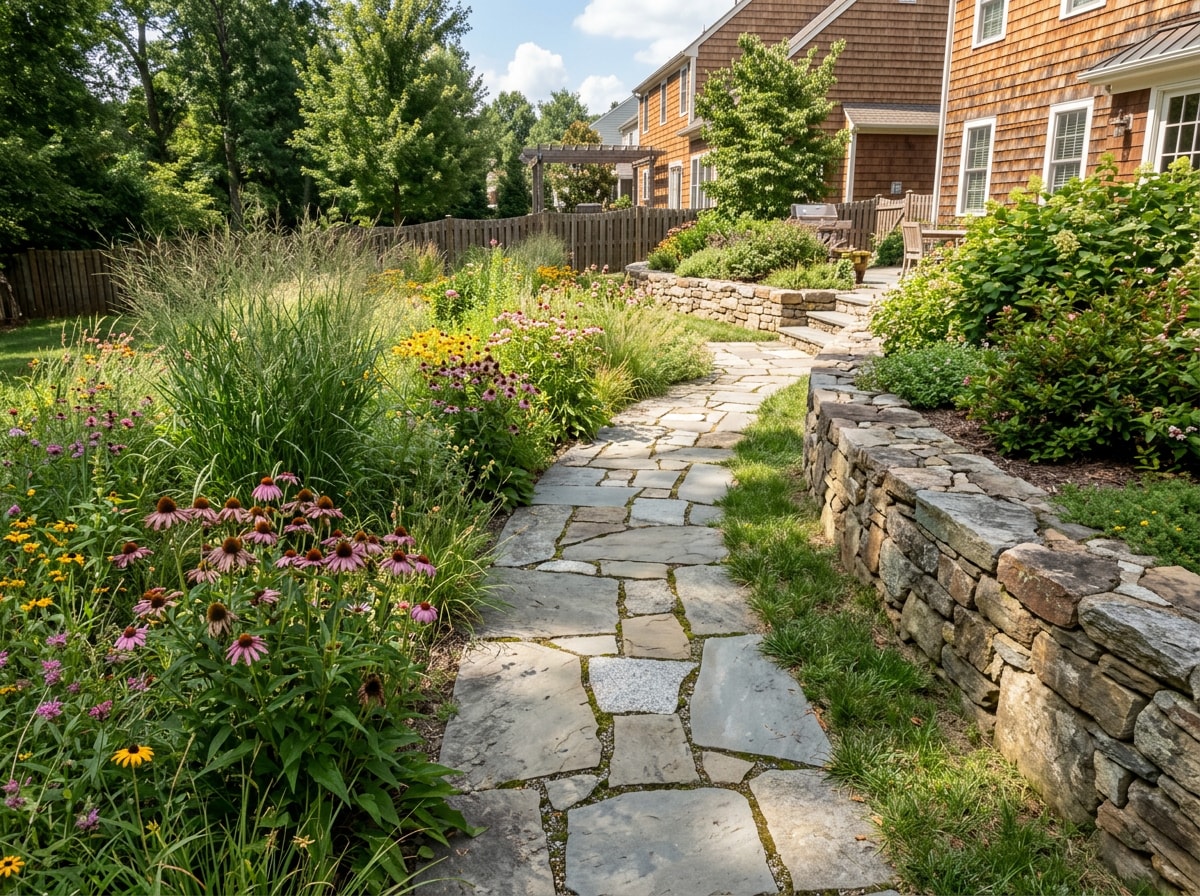
- Retaining walls hold soil on grade changes so planting beds do not wash out. See our retaining wall installation work for examples.
- Walkways keep foot traffic off root zones and define where a meadow bed starts and stops. Our walkway installation services tie paths directly into planting plans.
- Garden walls frame a naturalized bed so it reads as intentional design rather than an untended lot, which matters for HOA-governed neighborhoods. Explore garden wall installation options.
- Fire pits and patios give a naturalized backyard a place to actually sit and use the space. Check out fire pit installation and patio installation for how these pair with plantings.
If you're weighing the full cost of a project that combines plantings with hardscape, our backyard landscaping cost guide for Fairfax County breaks down typical pricing ranges for 2026.
Natural Landscaping vs. a Conventional Lawn
| Factor | Natural/Native Landscaping | Conventional Turf Lawn |
|---|---|---|
| Watering after establishment | Rarely needed once roots take hold | Regular watering through summer |
| Mowing | Little to none in meadow or woodland beds | Weekly mowing in season |
| Fertilizer and pesticide use | Minimal; plants are suited to local soil | Routine applications common |
| Erosion control on slopes | Deep roots stabilize clay slopes | Shallow turf roots offer limited hold |
| Wildlife and pollinator value | Habitat for bees, butterflies, birds | Limited habitat value |
Planning and Installing a Natural Landscape
A workable plan starts with a site assessment, not a plant list. Map where sun, shade, moisture, and drainage actually fall across the property before picking a single species.
From there, plants go in clusters, not singles, so masses read as intentional and fill in over a season or two. Grading and drainage issues get addressed before planting, since no amount of root structure fixes a yard that holds standing water against a foundation.
Hardscape elements, walls, walkways, steps, get built into that same plan from the start rather than added as an afterthought once the beds are already in. You can browse completed examples of this kind of integrated work on our projects page.
If you're planning a natural landscape anywhere in Fairfax County, VA, get a free estimate and we'll walk the site with you before you buy a single plant. See our full range of hardscape contractor services, or visit our Fairfax County, VA area page for service details in your neighborhood. You can also learn more about our full scope of work on the C&M Hardscapes homepage.
FAQ
Is using native plants in landscaping beneficial to the environment?
Yes. Native plants conserve water, reduce chemical use, and support pollinators and local wildlife far more effectively than exotic ornamentals.
How do I landscape with native plants in Fairfax County?
Map your yard's sun and shade zones first, then choose Virginia natives suited to each one. Group plants by water needs and plant in clusters rather than single specimens.
Are natural landscapes low maintenance?
Maintenance is reduced, not eliminated. Established native plants need less water and fertilizer, but weeding, thinning, and keeping invasive species out still take regular attention.
When's the best time to plant natives in Fairfax County?
Spring and fall are ideal, since cooler temperatures let roots establish before summer heat or winter cold sets in. Most of the county falls in USDA Hardiness Zone 7a, which should guide your planting calendar.
Does Fairfax County have an official natural landscaping policy?
Yes. The Fairfax County Board of Supervisors adopted a Natural Landscaping Policy and associated manual in 2007 directing staff to use native plant species at county facilities , and that same native-plant model now guides much of the private landscaping done in the county.
Do I need hardscaping for a natural landscape?
Usually, yes, on any yard with slope, foot traffic, or a gathering space. Retaining walls hold soil on grade changes, walkways keep traffic off root zones, and a patio or fire pit gives the planting a place to actually be used.