If you're trying to figure out how to regrade a yard in Arlington, VA, you've probably already got water pooling somewhere it shouldn't. Regrading reshapes the slope of your lawn so water runs away from your home instead of toward it. This guide walks through the actual DIY steps, the Arlington-specific permit rules most articles skip, and the point where hiring a pro saves you money instead of costing you more.
What Does Regrading a Yard Mean?
Yard grading refers to the slope and shape of your lawn. Regrading means reshaping that slope, usually to fix drainage rather than just to make the ground flatter.
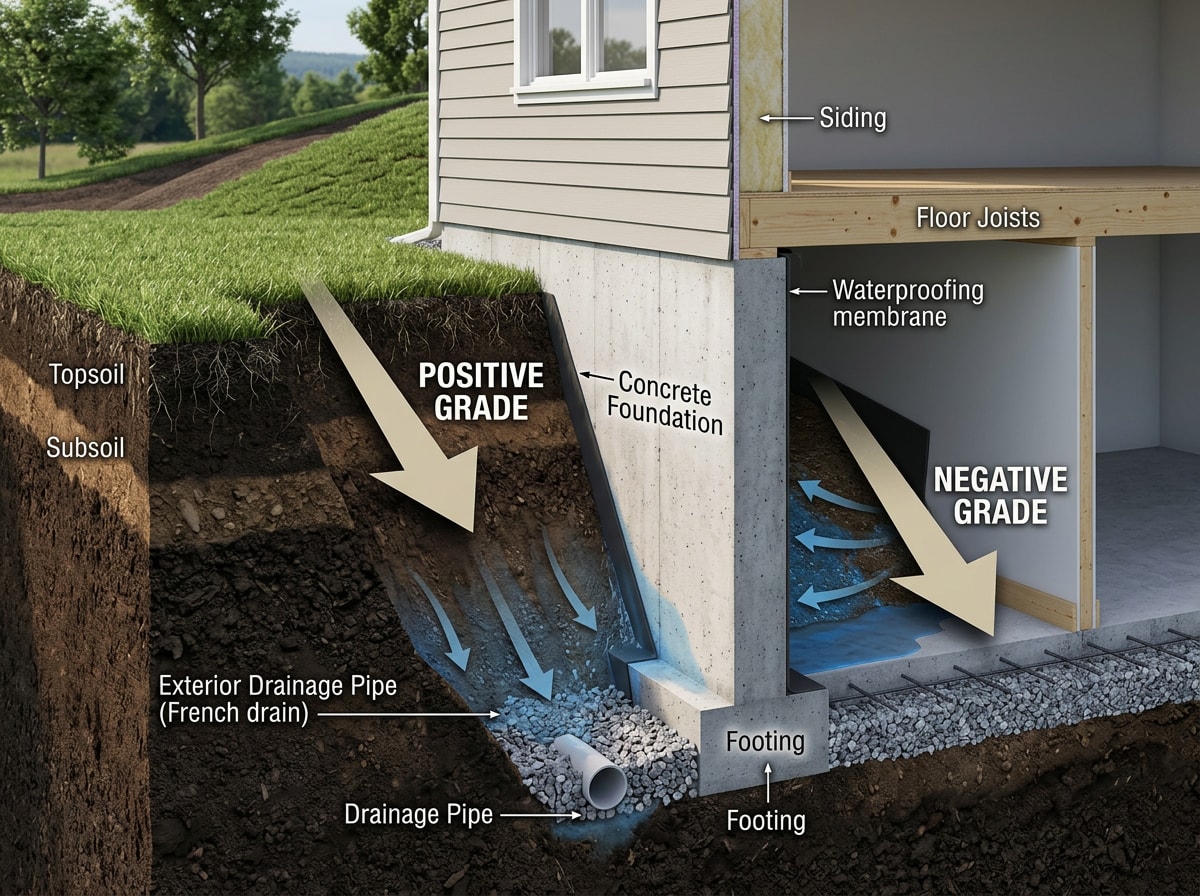
Grading comes down to two outcomes: a positive grade, where soil slopes away from your foundation, and a negative grade, where it slopes toward it. Positive grade is what you want. Negative grade sends water straight toward your basement or crawl space.
Arlington's older housing stock complicates things. Many lots were graded decades ago, before current drainage standards existed, and they sit on dense clay soil spread across the county's hilly terrain. In our experience working on properties throughout Arlington's older neighborhoods, yards built in the 1940s and 1950s are the most common source of negative-grade complaints, simply because nobody was grading to a 5% drainage standard back then.
Signs & Common Reasons Your Yard Needs Regrading
Most Arlington homeowners don't think about yard grading until something goes wrong. Two problems tend to show up first: water that won't drain, and ground that's visibly eroding.
Poor Drainage
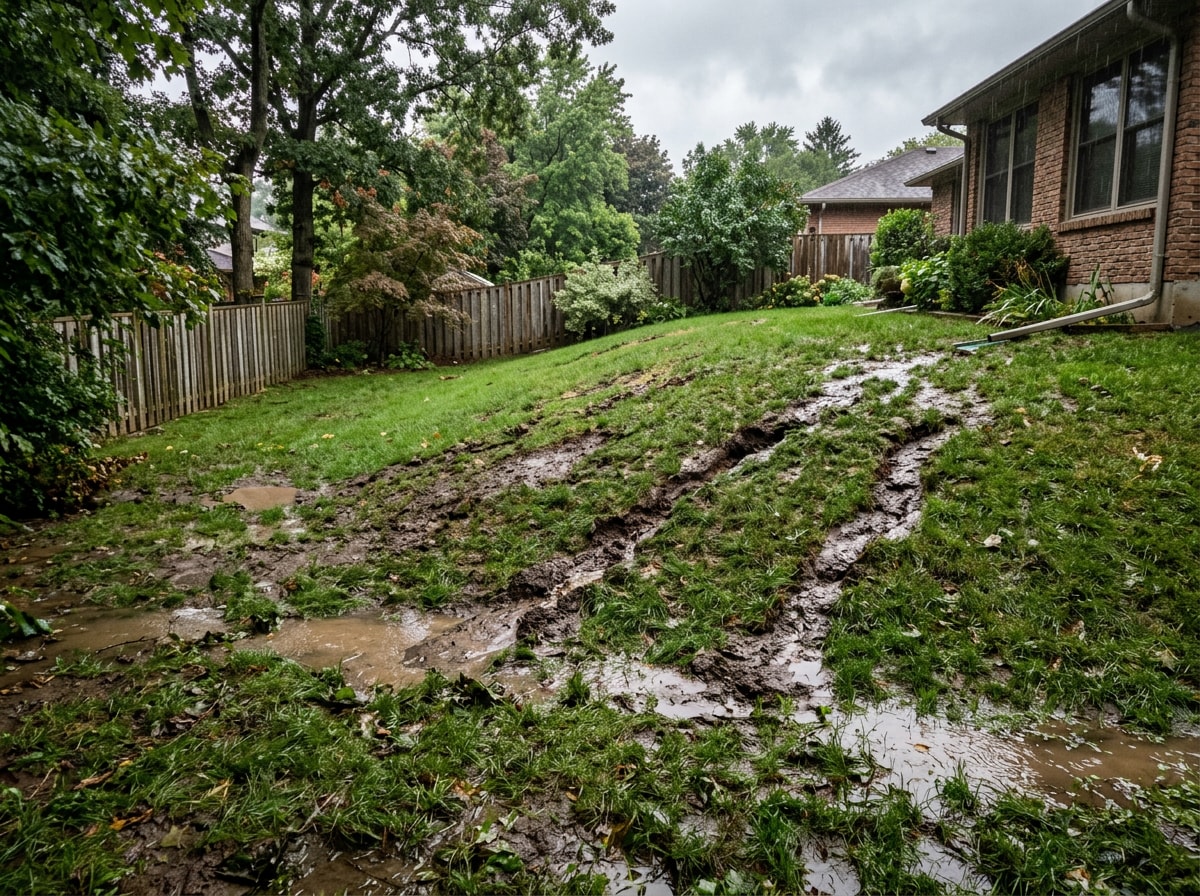
Water that pools in the yard or flows toward the house instead of away from it is more than a nuisance.
- Standing water that lingers for a day or two after rain creates ideal mosquito breeding grounds.
- Waterlogged soil suffocates grass roots, leaving bare or yellowing patches.
- Pooling water near the foundation can seep into basements, soften soil under footings, and contribute to cracks or settling.
That last point is the expensive one. Foundation repairs cost far more than a weekend of regrading would have cost to prevent.
Erosion Problems
A steep slope without proper grading sheds topsoil every time it rains hard. That washed-away soil takes grass seed, mulch, and plantings with it, often carving small gullies that deepen with each storm. An uneven yard also makes mowing awkward and sometimes unsafe, especially on slopes with kids or pets nearby.
The NRCS Urban Soil Primer explains how urban soil compaction and disturbed grading patterns accelerate erosion on residential lots, which is a big part of why Arlington's older, regraded properties erode faster than newly built ones.
How to Regrade a Yard: Step-by-Step DIY Process
- Call Virginia 811 first. This free service marks buried gas, electric, and water lines before you dig. Skipping it risks dangerous accidents or expensive repairs, and Virginia 811 requires at least three business days' notice before you start.
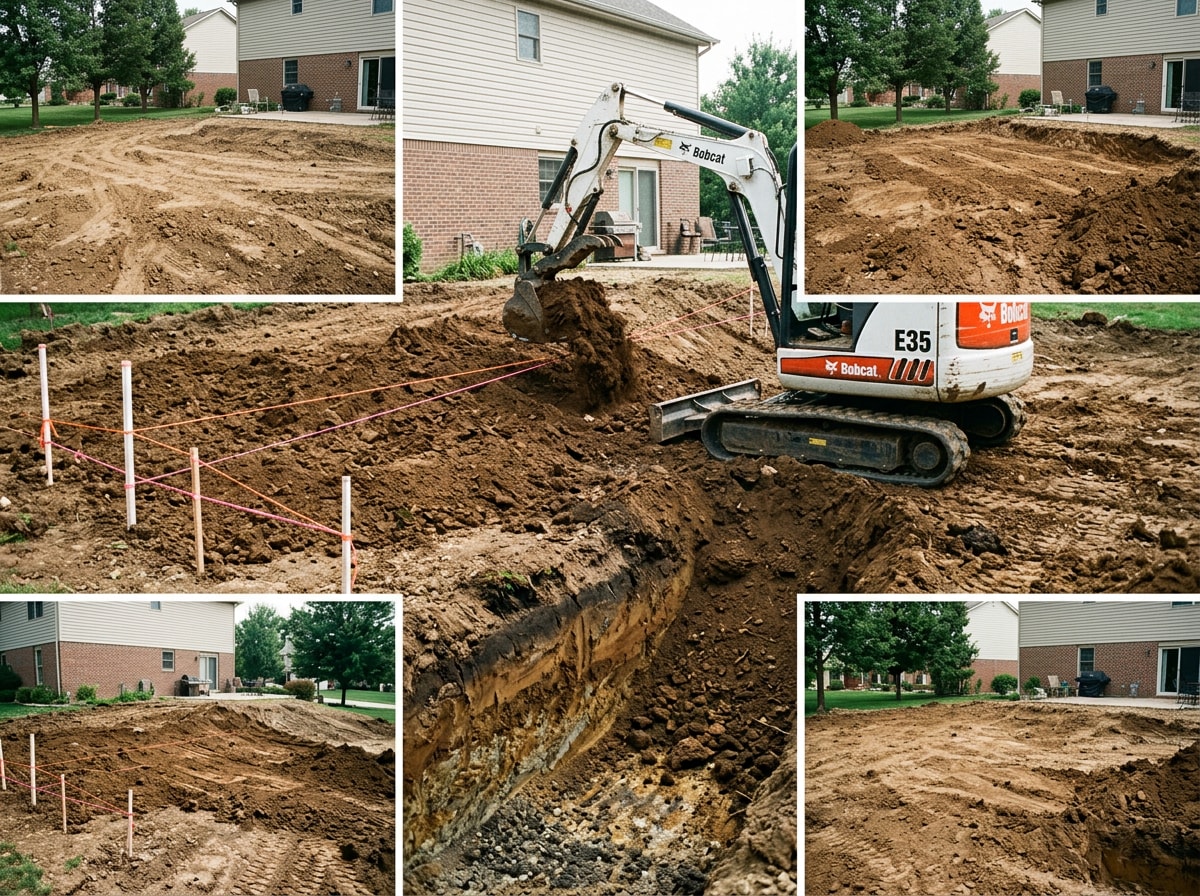
- Clear the work zone. Remove sod and strip the top 2 inches of topsoil, setting it aside for reuse. Small areas just need a shovel and rake; larger yards usually call for a rented mini excavator or small backhoe.
- Move soil from high points to low points to create your planned slope, checking your grade as you go.
- Add fill in thin layers, a few inches at a time, compacting each layer before adding more. Skipping compaction is the most common DIY mistake, since uncompacted fill settles unevenly over the following months.
- Replace topsoil and sod, then water thoroughly to help everything settle.
This approach works well for localized problem areas. Larger projects or steep-slope corrections usually need heavier equipment than most homeowners have on hand.
What Equipment Do I Need?
A basic hand-grading project needs surprisingly few tools:
- Two wooden stakes
- A carpenter's level
- About 12 feet of string
- A tape measure
- A hoe, rake, or shovel for moving soil
- A sturdy landscaping rake to smooth and level fill soil once it's in place
For anything beyond a small patch, a full backyard, a steep slope, or heavy clay that's hard to break up by hand, renting a small earth-moving machine like a compact track loader saves time and your back.
Finding Your Yard's Slope
- Drive a stake near the foundation and tie a string to it at ground level.
- Measure 10 feet out and drive a second stake.
- Level the string between the two stakes using a carpenter's level.
- Measure how far the string sits above the ground at the far stake.
That measurement tells you your grade percentage. A string sitting 3 inches higher at the 10-foot mark works out to roughly a 2.5% grade, below what most codes recommend.
The 2021 International Residential Code, Section R401.3 requires lots to be graded to drain surface water away from foundation walls, with the grade falling not fewer than 6 inches within the first 10 feet . That's about a 5% slope for the first 10 feet, with 2% recommended beyond that. Anything flatter tends to let water linger near the house.
DIY vs. Hiring a Professional for Yard Regrading
Bigger projects tip the scale toward hiring out. Regrading an entire yard, correcting a steep slope, or working around mature trees and existing hardscaping takes more labor and equipment than most Arlington DIYers have on hand. A professional crew also keeps the grade consistent across the whole property, which matters if you're planning a patio installation or retaining wall installation on top of the regraded area later.
Professional regrading makes sense when:
- Drainage problems are complex or recurring
- The property is large or has multiple low points
- Utilities, mature trees, or existing structures are nearby
- You're preparing the yard for a future hardscape project
Experienced contractors bring equipment, technical know-how, insurance, and the ability to pull permits when a project requires one.
DIY regrading, on the other hand, costs a fraction of professional rates since you're mainly paying for materials and equipment rental rather than labor. It demands physical stamina and access to the right tools, but if your project is one problem spot rather than a whole-yard issue, DIY is often the more practical choice.
Not sure which category your yard falls into? A hardscape contractor can assess the slope and recommend next steps before you rent a single tool. CM Hardscapes also serves Alexandria, VA, Fairfax, VA, and Fairfax County, VA if you're comparing drainage and grading options across Northern Virginia.
Cost to Regrade a Yard in 2026
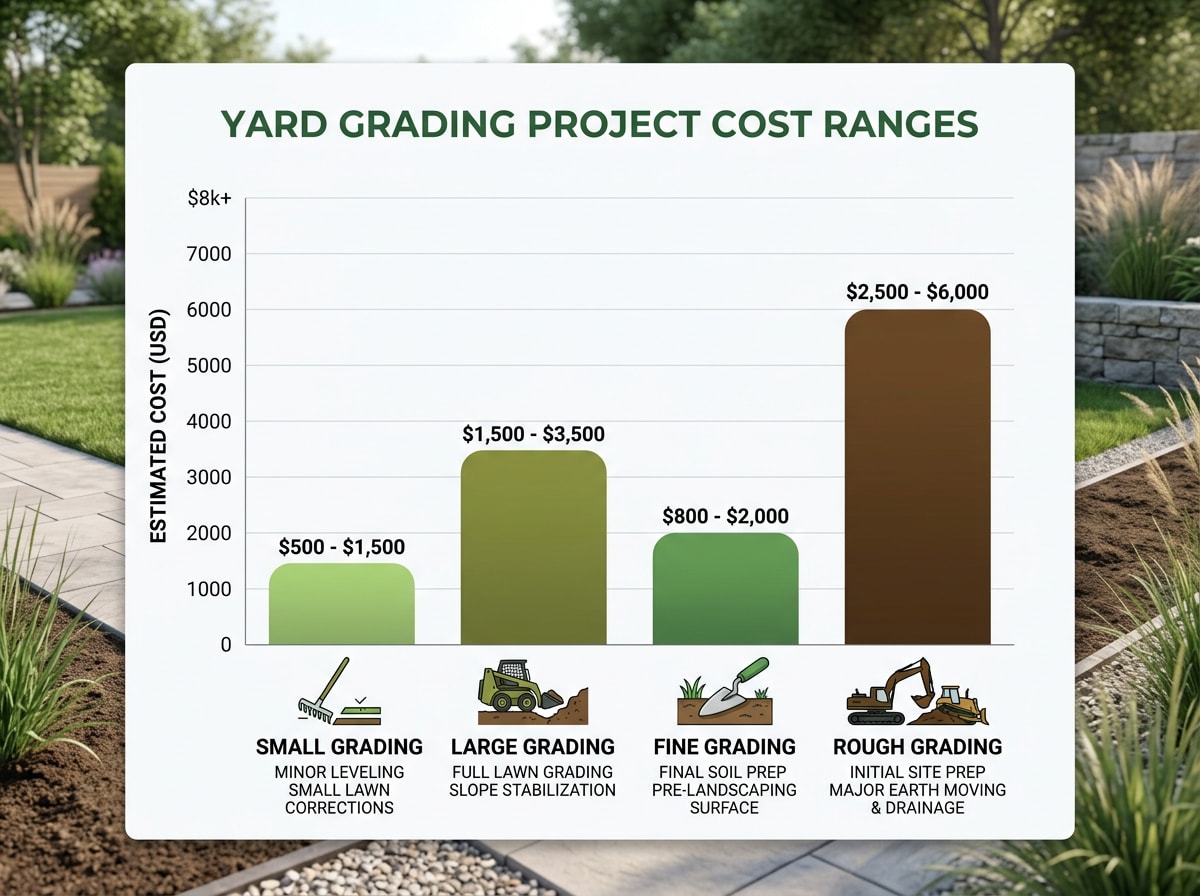
Regrading a yard in Arlington typically costs $500 to $1,000 for small lawns and $1,000 to $5,000 for an average backyard project, with straightforward land leveling running $0.40 to $2.00 per square foot.
| Project Type | Cost Range |
|---|---|
| Small grading project (patio, pool, or single foundation wall) | $500 – $1,000 |
| Large grading project (full backyard or new-construction lot) | $1,000 – $5,000 |
| Fine or finish grading | $0.40 – $1.00 per sq. ft. |
| Rough grading | $1.00 – $2.00 per sq. ft. |
DIY costs stay near the bottom of these ranges since you're mainly paying for soil, stakes, and a weekend equipment rental. Full-service professional pricing covers labor, heavier equipment, and cleanup, which pushes costs toward the higher end.
Northern Virginia's dense clay soil can push prices toward the top of these ranges regardless of which route you choose, since clay is heavier to move and often needs amendment to drain well. If you're already planning a concrete patio installation or walkway installation, grading the site correctly first avoids having to redo hardscape work later.
See our Arlington, VA service area page for more on local conditions, or request a free grading quote to compare DIY and professional options side by side.
If you're dealing with a low spot that keeps collecting runoff even after grading, pairing the regraded slope with a drainage-focused ground cover is often the fastest fix. Our guide to river rock landscaping in Arlington, VA covers how to channel water through a dry creek bed once the grade itself is correct.
FAQ
Can I Grade My Yard Myself?
Yes, for small projects. Localized grading around a foundation, patio, or single problem spot is DIY-friendly with basic tools. Larger projects, steep slopes, or yards with obstacles like mature trees and large rocks usually need professional equipment and expertise to get right.
Do I Need a Permit to Regrade My Yard in Arlington?
It depends on how much ground you're disturbing. A LDA/SWM permit is required for any activities that disturb equal to or greater than 2,500 square feet of land, as required by the Erosion and Stormwater Management Ordinance, Chapter 60, and the Virginia Erosion and Sediment Control Program . If your total disturbed area is less than 2,000 square feet, you do not need a LDA/SWM permit, and between 2,000 and 2,499 square feet, you'll need a survey of the disturbed area . Most single-spot DIY regrading projects fall well under that threshold. Confirm your specific project with Arlington County's Land Disturbing Activity/Stormwater Permit office before you start moving soil.
How Long Does It Take to Regrade a Yard?
Timelines depend on size and complexity. A DIY project typically takes five to seven days, spread across evenings and weekends. Professional crews usually need just 12 to 24 hours of actual labor, completed over two to three days once equipment and scheduling are factored in.
What Kind of Soil Should I Use to Grade My Yard?
Use a dense soil like clay for the bulk of the new slope, since it compacts well and resists erosion once settled. Reserve fertile topsoil for the top few inches only, where it supports grass seed or sod growth.
What Is the Minimum Slope for a Yard to Drain Properly?
The widely used benchmark is 6 inches of fall over the first 10 feet from your foundation, about a 5% grade, with a gentler 2% slope recommended beyond that point. This is the standard referenced in the International Residential Code's drainage section, and it's a good target even for yard areas that aren't technically regulated by the code.
How Do I Fix a Yard That Slopes Toward My House?
Regrade the soil near the foundation so it slopes away instead, following the 6-inch-in-10-feet benchmark above. If a physical barrier like a lot line, retaining wall, or neighboring structure prevents a full regrade, install a swale or French drain to redirect water around the house instead. Combining a corrected grade with a retaining wall installation is common on Arlington's hillier lots where space is tight.
When Is the Best Time of Year to Regrade a Yard?
Spring or fall, during dry weather, tends to work best for regrading. If you have an active drainage problem causing damage, address it immediately rather than waiting for ideal conditions. Either way, plan to reseed or sod right after grading so exposed soil doesn't erode before grass can establish.
Ready to stop guessing and get your yard properly graded? Visit CM Hardscapes or request a free estimate to get a crew out to assess your slope before the next storm.