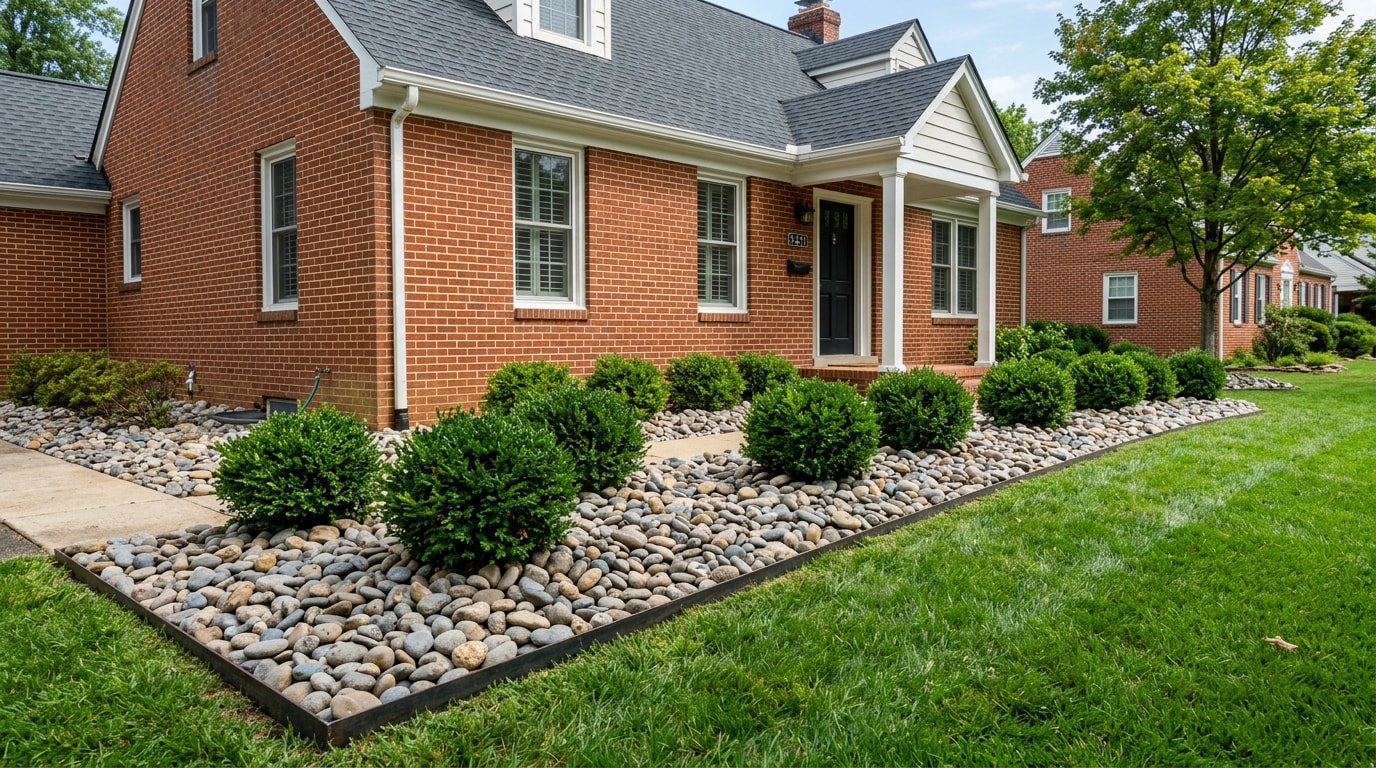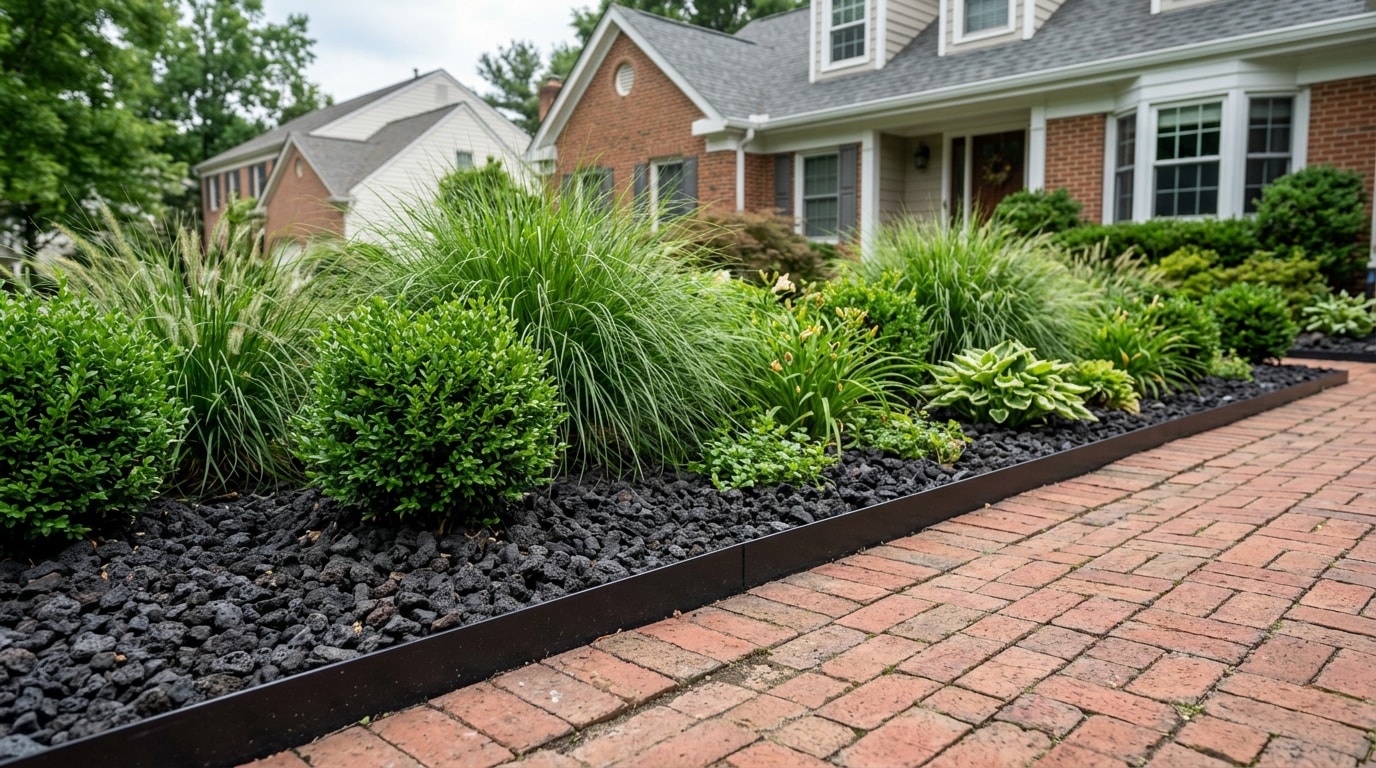
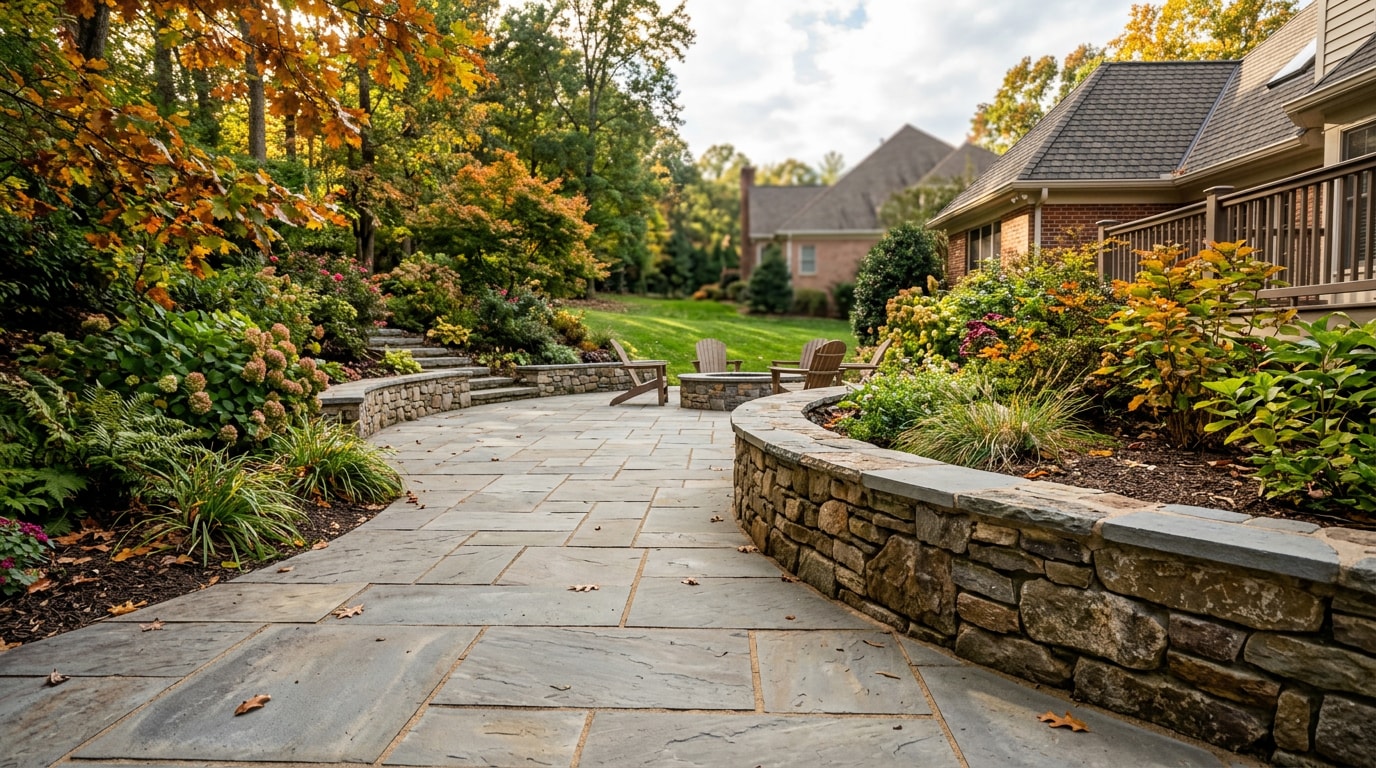
What is hardscape landscaping in Fairfax, VA? It's the built, non-living side of your yard: patios, walkways, retaining walls, and similar structures made from stone, pavers, brick, or concrete. If you're weighing a patio or wall project, the real question isn't just "what is it" but how Fairfax's clay soil, drainage patterns, and permit rules change the way it gets built.
What Is Hardscaping, Exactly?
Hardscape landscaping refers to the non-living, built elements of an outdoor space: patios, walkways, retaining walls, steps, and similar structures made from stone, concrete pavers, or brick. Landscaping is the broader umbrella term covering both hardscape and softscape: lawns, shrubs, trees, and garden beds.
Hardscape vs. landscaping isn't an either-or question. Landscaping includes everything outdoors, while hardscaping specifically means the non-living elements that give a yard structure and usability. Common hardscape features include:
- Patios (natural stone, pavers, or concrete)
- Walkways and front paths
- Retaining and garden walls
- Steps and stoops
- Driveways
- Fire pits and outdoor fireplaces
In Fairfax, VA, a well-planned mix of hardscape and softscape typically produces the most functional and attractive result. Browse examples on our hardscape contractor services page to see how these elements come together on real properties.
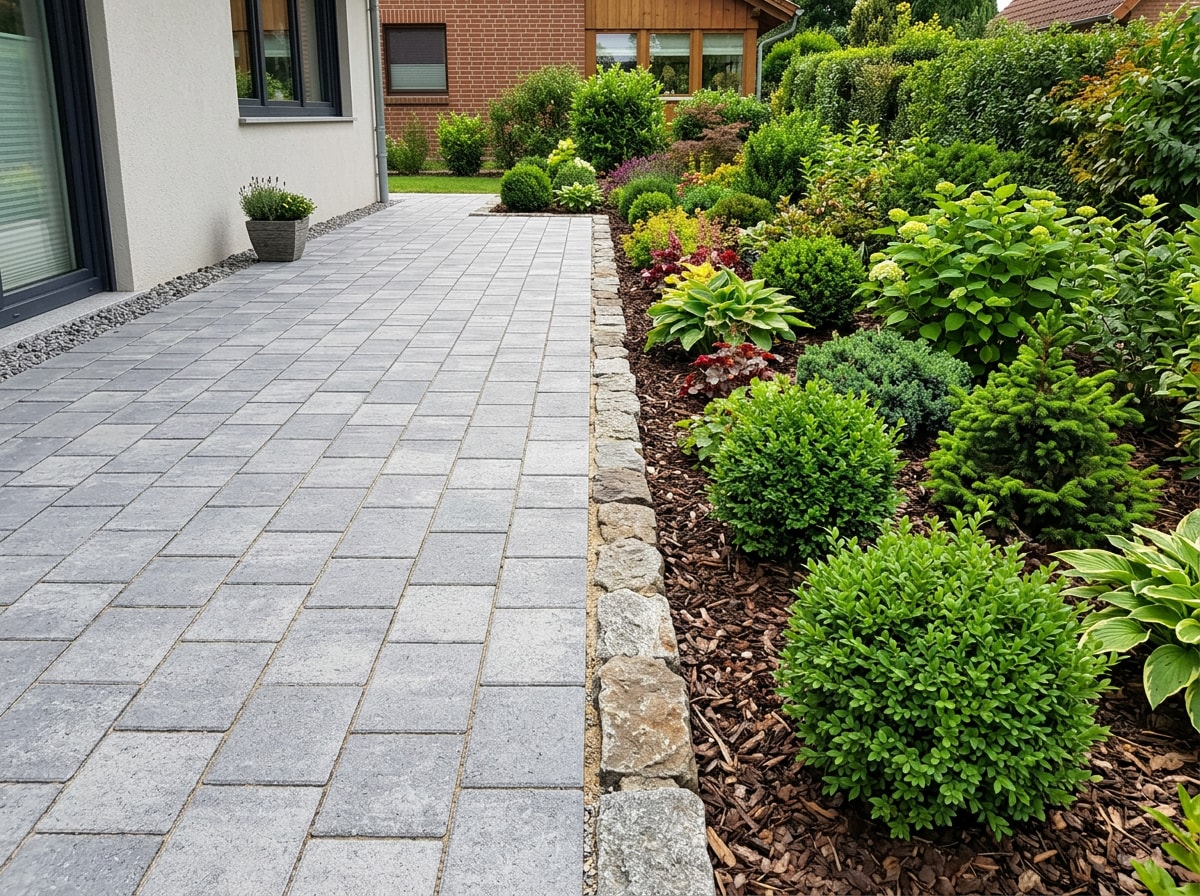
Why Fairfax's Clay Soil Changes How Hardscape Gets Built
Hardscape construction in Fairfax has to coordinate design intent with soil behavior, since much of the region sits on marine clay. Clayey soil drains slowly and compacts easily. That matters because clay expands when wet and contracts when dry, which can shift a shallow paver base over time if drainage isn't planned first.
Here's a detail most hardscape guides skip: the old trick of mixing sand into clay to "fix" drainage usually backfires. Adding some sand to clay soil will not improve drainage, a common misconception, and instead makes the soil structure similar to concrete. The fix isn't sand. It's proper excavation depth, a compacted aggregate base, and grading that moves water away from the structure entirely.
That's why sloped lots common in neighborhoods like Mantua or Kings Park West need deeper gravel bases and intentional grading, while flatter properties near Fairfax Circle may focus more on surface drainage away from the foundation. Getting this right before materials go down is what separates a patio that lasts from one that heaves within a few seasons.
For more on how soil texture affects infiltration, Virginia Tech's Cooperative Extension soil guide walks through why heavier clay and silty-clay soils are classified with slower infiltration rates than loams, which is exactly the kind of site condition a Fairfax contractor should test for before excavation (see the Virginia Cooperative Extension soil judging guide).
The Hardscape Design, Engineering, and Installation Process
Most Fairfax hardscape projects move through three stages: site evaluation and engineering, design and material selection, and installation.
Hardscape Engineering
Before any materials arrive, a contractor evaluates the site's grading, drainage patterns, and existing landscape. This stage involves decisions around base preparation and drainage design, since proper grading and a compacted sub-base prevent future settling, pooling, or cracking.
Hardscape Design
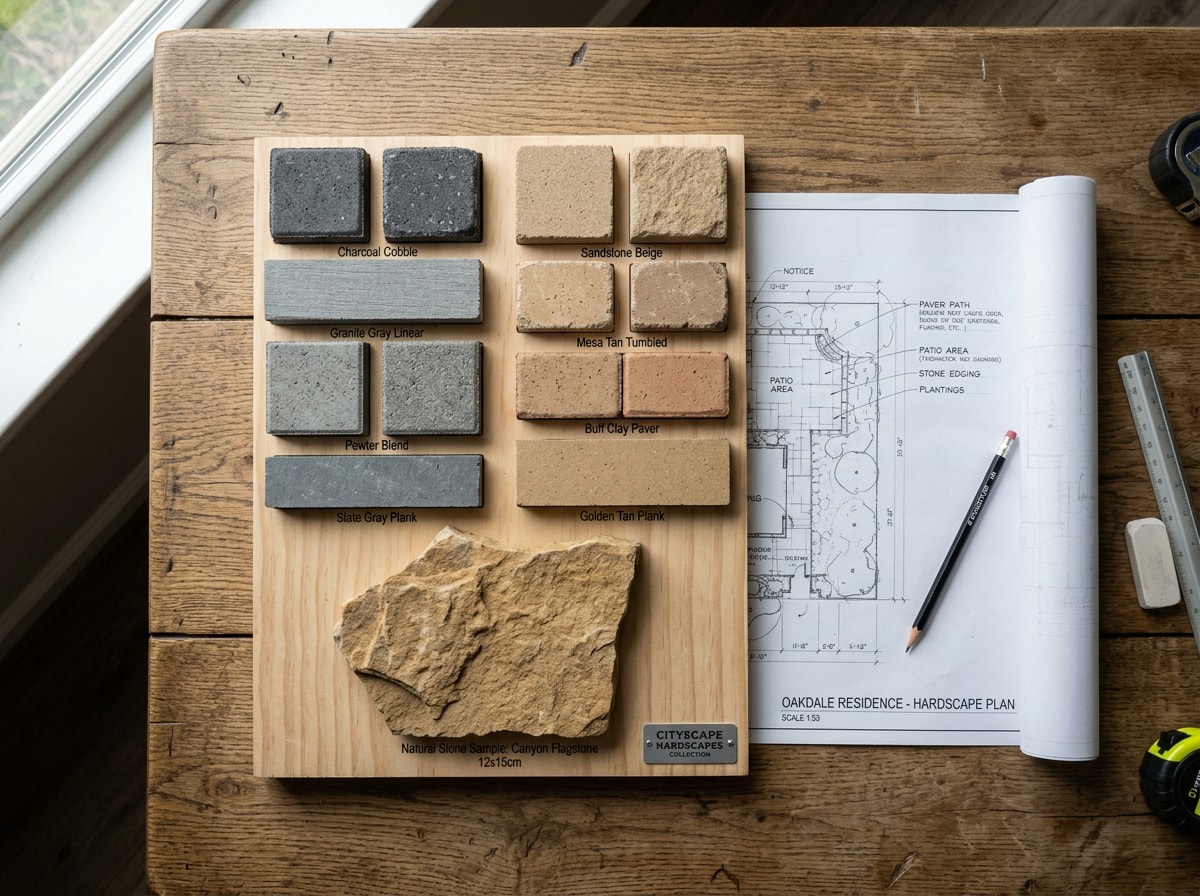
Once the site is understood, design shifts to style and material selection: modern, traditional, or rustic, built from natural stone, brick, or concrete pavers suited to the region's freeze-thaw winters. This is where layout, shape, and finish get finalized with the homeowner. Explore our masonry contractor services or stone masonry work for material inspiration.
Hardscape Installation
Installation covers excavation, base compaction, laying the chosen material, and finishing joints or sealing surfaces. A rushed installation often shows problems within a year or two, which is why crews prioritize structural integrity throughout. Most residential projects run from a few days to a couple of weeks, depending on scope.
Which Hardscape Features Give You the Best Return on Investment?
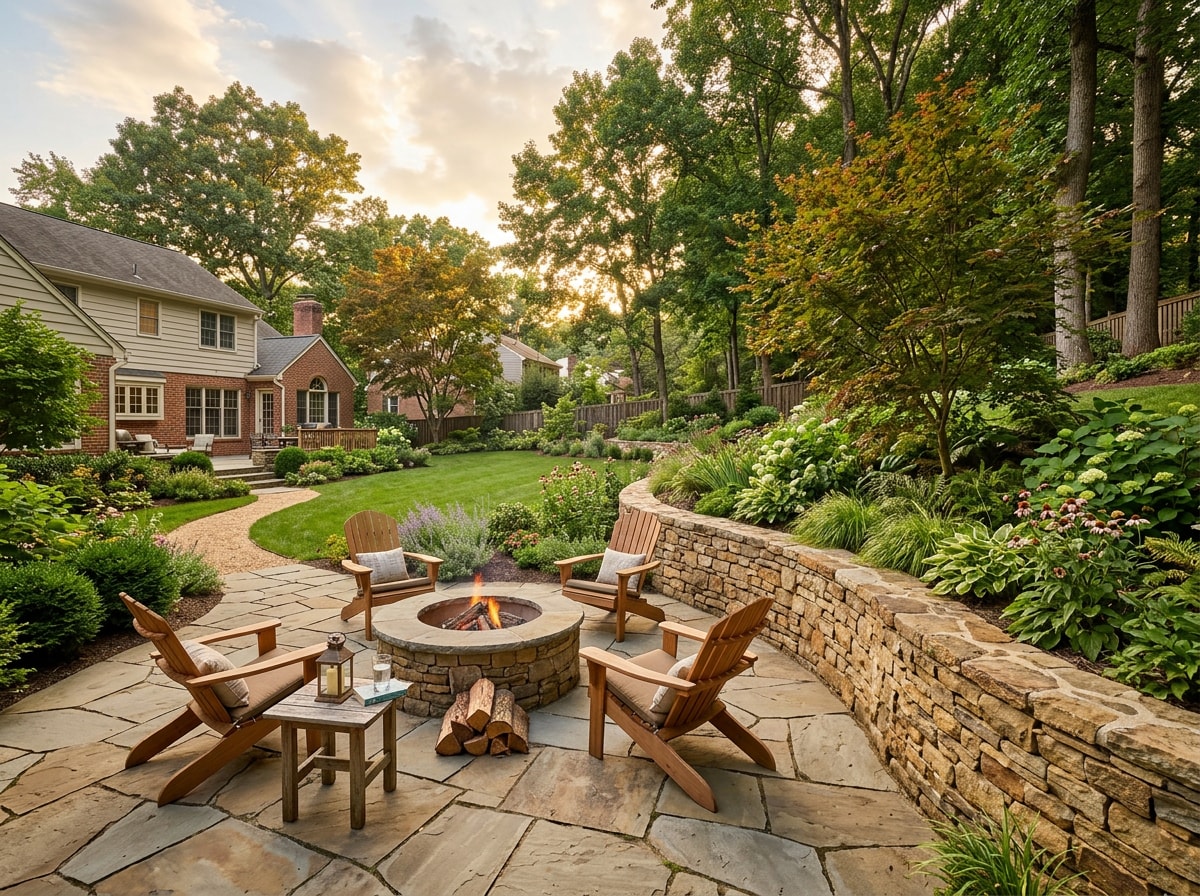
Patios are consistently one of the highest-return outdoor improvements, extending usable living space and holding up to years of heavy use with minimal upkeep. The National Association of Realtors' 2023 Remodeling Impact Report found that a new patio typically recoups about 95 percent of its cost at resale. You can read the full breakdown in NAR's 2023 Remodeling Impact Report: Outdoor Features.
| Hardscape Feature | Primary Benefit | Typical ROI Driver |
|---|---|---|
| Patio | Extends living space | High resale recovery, strong buyer appeal |
| Walkway | Reduces lawn wear | Improves curb appeal, low cost per square foot |
| Retaining wall | Stops erosion on slopes | Creates usable terraced yard space |
| Fire pit | Adds a gathering spot | Boosts outdoor "Joy Score" with buyers |
Walkways are a close second. A defined front path using flagstone or concrete pavers reduces lawn wear and adds a welcoming first impression; see our walkway installation services. Retaining walls do double duty on Fairfax County's hillier lots, holding back soil to prevent erosion while creating usable terraced space; our retaining wall installation page covers materials and design options. See more finished examples on our projects page.
Do Hardscape Projects Require Permits in Fairfax?
Yes, some hardscape projects require permits, and the most common trigger is retaining wall height. You will be required to obtain a retaining wall building permit for the construction of a wall retaining more than 3 feet of earth. This 3-foot threshold is the baseline for Fairfax County; the City of Fairfax and other Northern Virginia jurisdictions follow the same Virginia Construction Code baseline, though local review steps can differ, so always confirm with your specific building department before design.
| Trigger | Fairfax County Rule |
|---|---|
| Retaining wall height | Permit required above 3 feet of retained earth |
| Fast Track review |
Walls less than 4 feet qualify for a 24-hour staff review under Residential Fast Track
| Geotechnical report | Required for walls over 6 feet in height |
| Wall supporting a structure | Driveway, patio, or deck surcharge changes the engineering requirements |
Driveways, patios attached to the home, and projects involving significant grading or drainage changes can also trigger permitting, depending on scope. Confirm requirements directly with Fairfax County's Land Development Services before breaking ground. Check our Fairfax County, VA service area page or Fairfax, VA page for jurisdiction-specific notes.
Materials: What's Actually Used in Fairfax Hardscapes
Most Fairfax hardscapes use one of three material families:
- Natural stone (flagstone, fieldstone): irregular, high-end look, higher labor cost
- Concrete pavers: consistent sizing, wide color range, easier repairs
- Poured concrete: lowest material cost, good for driveways and large patios
If your project leans toward poured surfaces rather than unit pavers, our concrete contractor services cover everything from concrete patio installation to concrete driveway installation. For brick walkways, steps, or masonry repair work, see our brick masonry and steps and stoops installation pages.
Homeowners planning a full yard refresh often pair hardscape with softscape updates in the same season. If that's you, our guide on simple backyard landscaping ideas for Fairfax, VA homeowners covers low-cost ways to finish the space around a new patio or wall.
How to Choose a Hardscape Contractor in Fairfax
A qualified hardscape contractor should:
- Understand regional clay soil and drainage behavior, not just national spec sheets
- Know which projects trigger permits in your specific jurisdiction
- Source materials from established suppliers with warranty backing
- Provide proof of licensing, a portfolio of local projects, and references
Ask every contractor you interview for examples of work completed on similarly sloped or clay-heavy lots in your neighborhood, not just a generic photo gallery. Ready to plan your project? Request a free estimate with our team to get started, or visit our homepage to see our full range of services.
FAQ
What's the difference between hardscape and softscape?
Hardscape is the built, non-living part of a yard (patios, walls, walkways). Softscape is the living part (lawn, shrubs, trees, garden beds). Most finished yards use both.
What materials are best for patios in Northern Virginia?
Concrete pavers, natural stone, and brick are the most common choices, valued for durability and aesthetic flexibility in the region's freeze-thaw climate. The best choice depends on budget, maintenance preferences, and design goals.
How long does a hardscape project take?
Most residential projects run one to three weeks once consultation and design approval are complete. Site prep, weather, and material availability can all shift the timeline.
Do I need a permit for a patio in Fairfax, VA?
A standalone patio at grade usually doesn't need a permit. A patio attached to the home, one that changes drainage patterns, or one involving a retaining wall over 3 feet does. Confirm with Fairfax County Land Development Services before starting.
Are permeable pavers allowed in Fairfax?
Yes. Permeable pavers are commonly used and encouraged for managing stormwater runoff, especially on larger suburban lots and driveways. The permeable surface allows flow rates as high as 1,000 inches per hour , according to the Federal Highway Administration's technical summary on permeable interlocking concrete pavement.
Does hardscaping increase home value?
Yes, though the amount varies by project. Patios in particular recoup a high share of their installation cost at resale, per NAR's Remodeling Impact Report cited above, and well-built retaining walls and walkways add functional square footage that buyers notice.
Should hardscape be installed before softscape?
Generally, yes. Hardscape installation involves excavation and heavy equipment that can damage new plantings, so most contractors complete patios, walls, and walkways first, then finish with lawn and garden work around them.