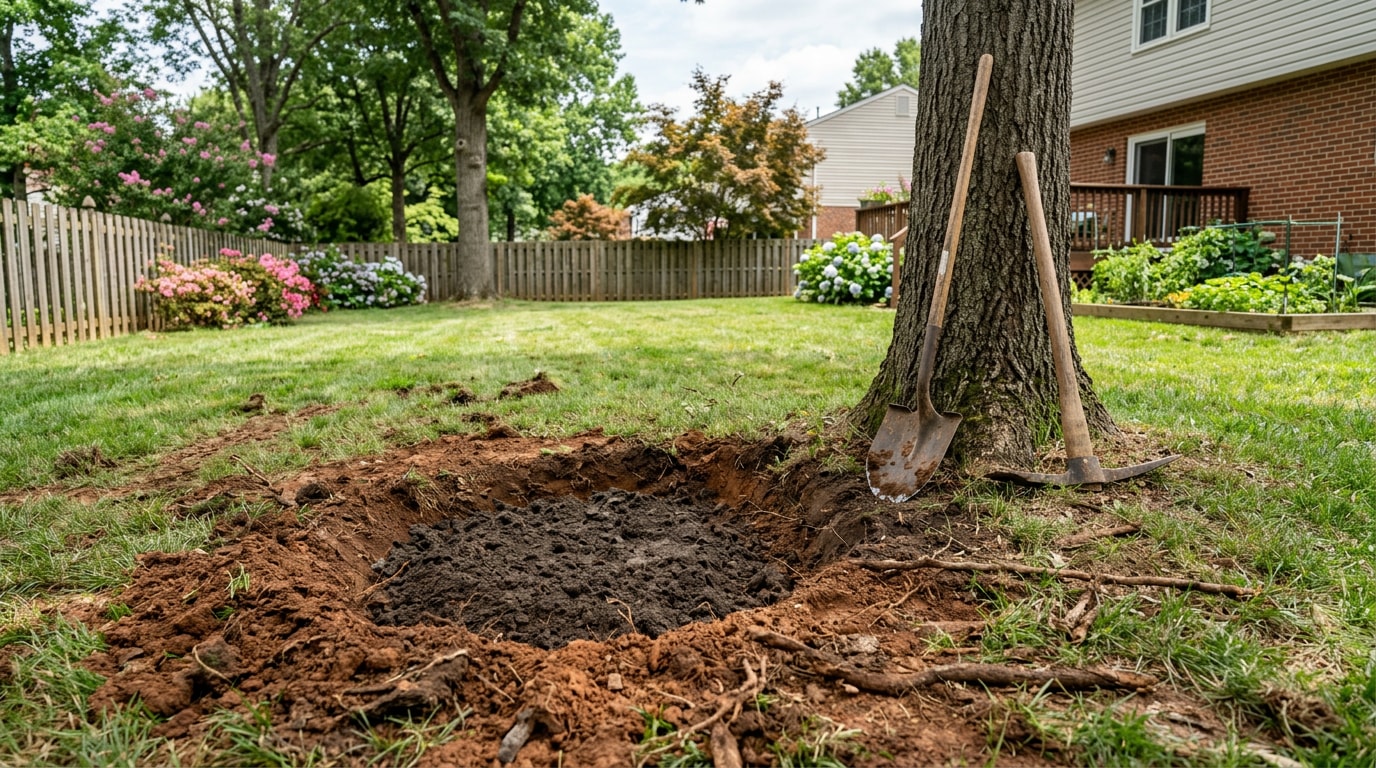

If you're searching "aeration and overseeding near me Alexandria, VA," you're probably looking at a thin, compacted lawn and wondering where to start. Alexandria's dense clay soil makes timing and technique more important here than in sandier parts of Northern Virginia. This guide covers the signs, the process, the costs, and one thing most lawn-only sites skip: how a recent patio, driveway, or walkway project changes your aeration schedule.
The Short Answer
Most Alexandria lawns need core aeration paired with overseeding once a year, ideally in early fall. Pricing depends on lot size, soil condition, and the provider you choose, so treat any flat number you see online as a starting point rather than a guarantee. The real driver behind the need for annual service is Alexandria's heavy clay soil, which compacts under foot traffic, mower wheels, and construction equipment, leaving grass thin and unable to compete with weeds.
We see this constantly on properties where we've just finished hardscape work. Soil near a new patio or driveway edge compacts fast under skid steers and wheelbarrows, and that compaction doesn't fix itself once the crew leaves.
7 Signs Your Lawn Needs Aeration and Overseeding
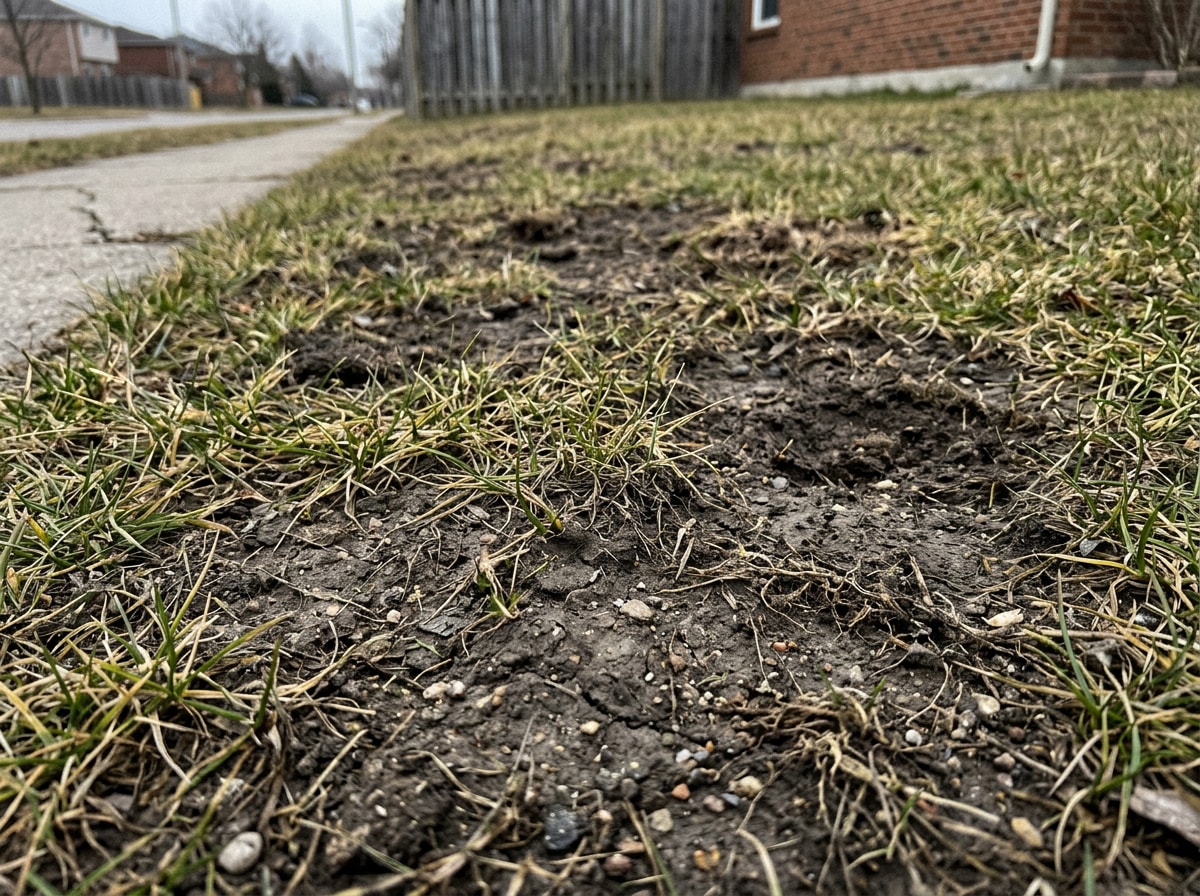
Your lawn is telling you it needs aeration and overseeding if it shows compacted soil, standing water, a spongy thatch layer, thinning grass, worn paths, dull color, or visible stress during summer heat. These problems often show up together on the clay-heavy lots common across Alexandria neighborhoods.
- Compacted soil — water beads up or runs off instead of soaking in.
- Puddling after rain — a sign roots can't absorb moisture fast enough.
- Thatch buildup — a spongy layer sitting between soil and grass blades.
- Weak, thin grass — patches that never fill in on their own.
- High foot traffic areas — worn paths near sidewalks, gates, or play spots.
- Dull, faded color — grass that looks tired even with regular watering.
- Seasonal stress — turf that struggles every July and August.
How Core Aeration and Overseeding Work Together
Aeration is the foundational step before any overseeding happens. Skip it, and new seed often fails to root in compacted ground.
What Core Aeration Actually Does
Core aeration is the process of mechanically pulling small plugs of soil out of the lawn, rather than just poking holes, to relieve compaction so air, water, and nutrients can reach the root zone. Loosening compacted soil increases the availability of water and nutrients, and enhances oxygen levels in the soil, which stimulates root growth and the activity of thatch-decomposing organisms. Those soil plugs break down naturally and return organic matter to the surface within a couple of weeks.
A standard core aerator pulls plugs about ½ to ¾ inch in diameter, 2 to 4 inches deep, and about 2 to 6 inches apart . That spacing matters: equipment that only spikes or pokes holes without removing a plug can actually make compaction worse at the edges of each hole.
Why Overseeding Comes Right After
Overseeding follows aeration because the holes left behind give grass seed direct contact with soil, instead of sitting on top where it dries out and never germinates. For Alexandria lawns, tall fescue seed blends are the standard recommendation, since they tolerate both summer heat and winter cold better than other cool-season options. Look for blends backed by independent cultivar performance data from the National Turfgrass Evaluation Program's ongoing tall fescue trials rather than generic bagged seed with no track record.
When to Aerate and Overseed in Alexandria
Fall is the best window for this region. September 15 to October 15 is most suitable for seeding cool-season grasses like the tall fescue that dominates Alexandria lawns. Spring aeration is possible but riskier, since newly loosened soil and tender seedlings have to compete with summer heat and crabgrass before they're fully established.
| Timing | What's Happening | Why It Works |
|---|---|---|
| Early-mid September | Soil is still warm, nights start cooling | Fast seed germination, less heat stress |
| Late September to mid-October | Fescue is in active fall growth | Roots establish before winter dormancy |
| After October 15 | Soil temperatures drop | Germination slows or fails; not recommended |
| March to April (spring) | Possible but not ideal | Seedlings compete with summer heat and crabgrass |
Core Aeration vs. Liquid Aeration
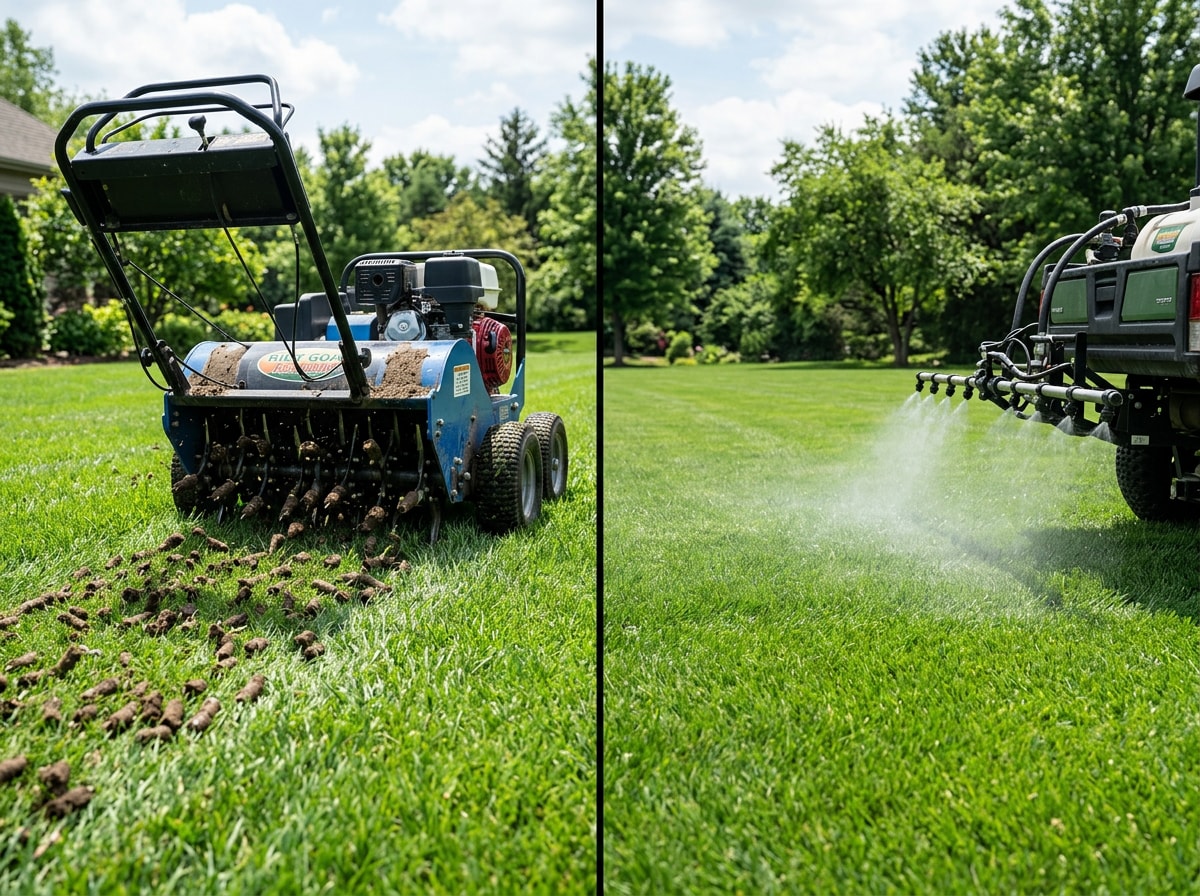
Core aeration physically removes soil plugs with a machine, while liquid aeration applies a soil-conditioning solution meant to loosen compacted particles chemically over time. For Alexandria's dense clay, core aeration remains the standard because it produces an immediate, physical change in the soil structure.
| Factor | Core Aeration | Liquid Aeration |
|---|---|---|
| How it works | Removes physical soil plugs | Chemical soil conditioner |
| Results timeline | Visible immediately | Gradual, over weeks |
| Best for | Dense clay, visible thatch, compacted lawns | Light maintenance between core services |
| Equipment needed | Core aerator machine | Sprayer |
| Repeat frequency | Once a year is typical | Often needs repeated applications |
For most Alexandria yards with visible thatch or hard-packed clay, core aeration is the more reliable of the two soil compaction methods.
Why Lawns Near Hardscape Projects Need Aeration More Often
This is the part most lawn-care-only sites never mention: construction equipment compacts soil just as much as foot traffic, sometimes more. If your yard has recently had a patio, a driveway, a walkway, or a retaining wall installed, the soil within several feet of that work has likely been compacted by skid steers, delivery trucks, or stacked material.
That compaction doesn't just sit at the surface. Heavy equipment can compress soil well below the top few inches, which is exactly the depth core aeration is designed to reach. If your lawn has looked worse since a hardscape project wrapped up, aeration and overseeding timed for fall is usually the fastest way to recover it, rather than waiting a full year on autopilot.
Homeowners planning a project this fall should ask their contractor about post-construction turf recovery before work starts, not after. A written plan for regrading disturbed soil and reseeding compacted areas should be part of the proposal, not an afterthought.
How to Prepare for Aeration, Seeding, and Topdressing
Getting your yard ready takes a few simple steps:
- Mow the lawn shorter than usual a day or two before service.
- Clear away toys, hoses, and debris so equipment can pass freely.
- Mark sprinkler heads, shallow irrigation lines, and buried utility markers ahead of time.
- Confirm your provider does a quick soil and thatch check before starting, so you're not paying for a treatment the lawn doesn't need.
What to Do After Aeration, Seeding, and Topdressing
Keep new seed consistently moist with light, frequent watering rather than one heavy soak, since germination depends on the top layer of soil staying damp. Hold off on mowing until new grass reaches about three inches tall, and keep heavy foot traffic off the lawn for several weeks.
Some providers apply a light straw or seed-starter mulch over freshly seeded areas to hold moisture in. If you're weighing that step against other mulch options for the rest of the yard, our guide to mulching in Alexandria covers costs and application timing in more detail.
Hiring Lawn Aeration and Overseeding Services in Alexandria, VA
A reliable provider shows up with commercial-grade equipment and a written scope that spells out seed type and coverage, not a vague promise to "aerate and seed." Local knowledge matters here too, since a crew familiar with Alexandria's clay soil will time the service differently than one working generic suburban lots.
If you're comparing providers, ask two questions before booking: what seed blend do they use, and is the aeration core or liquid? If your project also involves repairing a lawn damaged during a hardscape build, look for a contractor who handles both the hardscape work and the turf recovery, so you're not coordinating two separate crews.
CM Hardscapes serves homeowners across Alexandria, Arlington, Fairfax, and Fairfax County. Browse recent projects or visit our homepage to see the full range of services. Ready to fix a compacted or patchy lawn before winter? Get a free estimate and we'll walk the property with you.
FAQ
How much does aeration and overseeding cost in Alexandria, VA?
Costs vary with lawn size, soil condition, and seed quality, so a single flat number online is rarely accurate for your yard. Getting a couple of local quotes that include a soil assessment is the most reliable way to confirm current pricing for your property.
What is the best time to aerate and overseed in Alexandria, VA?
Early September through mid-October is the best window. Cool-season tall fescue is actively growing then, and seed has enough time to root before winter dormancy sets in.
Is core aeration better than spike aeration?
Yes, in most cases. Core aeration removes soil plugs and relieves compaction directly, while spike-type equipment just punches holes that can compact soil further around the edges.
Should I water after aeration and overseeding?
Yes. Water lightly once or twice daily for the first two to three weeks to support seed germination, then reduce frequency once new grass reaches mowing height.
How often should I aerate my lawn?
Once a year in early fall is standard for Alexandria's clay-heavy lawns. High-traffic yards or those recently disturbed by construction equipment may need it more often.
Can I mow right after aeration and overseeding?
No. Hold off until new grass reaches about three inches tall, then mow at a higher setting to avoid stressing the young seedlings.
Will aeration and overseeding fix bare spots left by construction equipment?
Usually, yes, if the compaction is limited to the top several inches of soil. Severely rutted or regraded areas may need topsoil and a heavier seeding rate in addition to standard aeration.