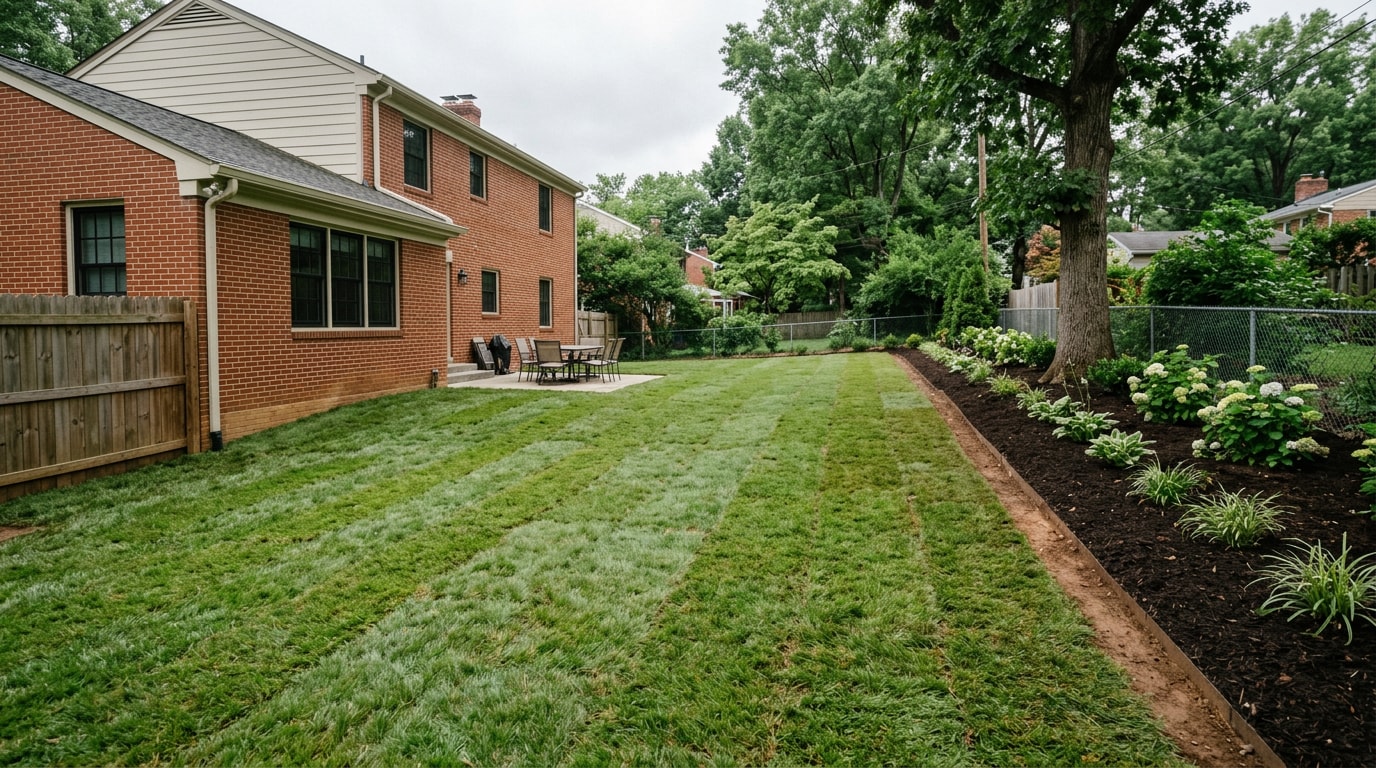
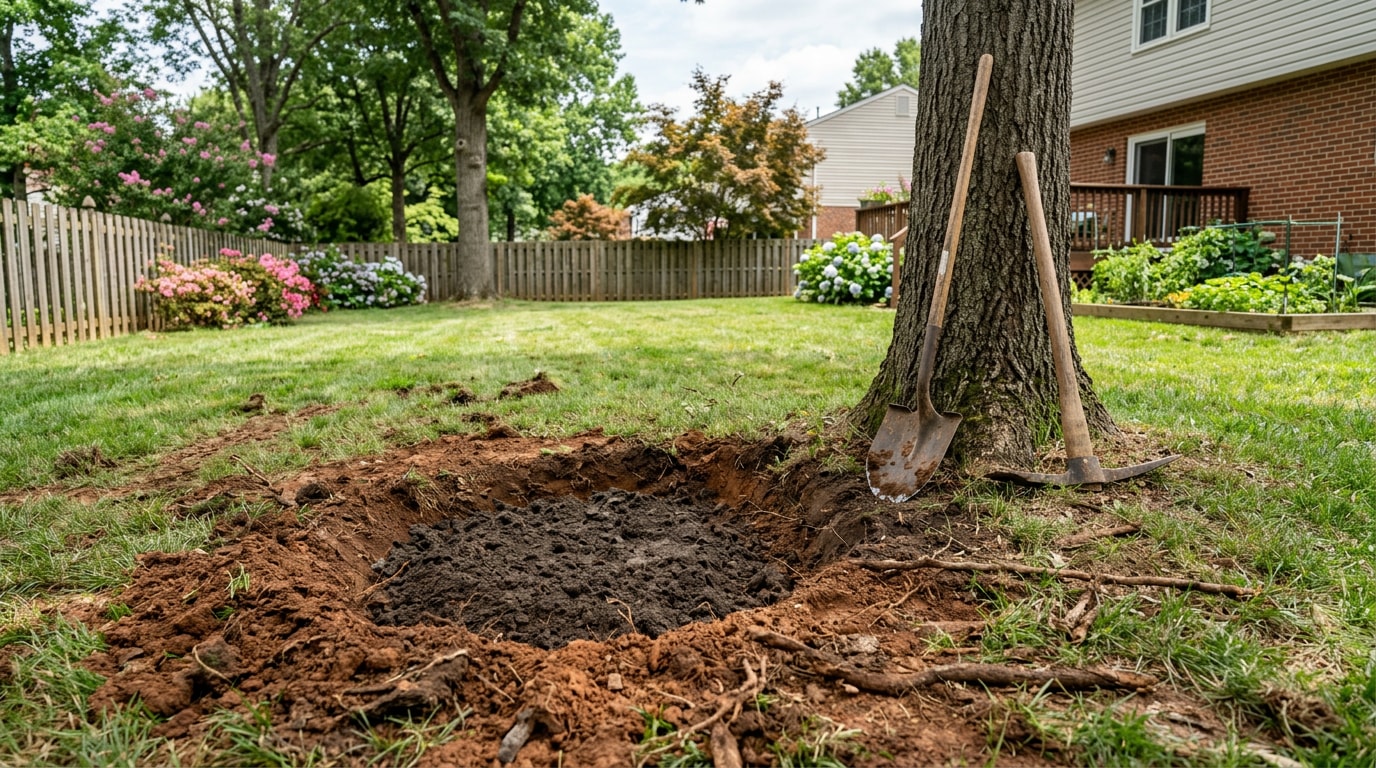
Removing small tree stumps in Fairfax County, VA is a project most homeowners can finish in an afternoon, provided they pick the right method for the stump's size and the county's notoriously heavy clay soil. This guide covers hand-digging, natural and chemical rot, grinding, and burning, plus the permit question almost everyone asks before the first shovelful comes out. Grab your tools, and let's get that stump gone for good.
Visit CM Hardscapes to see our services and request a free estimate.
How to Choose the Right Method for Your Small Tree Stump
Stump diameter, root depth, and how close the stump sits to structures or utility lines determine which removal method actually makes sense. For a genuinely small stump, hand-digging is realistic. Bigger or deeply rooted stumps push you toward grinding, chemical rot accelerators, or hiring help.
Here's a quick way to size up the job:
| Stump Diameter | Best Method | Estimated Time (hand-digging) |
|---|---|---|
| Under 6 inches | Hand-digging | 1-2 hours |
| 6-8 inches | Hand-digging (mattock + digging bar) | 2-3 hours |
| 8-14 inches | Hand-digging possible, chemical rot or rental grinder often preferred | 3-5+ hours |
| 14+ inches | Grinding or professional removal | Not recommended by hand |
These estimates assume reasonably loose soil. In parts of Fairfax County where clay-heavy soil is common, add extra time to every category. Clay resists shoveling and grips roots harder than the sandy or loamy soil referenced in most national stump-removal guides, so budget more patience than the chart above suggests.
Permits, Utility Lines, and Fairfax County Rules Before You Dig
Before you break ground, call 811 to have underground utilities marked. It's free, and it's the only way to know what's hiding beneath that trench.
On the permit side, routine stump and tree removal on your own property generally doesn't require anything from the county. Any land disturbing activity, such as removing trees, on more than 2,500 square feet of your property requires a permit from Fairfax County, and you can contact the Engineer of the Day to determine whether your project crosses that threshold. A single stump almost never hits that number, but if you're clearing several stumps or regrading a larger area at the same time, it's worth a quick call before you start.
If you're planning to deal with your stump by burning it rather than digging, grinding, or letting it rot, there's a separate legal step. More on that in the burning section below.
Remove the Stump Manually (Digging It Out by Hand)
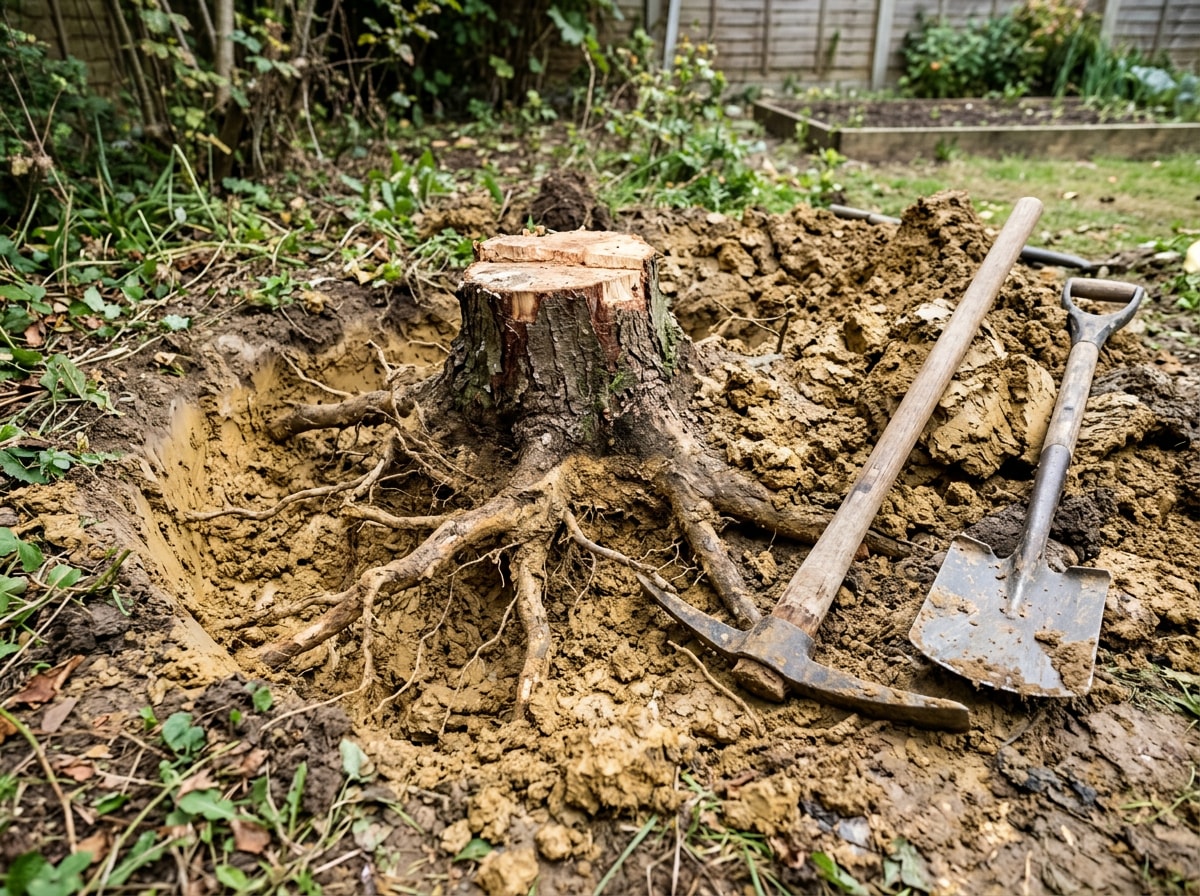
Manual digging is the go-to approach for small stumps, and it only requires basic tools: a shovel, a mattock, loppers, and a digging bar. The process breaks down into four steps: clearing around the stump, cutting the roots, levering it loose, and filling the hole once it's out.
Clear a Ring Around the Stump
Dig a trench roughly 2 feet across for small stumps, widening to 3 feet for anything closer to 8 inches in diameter. This is where you'll do most of your shovel and mattock work, exposing the root ball so you can see what you're dealing with before cutting anything.
A garden hose can speed things up. Spraying loose soil away from the roots makes them easier to spot than digging blind.
Expose and Cut the Lateral Roots
Once the trench is dug, cut the lateral roots close to the stump and again near the outer edge of the ring. Use loppers, a pruning saw, or an axe for thicker ones.
Removing a full section of root, rather than just nicking it, makes the stump far easier to rock loose later. Worth noting for local diggers: Fairfax County's dense clay soil is tougher to work through than the loamy soil referenced in a lot of national guides, so expect more resistance than you'd see in looser ground.
Rock the Stump and Lever It With a Digging Bar
With the major roots cut, wedge a digging bar under the stump and use a nearby root stub, rock, or the trench wall as a fulcrum. Push down on the bar to lever the stump upward in small increments, rocking it side to side as it loosens.
Stand to the side rather than directly behind the bar while you pry. Stumps can shift suddenly, and a bar under heavy tension can slip. Reposition the fulcrum as the stump rises higher out of the hole.
Cut the Taproot, Lift the Stump, and Fill the Hole
Many small stumps still have one thick taproot anchoring them straight down. Cut it with short, controlled strokes, keeping your hands clear of the blade path, then lift the stump out once it's severed.
With the stump gone, backfill the hole with the soil you removed, tamping it down in layers to avoid a sunken spot later. Top with fresh soil or mulch if the grade still looks uneven after a week or two of settling.
Let the Stump Rot Naturally (With or Without Chemical Accelerators)
Natural decay works without digging at all, but it's slow, often taking a year or more depending on wood type and moisture. Drilling holes and filling them with a slow-release fertilizer can speed the process, and formulations high in nitrates tend to promote the quickest decay.
For the no-chemical route, drill several holes into the stump's top and sides, pack them with compost or mulch, and keep the stump moist. Drilling several one-inch-wide holes spaced no more than 12 inches apart and at least ten inches deep increases the surface area exposed to wood-decaying fungi, which is the whole point of either version of this method.
Drilling pattern and depth matter more than most guides let on. The Iowa State University Extension guide to removing tree stumps covers how hole spacing and fertilizer choice affect decomposition speed if you want to get this part right.
Use a Stump Grinder
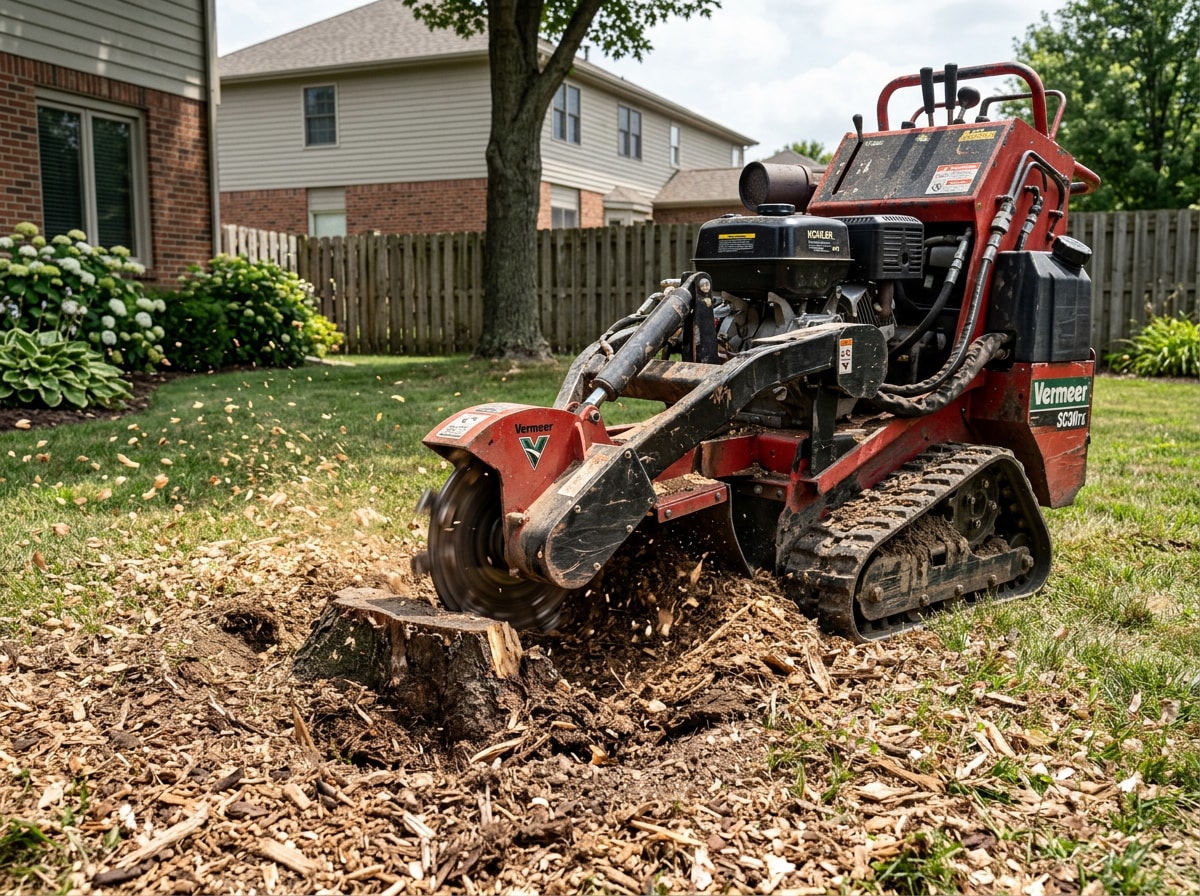
A stump grinder chews through the wood mechanically, which is faster than digging but requires either a rental or a hired operator. You can rent a grinder from most equipment yards; just confirm you're comfortable leveling the machine and controlling it before committing.
Grind in shallow passes, working down to at least 4 inches below grade so grass or new plantings can go in later without hitting leftover wood. Clear the area of rocks, sprinkler heads, and anything else that could become a dangerous projectile first.
Stump grinders are genuinely high-risk tools. Flying debris and noise exposure are real hazards with this kind of equipment, and basic precautions include keeping clear of rotating blades, knowing the drop zone, wearing eye protection, and wearing ear protection when chipping or cutting. That guidance comes from OSHA's landscaping equipment hazard page, and it applies whether you're a crew or a weekend DIYer.
Burn the Stump
Burning works by drilling holes into the stump, filling them with fuel (kerosene or potassium nitrate, never gasoline), and letting the stump smolder down over several hours or days of monitoring. It's a slower, more hands-off method than grinding but still requires supervision throughout.
Before you light anything, confirm that open burning is actually legal on your property. In Fairfax County and the towns of Clifton, Herndon, and Vienna, open burning of this kind requires a Fire Prevention Code Permit from the Fire Marshal.
Burning isn't allowed unless it's first approved by the Fire Marshal and conducted in accordance with the Fire Prevention Code, and it's prohibited outright when atmospheric or local conditions make it hazardous. Check the county's recreational fires and open burning page before you plan around this method; it's the one removal option where skipping the paperwork can turn into a fine.
Call in the Pros
Some stumps just aren't good DIY candidates. If a stump is over roughly 12-15 inches across, sits near a foundation or utility line, or you're dealing with several stumps at once, hiring a professional usually saves time, effort, and risk. Time pressure is another good reason: a crew with a grinder can finish in under an hour what might take you a full weekend by hand.
At CM Hardscapes, stump removal often comes up as the first step before a bigger project, like clearing a spot for a new patio installation or regrading a section of yard for a walkway. If that sounds like your situation, get a free estimate and we'll walk through what the site needs before anything gets built.
Benefits of Removing a Tree Stump
Beyond the obvious curb-appeal boost, removing a stump eliminates a tripping hazard, discourages wood-boring insects like termites from setting up near your home, and frees up space for new plantings or lawn. It's a small change that often makes a yard feel noticeably more finished.
If you're planning a broader yard refresh once the stump is gone, our Landscape Installation in Fairfax County, VA guide walks through what typically comes next, from grading to planting beds.
A Tree Can Grow Back From the Stump
A stump left in the ground still has a living root system. That means it can send up new shoots called suckers unless the roots are killed or ground out completely.
If you've removed the visible stump but notice regrowth weeks later, the root mass likely survived and needs further treatment.
Why Trust This Guide
This guide is built from fieldwork, not just research. CM Hardscapes' crews regularly excavate small stumps as part of site prep for patio, walkway, and retaining wall projects across Fairfax County, so the clay-soil warnings above come from repeated, firsthand digging, not a generic national assumption. If you'd rather hand the job off, contact our team for a free estimate.
FAQ
How Long Does It Take to Remove a Small Tree Stump by Hand?
Most stumps under about 12 inches wide take roughly 1-3 hours to remove by hand. Wood type, root depth, and soil condition, especially Fairfax County's clay-heavy ground, all affect the actual time.
Do I Need a Permit to Remove a Tree Stump in Fairfax County?
Routine stump removal on your own property generally doesn't require a permit. Larger land-disturbing activity is regulated above a specific square-footage threshold, so check Fairfax County's official tree removal guidance if your project involves more than a single stump. For local service details, see our Fairfax County service area page.
Can I Remove a Tree Stump Myself?
Yes, for small stumps, though digging is genuinely hard labor. Chemical or natural rot methods demand far less physical effort but take weeks to years longer than hand-digging or grinding.
How Long Does It Take for a Tree Stump to Rot Naturally?
Left alone, a stump can take a year or more to fully decay. Adding a chemical accelerator high in nitrates typically shortens that timeline substantially, though exact speed depends on wood type, moisture, and drilling pattern.
Is It Legal to Burn a Tree Stump in Fairfax County?
Only with a permit. Fairfax County requires a Fire Prevention Code Permit from the Fire Marshal before any open burning, including stump burning, and conditions can make it off-limits even with a permit in hand.
How Much Does It Cost to Remove a Small Tree Stump?
DIY costs are usually limited to tool rental or a chemical accelerator, often well under $100 if you don't already own a mattock and digging bar. Hiring a professional with a grinder costs more per stump but finishes in under an hour and removes the regrowth risk entirely.