
Front house white landscaping rock can turn a flat, tired bed into the brightest feature on a Fairfax, VA street in a single weekend. It holds its color through every season and pairs with brick colonials and modern builds alike. Here's how to use it well, and where it actually needs help from a contractor to last more than a year or two.
Why White Landscaping Rock Works for Fairfax Front Yards
White rock brightens shaded beds, holds its color through every season, and needs far less upkeep than mulch, which breaks down and has to be replaced every year or two. It pairs well with almost any home exterior, from brick colonials to modern builds with dark trim.
Homeowners typically use it in one of three ways:
- Full ground cover replacing grass or mulch across a bed
- Accent cover around existing shrubs and perennials
- Border treatment that frames beds without overwhelming them
Each approach delivers a different amount of curb appeal depending on how much of the yard gets covered. A properly built base is part of the equation too, and that's where a hardscape contractor can help plan grading and edging before any rock goes down.
Unlike mulch, which decomposes and needs topping off annually, white rock stays in place for years with only occasional rinsing or raking. It also resists weed growth more effectively when it's paired with the right fabric underneath, and it won't wash away the way loose mulch can during a heavy storm.
Front Yard White Rock Design Ideas for Curb Appeal
The ideas below cover the most common ways Fairfax homeowners are using white rock, from simple bed borders to full rock gardens on sloped lots. Each one can stand alone or combine with the others for a more layered look.
Define Flower Beds with White Rock Borders
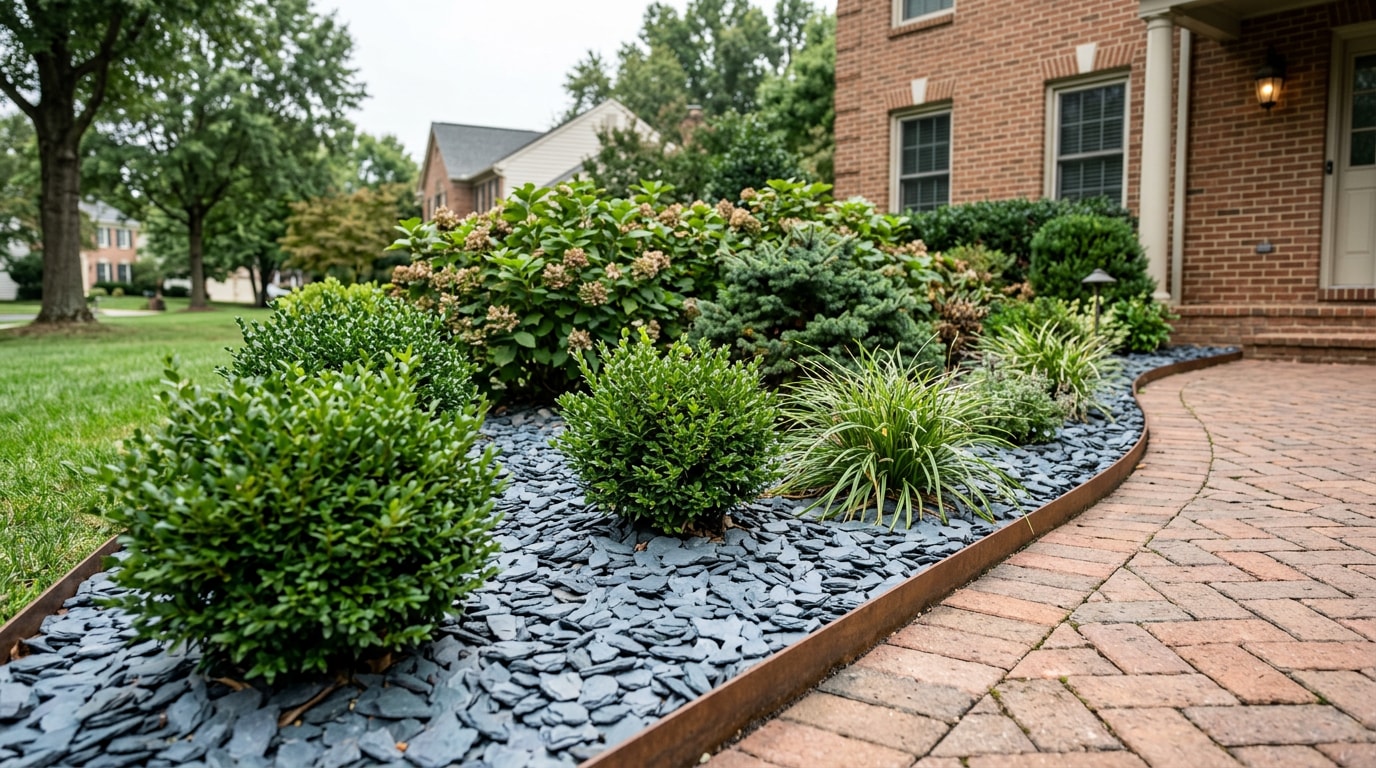
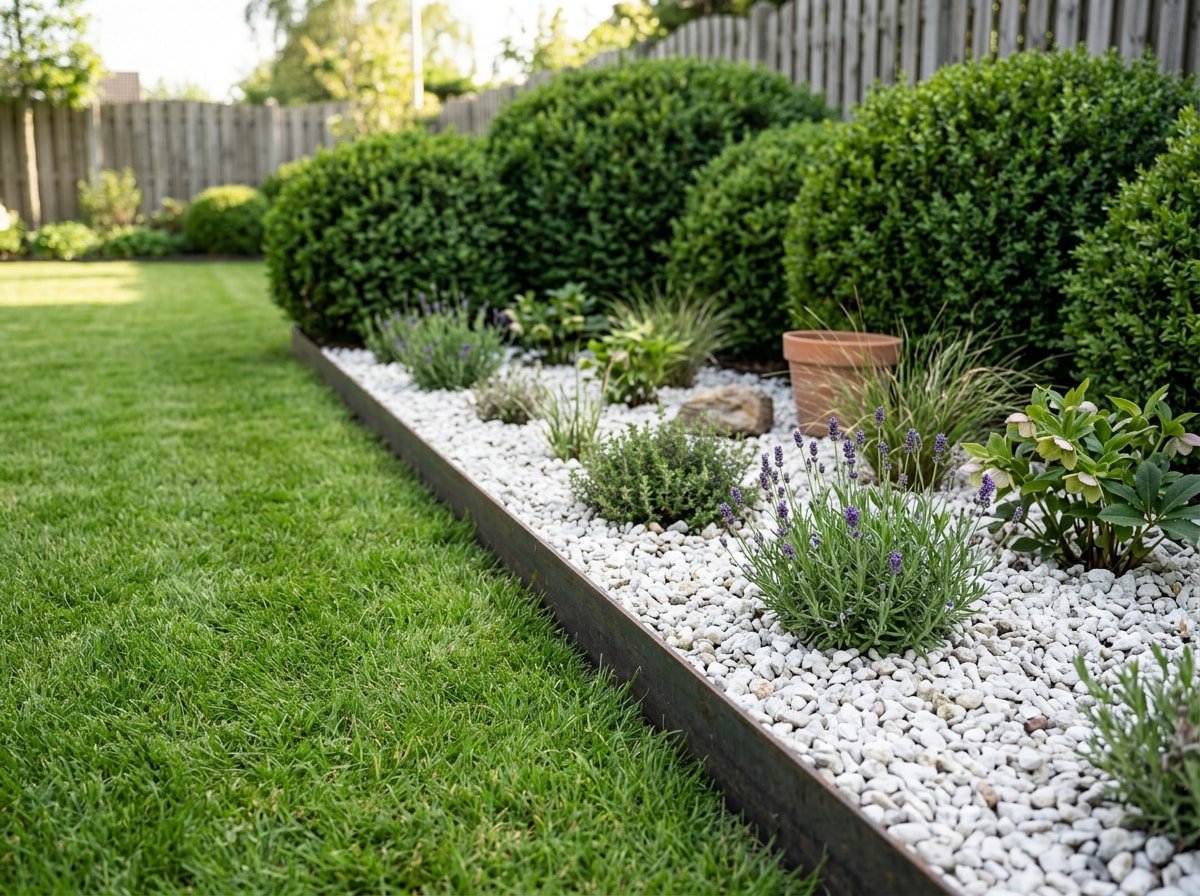
A rock border gives planting beds a clean, defined edge that separates them from the surrounding lawn. It keeps soil from spilling onto grass and makes mowing along the bed line much easier.
Edging material matters here:
| Edging Type | Look | Durability Note |
|---|---|---|
| Steel edging | Crisp, nearly invisible line | Holds a straight or curved line well over time |
| Natural stone edging | Textured, traditional | Adds mass; works well against masonry |
| Plastic edging | Budget-friendly | Can shift or heave if not installed carefully |
Beds like this often tie into larger retaining or garden wall structures, which is where a garden wall installation service can help keep everything structurally sound.
Create an Inviting Entryway with a White Rock Border
Framing the front door or entry path with white rock creates a welcoming first impression before guests even reach the porch. It draws the eye toward the entrance and adds contrast against brick, siding, or concrete steps.
This look works especially well where rock meets masonry, such as around a porch stoop or set of front steps. Pairing the two materials gives the entryway a finished, intentional feel rather than an afterthought. For homes where the steps themselves need attention, a steps and stoops installation project often pairs naturally with this kind of entry refresh.
White Gravel Pathways and Walkways
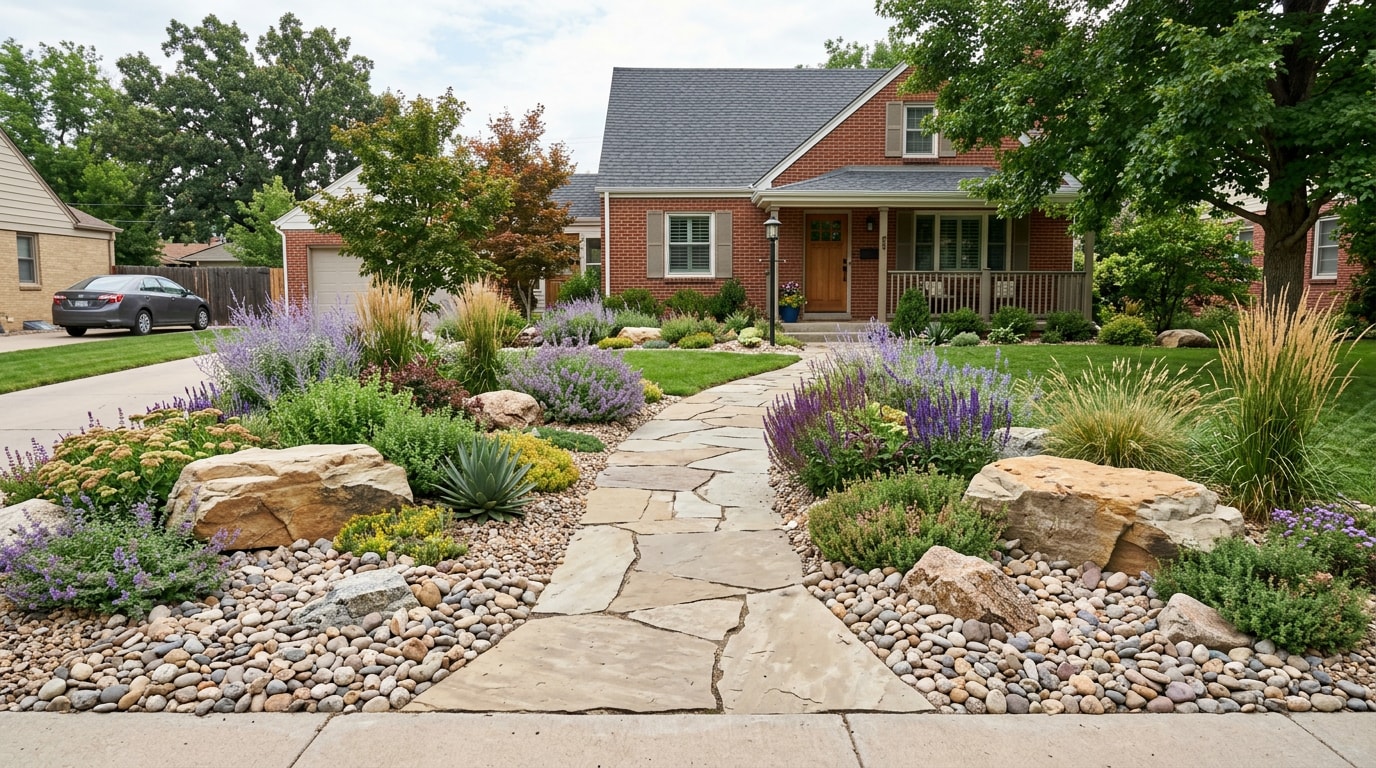
White gravel pathways offer a clean, modern look, especially with straight edges and minimal plantings alongside them. River-rock-style borders, by contrast, bring a softer, more organic feel with rounded stones that curve along the path's natural line.
Either style can frame a paver, flagstone, or concrete walkway surface rather than replacing it outright. The rock serves as a border and transition zone, while the walkway itself carries the foot traffic. Homeowners planning a new path from scratch may want to start with a walkway installation service to get the base and surface material right before adding rock accents.
Combine White Rocks with Flowering Plants and Greenery
Pairing white rock with greenery keeps a yard from feeling too stark or sterile. Hostas, boxwood, and flowering shrubs all contrast nicely against the bright background, giving the eye something to rest on besides stone.
Plant height and leaf shape matter here. Taller shrubs placed toward the back of a bed, with lower groundcover plants near the rock's edge, create a layered look that feels intentional rather than random.
Add Boulder Accents and Layered Rock Gardens
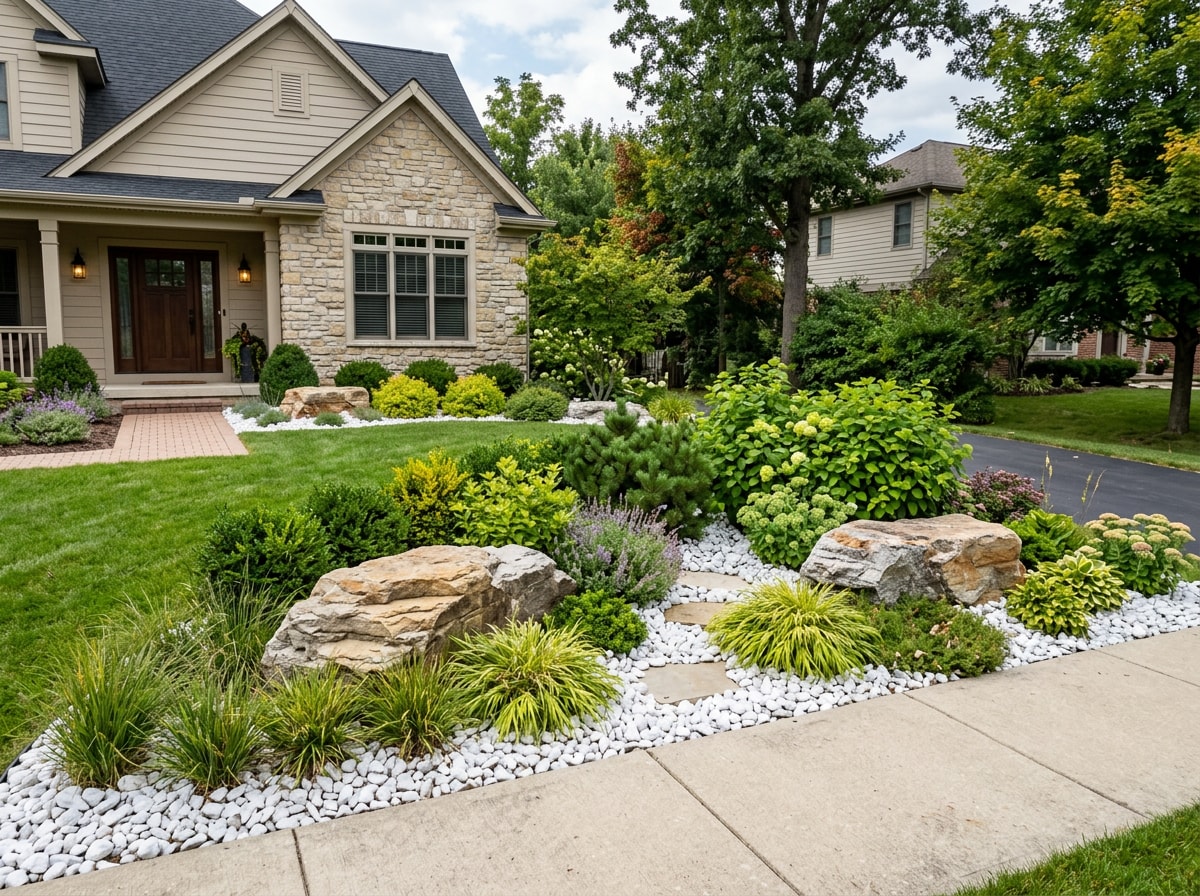
Larger boulders mixed with smaller white rock add depth and texture that flat rock coverage alone can't achieve. The contrast in scale, big stone against fine gravel, makes a bed feel more like a natural landscape feature than a simple ground cover swap.
For a typical residential front bed, one to three boulders in varying sizes usually works best, placed slightly off-center rather than symmetrically. Good rock garden design also considers sightlines from the street, so boulder placement should complement the home's architecture rather than block windows or walkways. For more size and placement examples, see this guide to front yard landscaping with large rocks.
White Rock Gardens for Sloped Front Yards
Rock gardens are a practical choice for yards with noticeable grade changes, since loose rock stays in place better than mulch or thin turf on an incline. They also slow water runoff, which helps reduce soil loss on a slope over time.
In Fairfax and much of Northern Virginia, dense clay soil compacts easily and drains slowly, which can make erosion worse on a sloped bed if the rock sits directly on uneven ground. Tying a sloped rock bed into a short retaining wall or a set of stone steps often solves both problems at once. A retaining wall installation is frequently the piece that turns a rock garden slope from a maintenance headache into a long-term fix.
Nighttime Lighting with White Rock
White rock reflects path and accent lighting more effectively than dark mulch or bare soil, which makes it a natural fit for nighttime curb appeal. Even modest fixtures appear brighter when the light bounces off a pale surface. Low-voltage path lights or uplighting aimed at a boulder accent can give the front of the house a soft glow after dark, often using less wattage than a dark bed would require for the same effect.
How to Install White Rock Around Your House
Getting a white rock bed to look good long-term starts with the ground beneath it, not the rock itself.
- Clear the area. Remove existing grass, weeds, and debris down to bare soil.
- Grade the bed. Slope the soil so water moves away from the foundation instead of pooling.
- Set the edging. Install edging before the rock goes in, so it contains the material along the bed's perimeter.
- Lay fabric. Use a permeable landscape fabric rather than solid plastic sheeting.
- Add rock. Spread rock to a depth of about two to three inches, enough to cover the fabric without burying plants or creating a surface deep enough to shift underfoot.
Skipping any of these steps tends to show up within a year or two, usually as rock migrating into the lawn or weeds pushing through gaps in the fabric.
Drainage Considerations for White Rock Landscaping
Good drainage keeps a white rock bed from turning into a muddy mess after heavy rain, and it starts with correct grading before any rock goes down. Water should flow away from the house, not collect in low spots where it can stain rock and rot plant roots.
Permeable fabric matters more than most homeowners expect. A weed barrier may be placed on the soil surface before using either organic or inorganic mulch material, and the best choices are landscape fabrics of various types that allow air exchange and water infiltration. A solid plastic barrier underneath rock often backfires by trapping water instead of letting it soak through.
It's also worth knowing what can go wrong even with fabric installed correctly. Landscape fabric under rock restricts water and air movement, which reduces soil health and plant growth, and trapped sediments make the layer less permeable over time, which reduces infiltration and increases runoff. On a slope, that problem compounds: rock applied to a slope or even a slight incline tends to slide downhill and expose the landscape fabric underneath. That's one more reason a short retaining edge, not just fabric, is often the real fix on a graded bed.
Need a second set of eyes on grading before you buy rock? Get a free estimate and we'll walk the bed with you.
Does White Landscaping Rock Get Dirty? Keeping It Clean and Bright
White landscaping rock shows dirt, pollen, and organic debris more noticeably than darker stone simply because there's less color to hide it. Dust, falling leaves, and grass clippings all stand out against a pale background in a way they wouldn't on gray or brown rock.
Regular upkeep is fairly simple:
- Rinse with a hose a few times per season
- Remove leaves and debris by hand or with a leaf blower
- Scrub stubborn spots with a mild outdoor cleaner as needed
In shaded, damp areas, algae or moss can develop on stone mulch over time, so improving airflow or sun exposure around the bed helps limit it. Staying ahead of staining is much easier than trying to restore a neglected bed later.
FAQ Fairfax Homeowners Ask About White Landscaping Rock
Is River Rock Good for Front Yard Landscaping?
Yes. River rock's smooth, rounded shape holds up to weather and foot traffic better than angular gravel in high-wear areas, and it pairs naturally with both modern and traditional home exteriors.
How Deep Should White Landscaping Rock Be?
Most residential beds use two to three inches of rock over fabric. That depth covers the fabric fully without burying low plants or creating a surface so deep it shifts underfoot.
How Much Maintenance Does a Front Yard Rock Garden Need?
Maintenance is generally light: occasional raking, debris removal, and rinsing a few times per year. Beds with more plantings need periodic weeding and pruning, but the rock itself doesn't require the seasonal replacement that mulch does.
Are Rock Gardens Cheaper Than Grass Lawns?
The upfront cost can go either way depending on materials and bed size, but rock gardens typically cost less over time since they skip ongoing mowing, fertilizing, and watering.
Do Rocks Increase Heat Around My House?
Light-colored rock reflects more sunlight than it absorbs, which generally keeps surface temperature lower than dark mulch or asphalt in direct sun. Surface albedo is a measurement of the reflectivity of solar energy on a surface, measured on a scale from zero, where the surface absorbs all incoming energy, to one, where it reflects all incoming energy. Rock placed tight against windows or vinyl siding in full sun is still worth a second look, since reflected glare and heat can add up in that narrow zone.
Do White Landscaping Rocks Stay White?
Not indefinitely. Dust, pollen, and organic debris cause gradual discoloration over time, especially without regular cleaning. With routine rinsing and occasional scrubbing, most homeowners find white rock stays bright enough for years.
Get It Installed Right the First Time
A white rock bed looks sharp for exactly as long as the grading, edging, and fabric underneath it were done correctly. Shortcuts there show up fast, especially on Fairfax's clay soil and sloped lots. If you're ready to plan a front yard refresh, visit CM Hardscapes or get a free estimate and we'll help you design a bed that still looks this good in year three. We also serve homeowners throughout Fairfax, VA and the surrounding county.