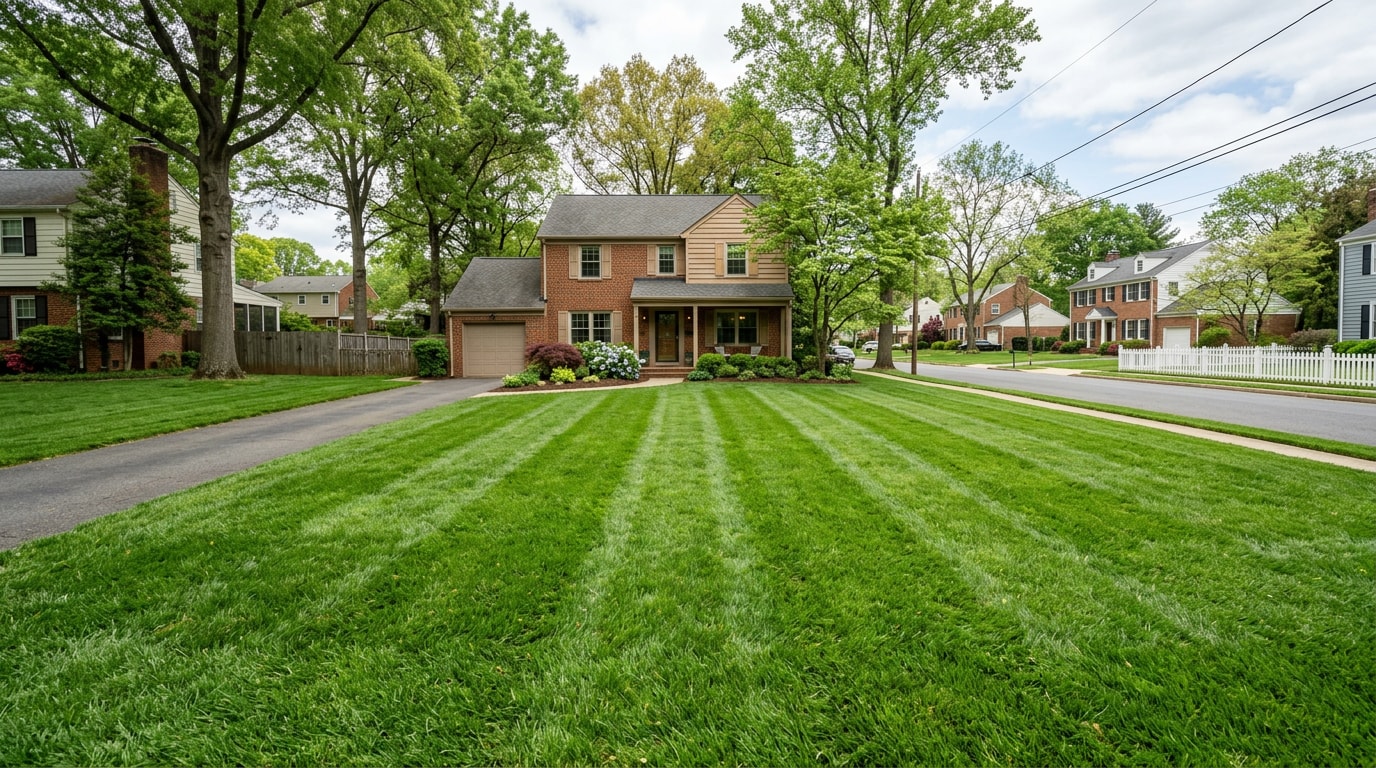
Knowing how to plant grass seed on an existing lawn in Arlington, VA is the fastest way to fix a thin, patchy yard without tearing out what's already growing. The method is called overseeding, and timing, soil prep, and aftercare decide whether that new seed actually takes root. Here's the exact process, from calendar dates to the first mow, plus where DIY tends to stall out.
What Is Overseeding, and Why Does Your Arlington Lawn Need It?
Overseeding means spreading new grass seed directly over an existing lawn to thicken it, rather than killing off the old turf and starting from bare dirt. Overseeding is the process of planting grass seed into an existing lawn, done to improve your lawn's overall look and health, thicken your grass, minimize weeds, fill in bare or damaged areas, or convert to another type of lawn grass.
Arlington's clay-heavy soil compacts easily, and the transition-zone climate puts cool-season grass under real stress during hot, humid summers. The result is often thinning turf, bare patches near trees or walkways, and lawns that lose density year over year. Overseeding fills in those gaps without the cost or mess of a full tear-out.
When to Overseed Your Lawn in Arlington, VA
Timing matters more than almost any other factor in overseeding success. Cool-season grass seed germinates best when soil temperatures reach 50 to 60 degrees Fahrenheit, which roughly corresponds to daytime air temperatures in the 60°F to 75°F range. In Arlington, that window usually opens in late August.
Early fall seeding of cool-season grasses is much preferred over spring seeding to allow maximum establishment and growth before the turf's first full summer. For Northern Virginia specifically, the best seeding dates are the last week of August to mid-September for fall seeding, and it may be possible to get good results as late as the middle of October. Waiting past that window sharply reduces your odds of a thick spring lawn, since the grass needs time to root before cold weather stalls growth.
If you're also dealing with aeration timing or low spots that collect water before you seed, our aeration and overseeding guide for the region walks through how the two jobs work together.
When to Overseed Cool-Season Grass
Tall fescue and Kentucky bluegrass, the two most common lawn types in Arlington, both germinate best when seeded in that same late-August-to-mid-September window. Seeding earlier in that range gives roots more time to establish before frost, which generally produces a denser lawn by spring.
Choosing the Right Grass Seed for Your Existing Lawn
Match your new seed to what's already growing. Mixing in an incompatible species can create a patchy, uneven look, since different grasses grow at different rates and textures.
Most Arlington yards are planted in turf-type tall fescue, a durable blend suited to family yards with moderate foot traffic. Lawns with heavier shade often do better with a fescue-and-fine-fescue mix, while sunnier yards can support more Kentucky bluegrass for self-repairing density.
How Much Seed to Buy
Seed bags and local Extension guidance both point to roughly half the new-lawn rate when you're overseeding into existing turf rather than starting from bare soil. Rate suggestions for seeding different turfgrass species are usually given in pounds per 1,000 square feet and are designed to provide about 1,000 to 2,000 seedlings per 1,000 square feet.
| Grass Type | New-Lawn Rate (lb/1,000 sq ft) | Approx. Overseeding Rate (lb/1,000 sq ft) |
|---|---|---|
| Turf-type Tall Fescue | 6–8 | 3–4 |
| Kentucky Bluegrass | 2–3 | 1–1.5 |
| Fine Fescue | 4–5 | 2–2.5 |
| Perennial Ryegrass | 4–5 | 2–2.5 |
Always confirm the rate printed on your specific seed bag first; blends and cultivars vary.
How to Prepare Your Lawn Before Overseeding
Prep work determines germination success more than the seed itself. Even premium seed struggles if it never reaches bare soil. Clearing debris, loosening compacted ground, and mowing short all improve seed-to-soil contact, which is the single biggest factor in whether new grass actually grows.
Test Your Soil First
This is the step most DIY guides skip, and it's worth doing before you buy a bag of seed. Arlington County's own guidance is direct: test your soil before adding fertilizer, since pH, nitrogen, phosphorus, and potassium levels have a strong influence on lawn health and should be checked every two to three years.
The soil analysis test is conducted at Virginia Tech, costs $10, and results are emailed to you. If you need help reading the results, the VCE Help Desk can be reached at 703-228-6414.
Dethatch and Aerate the Lawn (If Necessary)
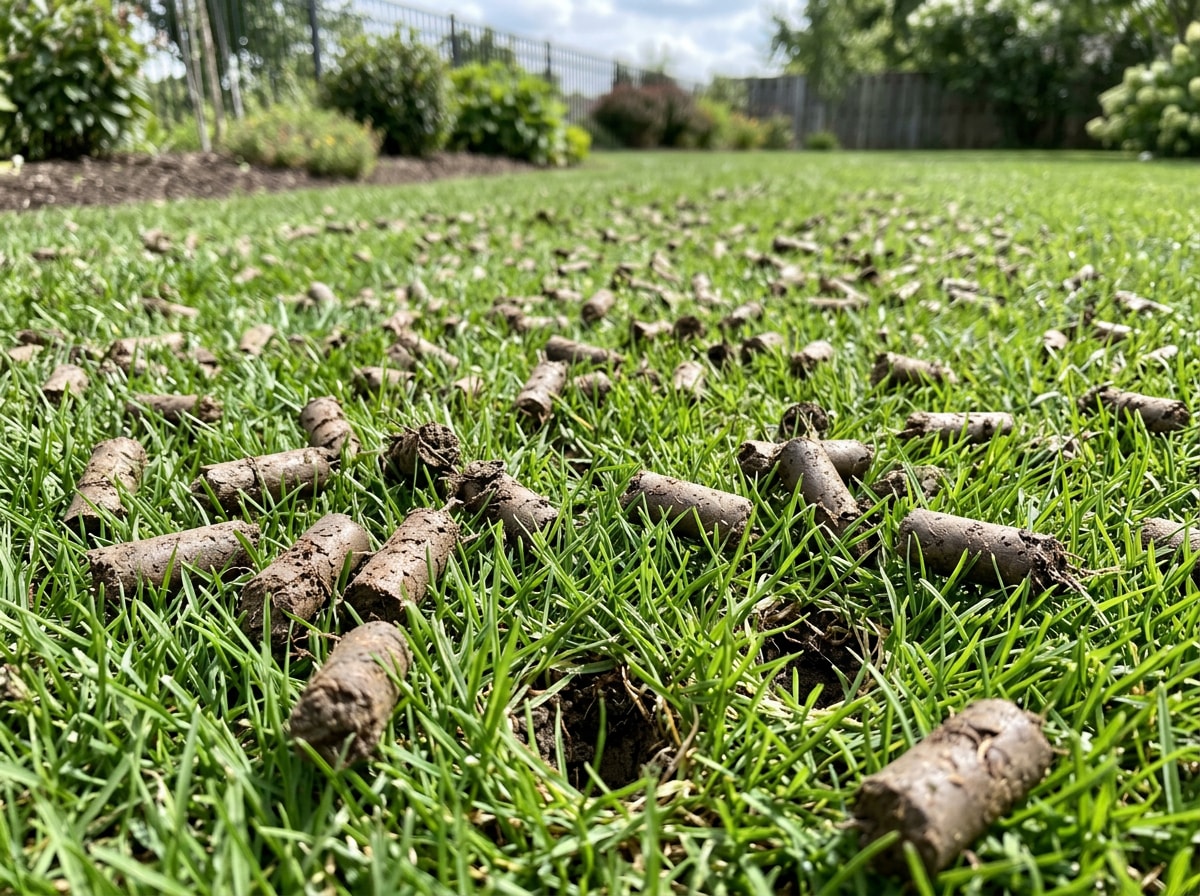
Check your thatch layer. Thatch layers greater than ½ inch in thickness will eventually cause a decline in turfgrass performance and will make renovations using seed very difficult. Arlington's compacted clay soils especially benefit from core aeration before overseeding, since aerification with a coring aerifier helps prepare a lawn for renovation by inoculating the thatch with soil, reducing compaction, and creating moisture-collecting holes in the soil.
Mow the Lawn Short
Mow your existing lawn down to about 1.5 to 2 inches before spreading seed, shorter than your usual mowing height. Bag the clippings instead of leaving them on the lawn, since loose clippings can sit on top of the soil and physically block seed from making contact.
Step-by-Step: How to Spread Grass Seed on an Existing Lawn
- Divide your seed. Split your total seed quantity into two equal portions before you start.
- Make your first pass. Walk the yard in one direction with a broadcast or fertilizer spreader, set to the overseeding rate from the bag.
- Make a second pass. Walk perpendicular to your first pass for even coverage across the whole lawn.
- Check your spreader settings. Overseeding typically calls for roughly half the new-lawn rate per 1,000 square feet. Applying too much seed wastes product and can crowd out germination.
Ensure Seed Contact
Seed only germinates once it touches bare soil. Sitting on thatch or grass blades leaves it exposed and dry. A light raking pass after spreading helps work seed down into the soil surface and noticeably improves germination.
Watering and Aftercare for New Grass Seed
New seed needs a different watering routine than established turf.
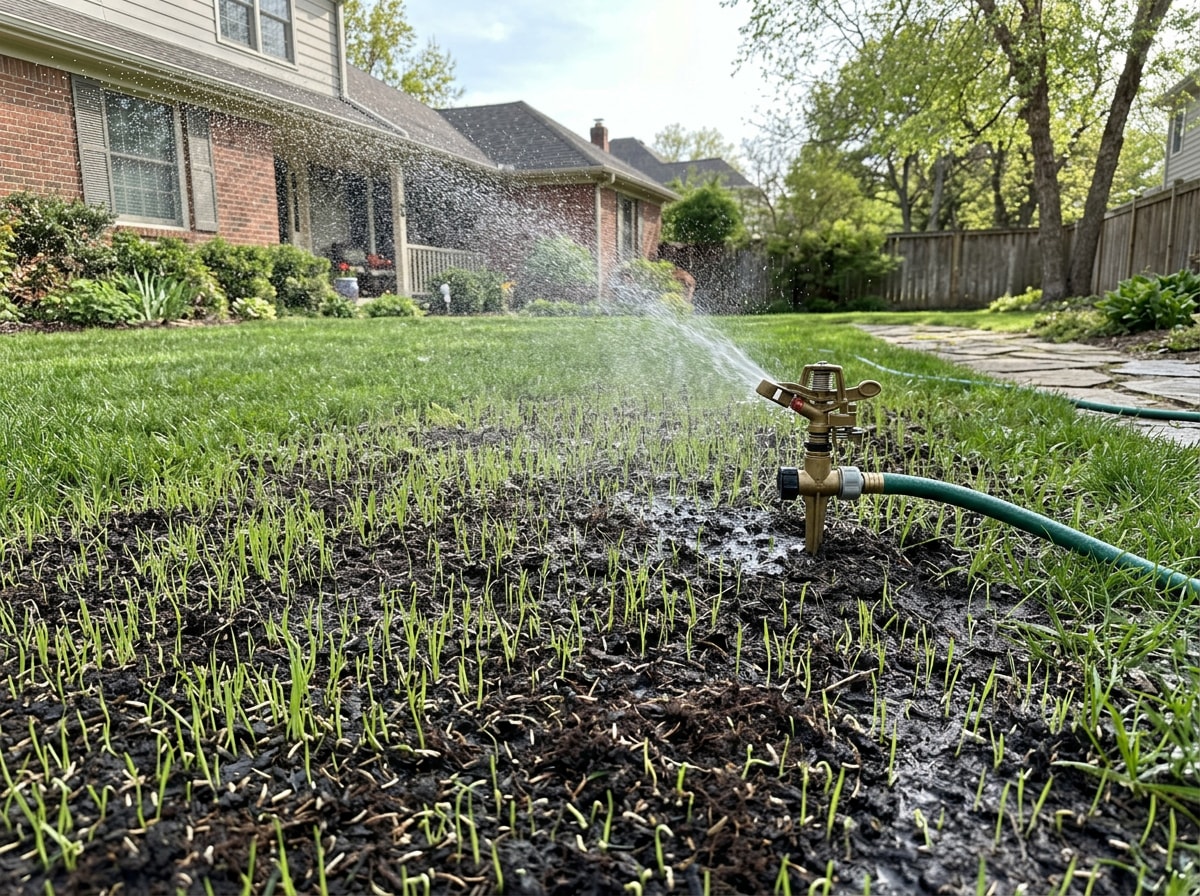
- Weeks 1–2: Water lightly once or twice a day to keep the top layer of soil consistently moist without pooling.
- Once seedlings reach about an inch tall: Taper off to deeper, less frequent watering a few times a week to encourage stronger root growth.
- First mow: Hold off until the new grass reaches roughly the same height as your existing turf, usually three to four weeks after seeding.
Starter fertilizer can go down at seeding time or shortly after germination to support early root development. Check the product label for timing specific to your grass type, and lean on your soil test results rather than guessing at rates.
Common Overseeding Mistakes (and How to Avoid Them)
- Seeding too early. While soil is still hot, this invites crabgrass and other summer weeds to compete with young grass before it can establish.
- Skipping soil prep. Seed spread straight onto thatch or hard, compacted ground rarely germinates well, no matter how good the seed is.
- Over-seeding. More isn't always better. Packing in too much seed causes thin, weak seedlings competing for the same light and nutrients.
- Ignoring drainage. Low spots that stay soggy after rain will drown new seed before it roots, even with perfect timing.
When DIY Overseeding Isn't Enough
Some Arlington yards have problems overseeding can't fix on its own, chronic shade from mature trees, low spots that pond water, or soil so compacted that aeration barely dents it. In those cases, grading the yard or adding a defined hardscape area, like a walkway through a high-traffic bare path, often solves the problem permanently instead of reseeding the same spot every fall.
At CM Hardscapes, we see this pattern across Arlington properties: the "bad grass spot" is usually a drainage or grading issue wearing a grass costume. You can browse examples of completed yard and hardscape work on our projects page, or get a free estimate if you'd rather have someone assess the yard before you buy seed.
FAQ
Can I Just Throw Grass Seed on My Existing Lawn Without Preparing the Soil?
You can spread seed without prepping the soil first, but germination rates drop significantly when seed can't reach bare ground. Without dethatching, aerating, or mowing short beforehand, much of the seed dries out or gets picked off by birds before it ever sprouts.
How Much Grass Seed Do I Need to Overseed?
Overseeding generally requires about half the seed rate used for a brand-new lawn, though the exact amount depends on the grass type. Always check the bag label first; it's calibrated to that specific product.
Can You Mix Different Types of Grass Seed?
Yes. Cool-season lawns are commonly planted with a blend of tall fescue, Kentucky bluegrass, and perennial ryegrass for better resilience. Warm-season grasses, by contrast, are usually planted as a single species, or monostand, rather than mixed.
Is Spring or Fall Better for Overseeding in Arlington?
Fall. Cooler air, warm soil, and less weed competition make it the more reliable window. Spring seeding is possible but fights rising temperatures and weed pressure right as new grass needs to establish.
How Soon Can I Walk On or Mow New Grass Seed?
Avoid foot traffic as much as possible until seedlings are well rooted, generally three to four weeks. Hold off on mowing until the new grass matches the height of your existing lawn so you don't scalp or uproot young seedlings.