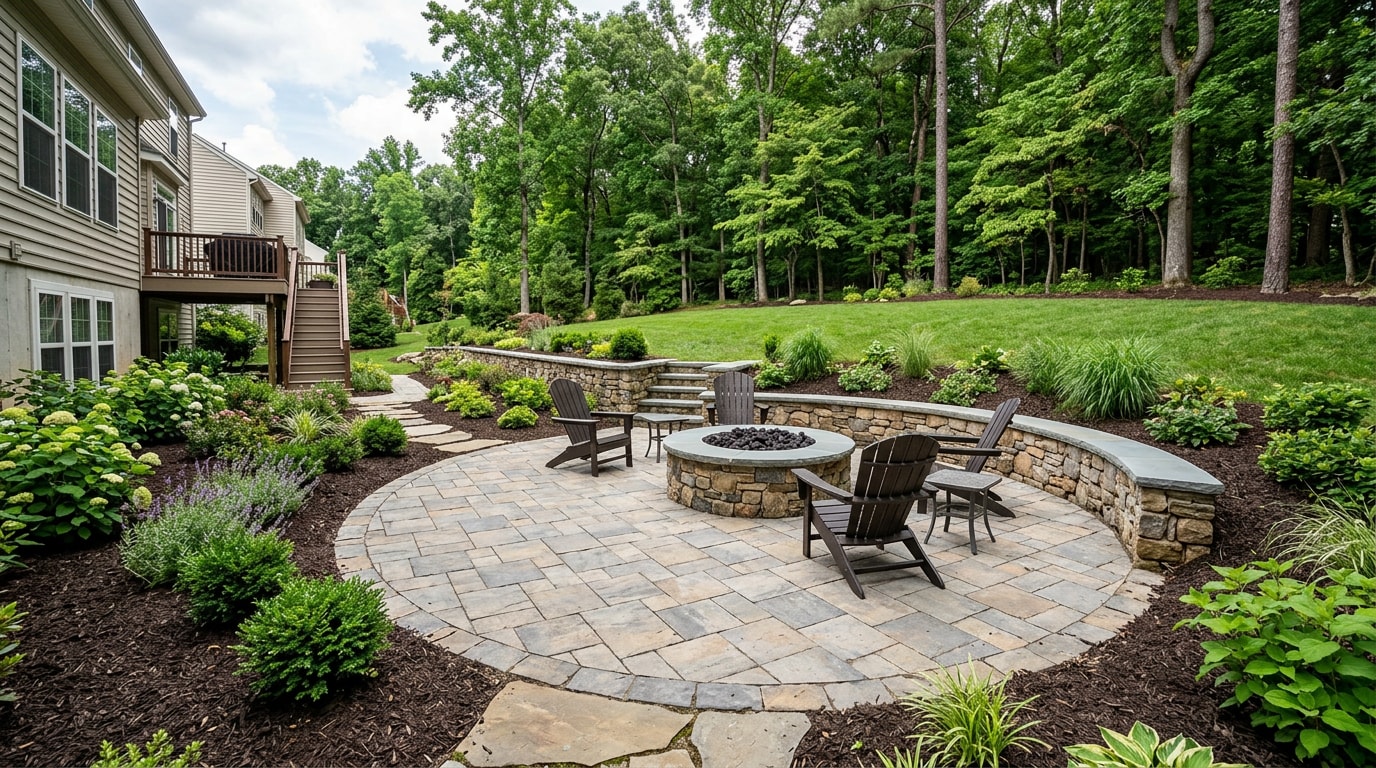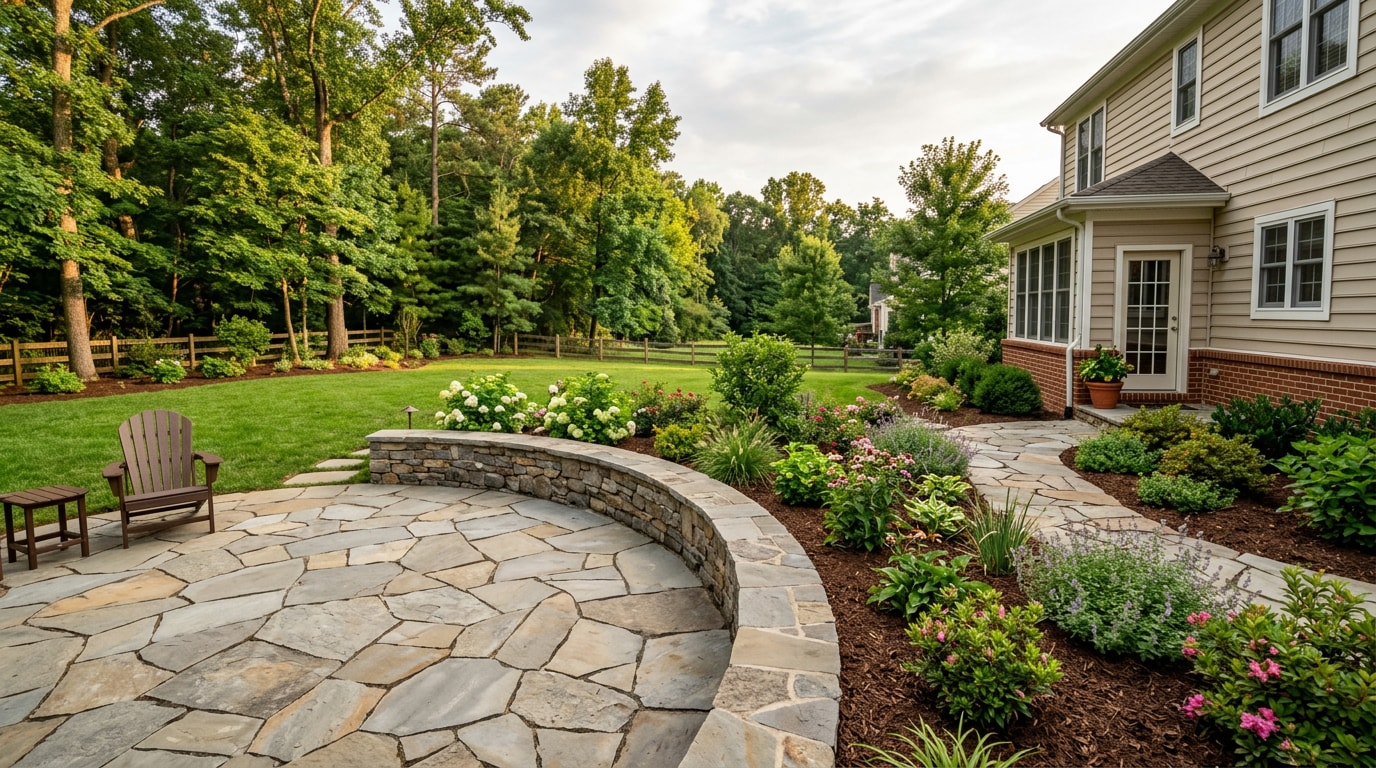
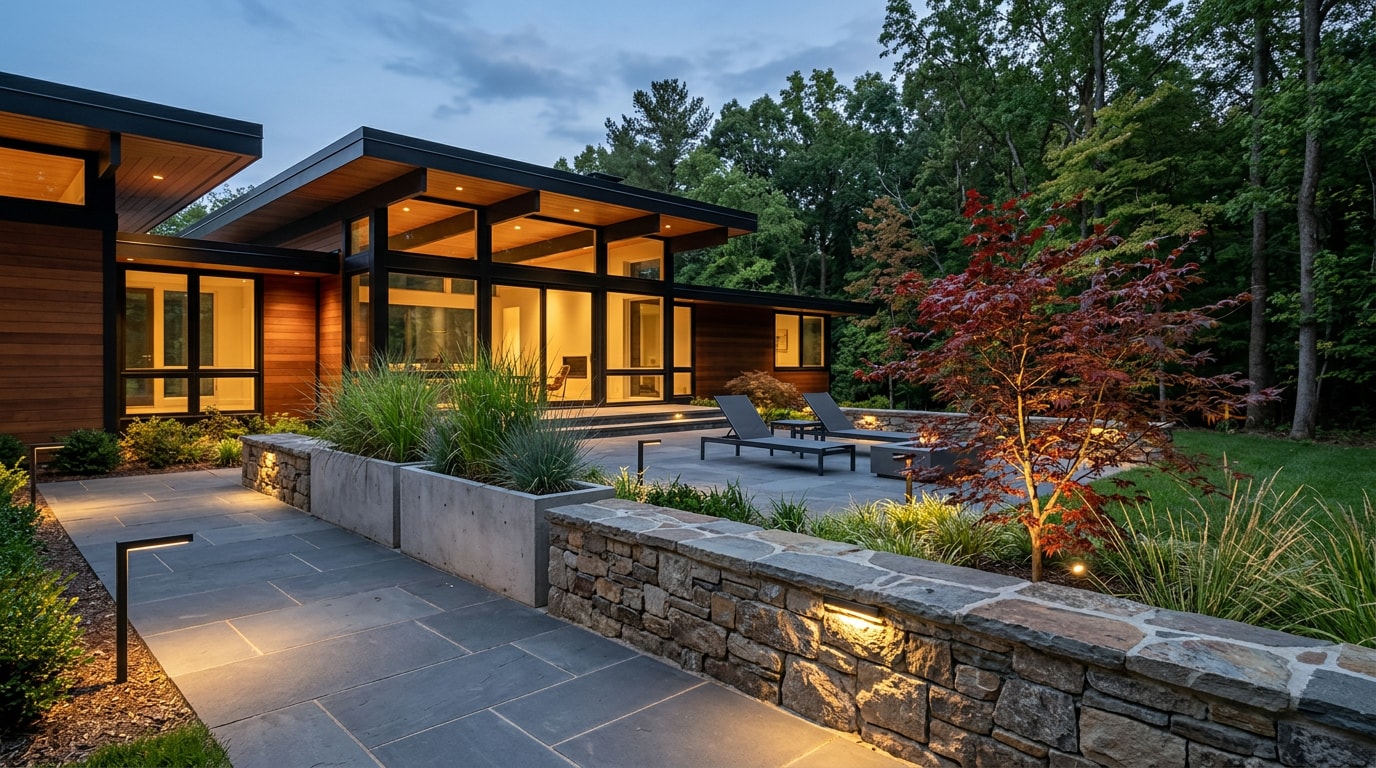
Mid century modern landscaping in Fairfax County, VA pairs clean-lined hardscape with plantings built for Virginia's humidity, not Palm Springs. Few counties in the country have as much original MCM housing stock to borrow from, and the yards that get the style right follow a specific playbook rather than a Pinterest mood board. Here's what actually holds up on an MCM lot here, from patio geometry to the plants that won't rot by July.
What Is Mid-Century Modern Landscaping?
Mid century modern landscaping borrows the clean lines, geometry, and material honesty of mid-century modern architecture to blur the line between a home's interior and its yard. It leans on an indoor-outdoor connection built from glass walls, flat planes, and natural materials arranged with intentional simplicity.
For homeowners already living in an MCM house, or anyone drawn to the look, matching the landscape to the architecture is historically accurate, not purely decorative. At C&M Hardscapes, we build the patios, walls, and walkways that make that connection work on real Fairfax County lots, not just show-house photos.
Why Fairfax County Is an MCM Landscaping Hub
This isn't a borrowed aesthetic here. Fairfax County has two nationally recognized mid-century modern neighborhoods, and both shaped how landscape architects thought about siting a house on a lot.
Hollin Hills encompasses approximately 326 acres and boasts 450 architecturally significant homes , built between 1946 and 1971. The landscape design wasn't an afterthought: landscape architects including Lou "Barney" Voight, Daniel Urban Kiley, and Eric Paepcke accentuated each lot's terrain and vegetation, making Hollin Hills a standout example of mid-century modern design nestled in lush greenery . In 2022, Fairfax County gave the neighborhood further protection: its Historic Overlay District status, established in 2022 by Fairfax County, imposes design review standards that help maintain the neighborhood's cohesive aesthetic and wide open feel .
Holmes Run Acres, near Falls Church, carries its own distinction. Holmes Run Acres is the first Mid-Century modern community in Virginia to be designated as a landmark/historic place , with homes sited by architect Francis Donald Lethbridge, Nicholas Satterlee, et al.
The county has since taken a broader inventory of this period. A survey captured 151 individual properties, neighborhoods, and commercial developments constructed between 1950 and 1985 , giving preservation planners a real baseline instead of guesswork. If you own a home in one of the protected districts, design review isn't the obstacle it sounds like: design review is free and is conducted by the Fairfax County Architectural Review Board (ARB) , and it's worth a quick call before you commit to a material change.
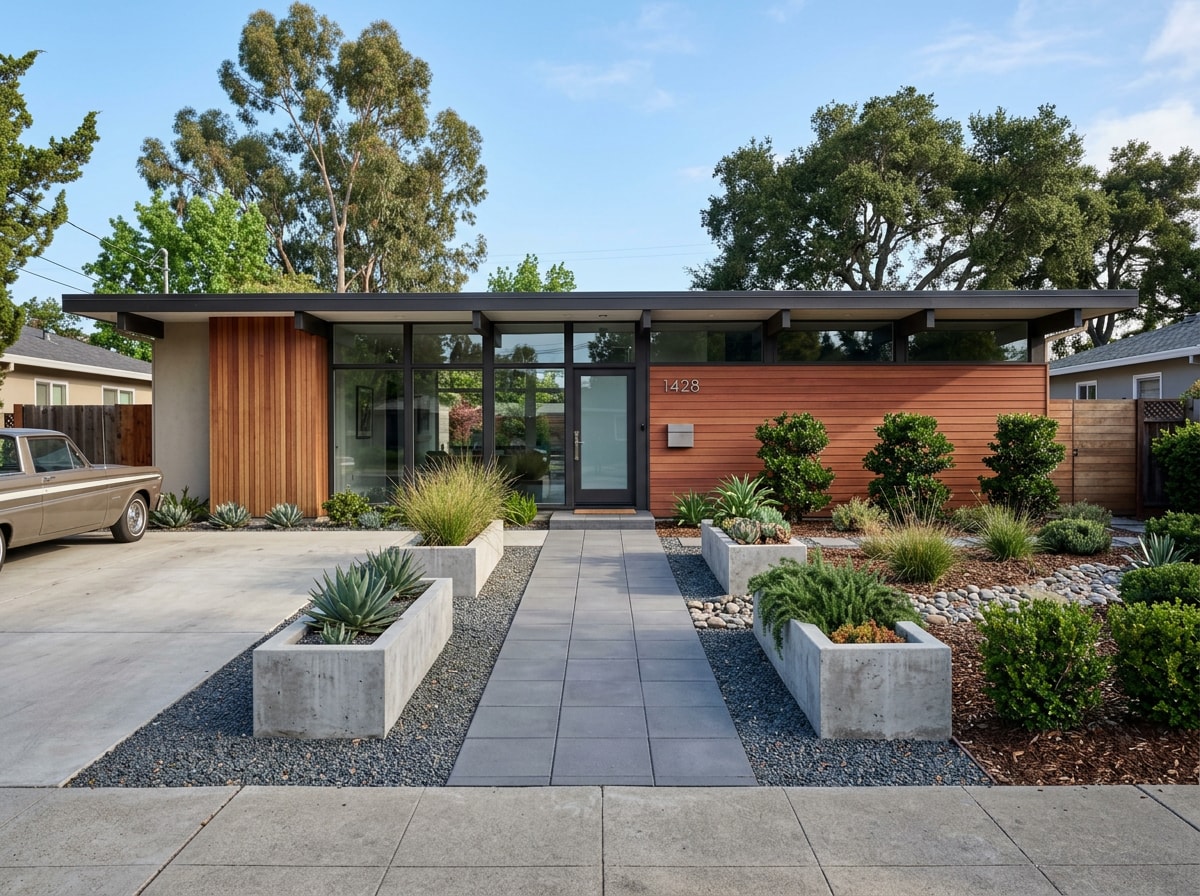
Key Elements of Mid-Century Modern Landscape Design
Every well-executed MCM yard rests on three pillars:
- Geometric structure — shapes that are drawn, not grown
- Tight indoor-outdoor flow — the yard reads as a room, not a separate destination
- Honest natural materials — wood, stone, and concrete left to age the way they're meant to
Our hardscape contractor team can translate these three pillars into a plan suited to local soil and climate, not a national style guide written for Phoenix.
Clean Lines and Geometric Shapes
Clean lines and geometric shapes show up everywhere in an MCM yard, from the overall layout down to planters, pathways, and patio edges. Nothing curves just for the sake of softness. Every shape earns its place.
Expect a rectangular patio, linear planters, and poured concrete walkways that reinforce bold angles. In Fairfax County, this kind of geometric hardscape needs proper base prep and control joints. Clay soil and freeze-thaw cycles can crack a rigid patio that wasn't built to handle seasonal movement. Linear planters built from brick or block, like a garden wall, hold their edge far better over time than wood frames do in our humidity.
Seamless Indoor-Outdoor Flow
This style blurs the line between house and yard. Large windows, sliding glass doors, and patios create a natural transition, so the backyard functions like an extension of the living room rather than a separate destination.
A well-executed transition often pairs a natural boulder retaining wall with an expansive stone patio or paved terrace, letting the hardscape read as a continuation of the architecture itself. Open floor plan landscaping works best when sightlines from inside the house line up with a focal point outside: a specimen tree, a fire feature, or a simple rectangular water feature.
Natural Materials and Hardscaping
Mid century modern landscape design leans on wood, stone, and water to soften all that geometry while keeping the yard grounded in nature. Concrete patios, exposed aggregate finishes, and dry-stacked stone masonry are common choices because they age honestly and look good against greenery.
In our climate, material selection matters more than most style guides let on. Exposed aggregate holds up well to freeze-thaw cycling. Untreated wood needs careful species selection and sealing to survive Virginia's humidity without warping or rotting within a few seasons. Having built patios and walls for homeowners throughout Fairfax, Arlington, and Alexandria, we've watched plenty of DIY cedar screens fail where properly sealed stone or concrete would still look sharp a decade later.
Best Plants for Mid-Century Modern Landscaping in Fairfax County
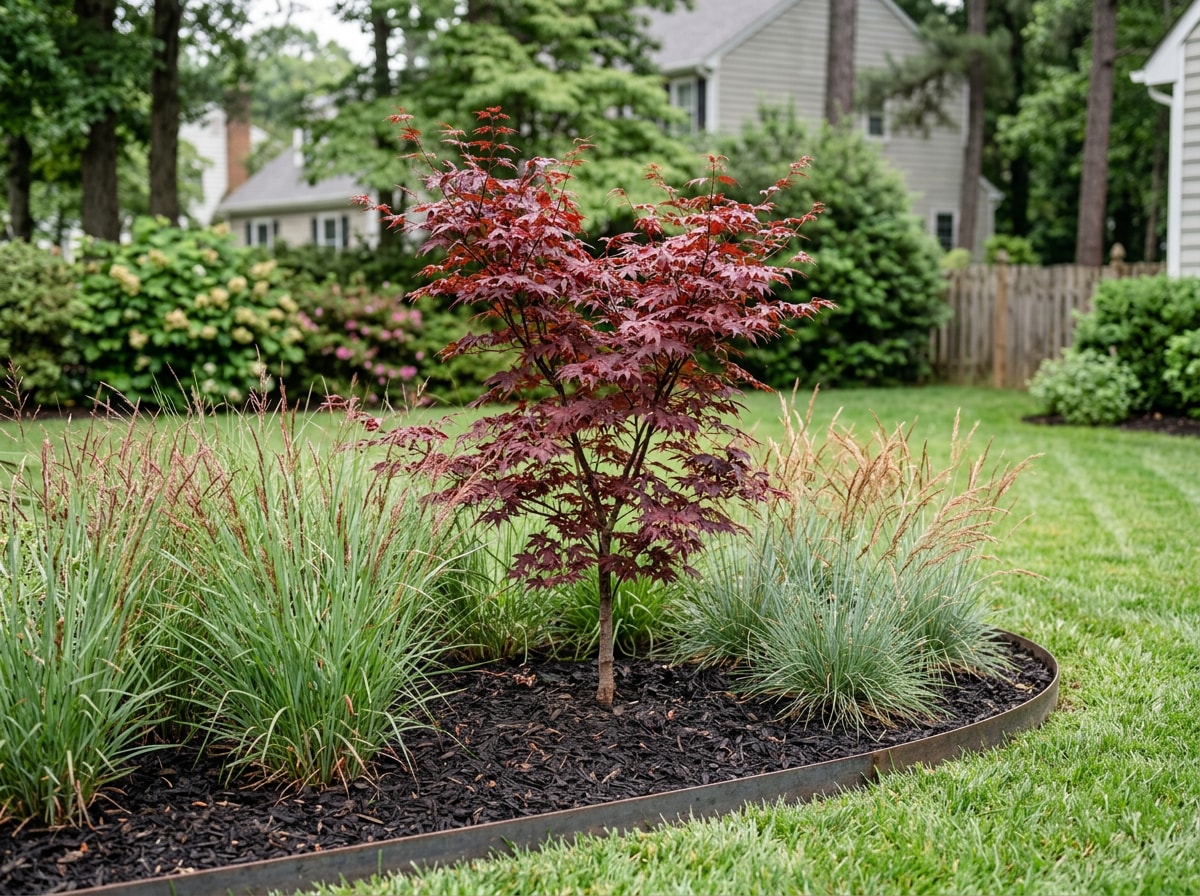
MCM yards typically rely on three plant categories: a centerpiece ornamental tree, low ground covers, and ornamental grasses that add movement without competing with the hardscape. A Japanese maple or a cluster of well-pruned "Skyrocket" junipers often serves as that focal point, anchoring the design the way a piece of sculpture would.
One correction worth making before you plant anything: this yard isn't in zone 7a anymore. Fairfax County was previously classified as Zone 7a. As of 2023, we are now in Zone 7b . That half-zone shift changes which plants reliably survive a Northern Virginia winter, and most national MCM plant lists still assume the old numbers.
| Classic Desert MCM Plant | Fairfax County (Zone 7b) Alternative | Why It Works Here |
|---|---|---|
| Agave or yucca | Inkberry holly ('Shamrock') | Evergreen, sculptural form, tolerates clay and humidity |
| Fountain grass | Little bluestem or switchgrass | Native, upright habit, handles wet winters |
| Barrel cactus | Clipped boxwood sphere | Geometric shape without rot risk in open ground |
| Fan palm | Japanese maple | Vertical accent, works as the single specimen tree |
| Groundcover succulent | Creeping sedum in raised beds | Low, spreading, but needs sharp drainage here |
For deeper plant-by-plant guidance tied to our region, the Virginia Cooperative Extension's native plant resources are a reliable starting point.
Incorporating Succulents and Drought-Resistant Plants
Succulents and drought-resistant plants are a staple of mid-century landscape design, valued for their sculptural quality and low water needs, a look that originated in hot, dry regions like the Southwest.
Fairfax County's humidity doesn't treat succulents kindly in open ground, where wet winters tend to rot their roots. They still work well here as container accents on a patio or tucked into raised, well-drained beds, giving you that low-maintenance effect without fighting the local climate.
Water Features and Fire Pits as Focal Points
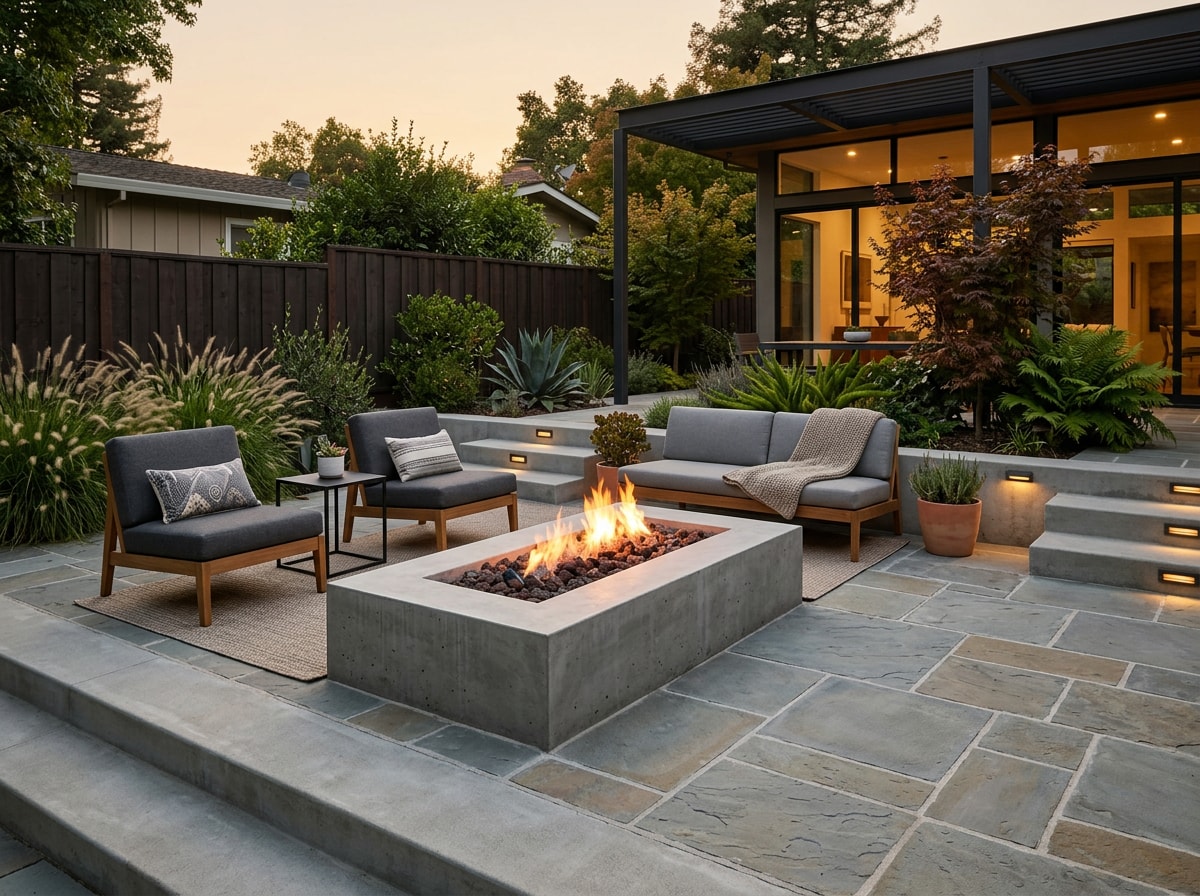
A simple rectangular water feature or a clean concrete fire pit can anchor an entire mid century modern landscape, giving the yard a gathering place and a visual focal point that echoes the geometry used elsewhere in the design.
Here's something most landscaping guides get wrong for this area: a typical backyard fire pit doesn't need a county permit at all. Recreational fires are specifically exempted from the Fire Prevention Code definition of open burning and therefore do not require a Fire Prevention Code Permit . You do still need the basics covered: a minimum of one portable fire extinguisher with a minimum 4-A rating or other approved on-site fire-extinguishing equipment shall be available for immediate utilization , and you need the property owner's sign-off. Permits only come into play for bonfires and controlled burning, which are a different category entirely.
For general placement and clearance guidance beyond local code, the NFPA's wildfire safety guidance for fire pits is worth a read before you finalize a design. Our fire pit installation team can help place it where it reads as part of the hardscape, not an add-on.
Retro Lighting Ideas for the Perfect Ambiance
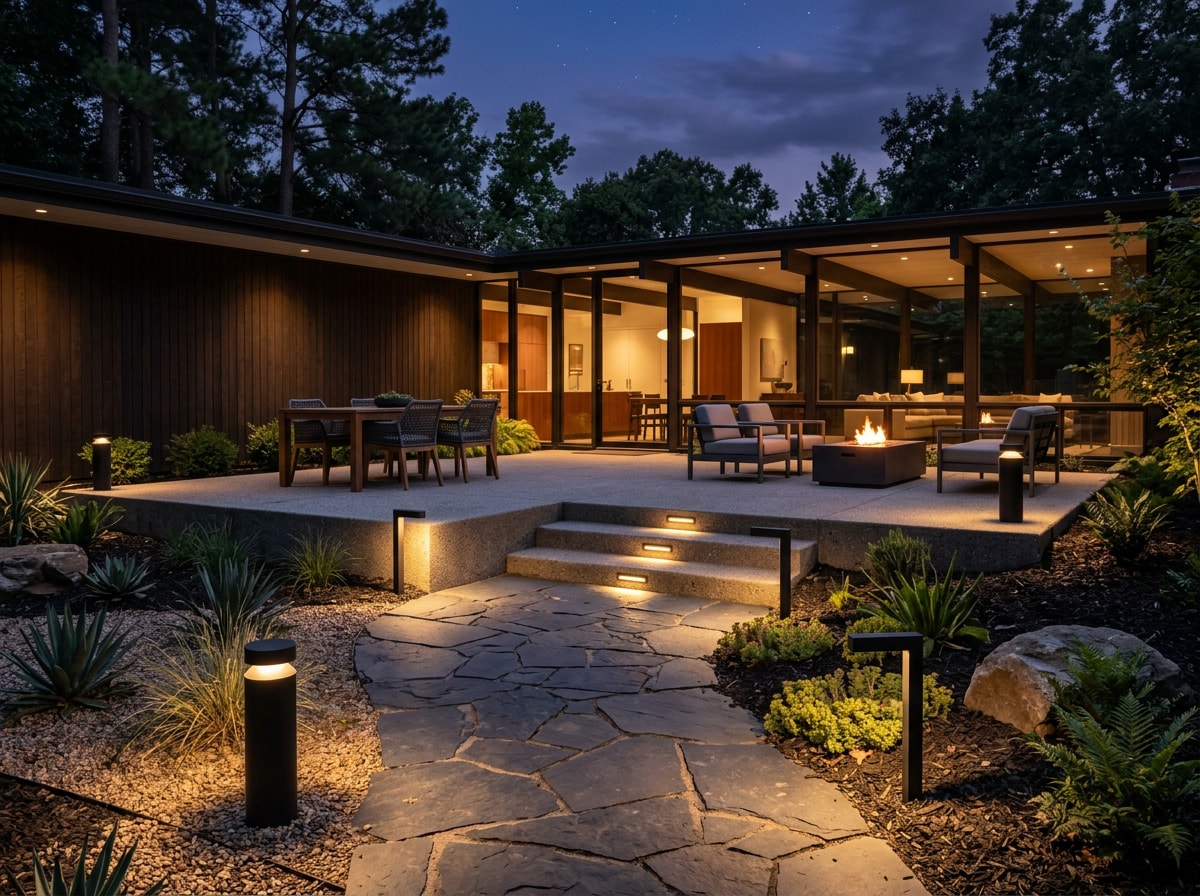
Lighting makes or breaks an MCM yard once the sun goes down. The same clean-lined, geometric sensibility that shapes the hardscape should carry through to the fixtures: low-profile path lights, sphere pendants, and linear fixtures read as retro lighting without looking costumed.
Accent lighting works best when it highlights the architecture and planting already in place rather than competing with it:
- A single uplight on a specimen tree
- A soft wash along a boulder or stone wall
- Step lights recessed into the patio surface
Keep fixture finishes consistent. Matte black or bronze tends to match the understated, modernist influence running through the rest of the design.
Working Within Hollin Hills or Holmes Run Acres Guidelines
If your home sits inside a designated historic district, a few extra steps protect your timeline:
- Check whether your property falls inside the Hollin Hills or Holmes Run Acres historic boundaries.
- Contact the Fairfax County Architectural Review Board before finalizing exterior material choices.
- Keep documentation of original materials if you're matching or restoring an existing feature.
- Loop your contractor in early so design review doesn't stall a build mid-project.
This adds a step to planning, but it also protects the resale value and architectural integrity that made these neighborhoods worth living in to begin with.
Planning Your Mid-Century Modern Landscape Project
A realistic MCM landscape project in Fairfax County typically moves through site assessment, material selection, hardscape installation, then planting and lighting last. Costs vary widely based on patio size, wall length, and material grade, so get specifics in writing before you commit to a design. For a broader breakdown of local pricing and process, our landscape installation guide for Fairfax County covers typical cost ranges by project type.
You can also browse completed work on our projects page to see how these elements come together on real Northern Virginia properties before you commit to a plan.
FAQ
What are the key features of mid-century landscape design?
Key features include clean lines, geometric shapes, a tight integration of indoor and outdoor spaces, and natural materials like wood, stone, and concrete, all arranged with simplicity and a strong connection to the surrounding environment.
What plants thrive in mid-century modern landscaping in Fairfax County's climate?
Inkberry holly, little bluestem, switchgrass, boxwood, and Japanese maple all hold up well in Fairfax County's current zone 7b conditions. Desert staples like agave and barrel cactus generally fail outdoors here and should be limited to containers.
Do I need approval to change landscaping in Hollin Hills or Holmes Run Acres?
If your property is inside the historic district boundary, exterior changes typically go through the Fairfax County Architectural Review Board first. Design review is free, and getting a quick read on your plan before installation avoids rework later.
Do I need a permit for a fire pit in a Fairfax County backyard?
Most residential fire pits count as recreational fires, which are exempt from the Fire Prevention Code Permit requirement. You still need the property owner's permission and a fire extinguisher on hand. Bonfires and controlled burning are a separate category that does require a permit.
What are the best outdoor furniture options for a mid-century landscape?
Look for sleek, minimalist furniture made from teak, metal, or wicker. Iconic pieces like the butterfly chair or an Eames-inspired lounger fit the aesthetic without looking like a costume piece, and both hold up reasonably well outdoors with proper care.
How much does mid-century modern landscaping cost in Fairfax County?
Cost depends on patio size, wall length, material grade, and whether your property sits inside a historic district with added design review. Get a written estimate scoped to your specific lot rather than relying on a national average.
Ready to bring this style to your own yard? Get a free estimate and we'll walk your property with the local climate, soil, and (if it applies) historic district guidelines in mind. We also serve Arlington and Alexandria homeowners taking on the same style of project.